In a previous post featuring books about Korea, readers pointed out a couple of truly great books that been overlooked.
The first one is The Zen Monastic Experience, by Robert Buswell. Written about life in a major Korean zen monastery, this is based upon the years he spent at Songgwa Temple. He lived here as monk for about five years, under the great master Kusan Sunim. Buswell also does a great job of explaining the different jobs and positions at a large monastery.
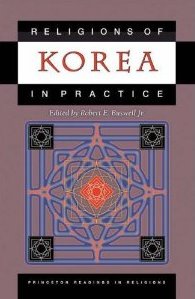
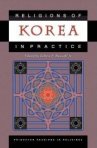
As I think about it, I could do an entire post on the books of Robert Buswell! He’s really done some great ones about Korean Buddhism. One of the most influential is The Collected Works of Chinul: The Korean Approach to Zen. This is the only English translation of the complete works of one of Korea’s most important thinkers. However, used copies of this one sell for over $200, so it’s probably better to get the excerpted version, Tracing Back the Radiance: Chinul’s Korean Way of Zen. All of the works in this book are full-length; it’s only the longer, and more obscure works of Chinul that were left out. Buswell was also the editior of Religions of Korea in Practice, and Currents and Countercurrents: Korean Influences on the East Asian Buddhist Traditions. This second one is definitely an under-appreciated gem. Most of us bought into the idea of a linear transmission of Buddhism. However, Buswell shows that this was much more dynamic, with Buddhist practitioners and teachers traveled throughout the region learning and influencing as they went.
Similar to Religions of Korea in Practice is Makers of Modern Korean Buddhism. This is quite a nice volume about modern Korean Buddhism, with many chapters about the history and key figures of Korean Buddhism during the turbulent 20th century.
Here’s a nice book about the life of modern Korean Buddhist nuns, Women in Korean Zen: Lives And Practices. Martine Bachelor was also another person who lived at Songgwa Temple and practiced under Kusan Sunim. She talks about the life of Korean Buddhist nuns, the difficulties of a westerner adjusting to both the monastic and Korean culture, and in the second half of the book, Martine includes the autobiography of the outstanding nun, Son’gyong Sunim.
One of the great works in Korean Buddhism is The Mirror of Zen, by Seon master Sosan. This one is studied by most of the monks and nuns in Korea, and here is widely availiable in English for the first time. My only complaint, and it’s not a reason to avoid this book, is that this book is only one section of Sosan Sunim’s original work, Mirror of the Three Religions: Confucianism, Taoism, and Buddhism. (The only attempt at this work in English is a MA thesis at the University of Hawaii by Jinwol Sunim.*) In it, Sosan Sunim compares the three religions then prevalent in Korea, and shows their common characteristics and beliefs, explaining why there is no need for conflict between them. In a sense, Sosan Sunim’s original work may be one of the first “Appreciation of” textbooks in the world.
Another neat book is Temples of Korea. With beautiful photos, information, history about a number of important temples in Korea, I doubt you could go wrong with this one.
There’s an interesting couple of books that resemble the “How it’s made” series, in the sense that they show and explain all of the components of various temples in detail. The first is called Korean Temple Motifs, and is quite a nice, if expensive, book.
The second, Korean Cultural Heritage (Vol. 1), is perhaps even better. There is a volume 2, but it doesn’t cover Buddhism. This book (volume 1) is definitely worthwhile, but hard to find. It’s at Kyobo Books in Seoul, and I found my copy at the Bandi and Luni’s at Jongno 1ga (in Seoul), but apart from that, it doesn’t seem to be in many other places.
These are just some of the many books about Korea. I haven’t posted anything by my Dharma teacher, Daehaeng Kun Sunim, because you’ve probably already seen information about her books if you’ve visited this blog before. Likewise, most westerners interested in Buddhism already have at least a passing familiarity with the works Seung Sahn Kun Sunim. I’ve also avoided posting much about Korean art for two reasons. One, I don’t know anything! And two, there are a lot of newish books about Korean art that I haven’t looked at. Many of them aren’t available outside of Korea, but the bookstore Seoul Selection has a very good selection.
If you know of any books about Korea that left a good impression, please share them in the comments section. And I’ll try to include them in a future post.
* Common Themes of the Three Religions (Confucianism, Taoism, and Buddhism): The Samga Kwigam of Hyujong (1520-1604) (University of Hawaii, 1990)
Korea has one of the most vibrant communities of Buddhist nuns in the world. To my knowledge, only Taiwan has anything even close. While there are still some inequities, such as the tendency for monk’s temples to attract more donations, in terms of practice, the nun’s community is outstanding.
Two of the major institutions for nuns (and also monks) are the meditation hall, the seonbang, and the sutra study program, the kangwon. This is a four-year course of study where one lives at the kangwon with Korean sunims,* while attending lectures and commentaries. This involves massive amounts of memorization and traditional sino-Korean (Chinese) characters, as well as the daily work you’d expect at a large temple. Only upon completion of one of these courses is a nun (or monk) allowed to take full ordination in Korea. (This applies to only the Jogye Order, although it is by far the largest Buddhist order in Korea.)
Jaeun Sunim
Although a number of non-Koreans have ordained in the Jogye Order, few (male or female) have taken full ordination after completing the traditional four-year kangwon course of study. Even now, the number is certainly less than 10 people, although there are several who will graduate in the next year or two. Instead, most foreign sunims have ordained through the four-year meditation hall program.
However, Jaeun Sunim (/ja-un/), a Canadian, did not choose this path. She was one of two bikkhunis** who were the first to take full ordination after graduating from the kangwon. This interview examines her experiences and why she endeavored to spend years training in a completely different cultural environment. This interview originally appeared in theLotus Lantern magazine.
* Sunim is the Korean title of respect and address for both nuns and monks. It’s similar to “venerable.”
**Bikkhuni is the term for a fully ordained Buddhist nun.
By the numbers: 7000+ The number of nuns in Korea’s Jogye Order.
6 – Kangwons attended by Buddhist nuns
18 – Meditation halls exclusive to nuns
All of these kangwons and meditation halls are run by the nuns. Men (including monks) are generally not allowed in these temples.
How did you become interested in Buddhism?
I think it would be truthful to say that I have always been a Buddhist. However, as I was born in a country where there is no indigenous Buddhist tradition, it was many years before I was able to recognize it.When I was in the first grade at school, a student asked our teacher, “Who made the world?” and she said, “God made the world”. Another student asked, “Then, who made God?” and she said, “We shouldn’t ask questions like that”. I remember asking, “Why not?” I had many questions about life that nobody seemed to want to talk about. My experiences with Christianity were similar: I was told to just have faith and that we shouldn’t try to understand the mind of God. These attitudes served to quell my interest in religion. So I redirected my inquisitiveness in a more “acceptable” direction and studied science, eventually majoring in biochemistry.
When I was a university student, I did volunteer work with the local chapter of Amnesty International, and was shocked by the stories of torture and injustice that are committed so routinely around the world. I realized how well off and comfortable I was compared to most people in the world. My life seemed so useless in the face of all that suffering, and this brought back many of the unanswered questions of my childhood. So as a graduate student I did research in virology, with the idea that I could do some good in the world by helping to understand diseases so that they could be more effectively treated and prevented. At the same time, I started to read more in philosophy and psychology, and to explore some alternative spiritual paths.
One day a friend told me she was learning to meditate and suddenly I found myself saying that I wanted to learn too. She loaned me a book by Vietnamese master Thich Nhat Hanh and as I read it, I simply knew that I was a Buddhist. My friend introduced me to a woman who was teaching meditation, and eventually I met her teacher, the late Venerable Namgyal Rinpoche, and other students of his who were teaching Buddha Dharma. From them, I began to learn the fundamentals of Buddhist theory and practice
It was such a relief! In Buddhism, I not only found others who were asking the same kinds of questions that had nagged me since childhood, but a way of spiritual life in which this kind of questioning is in fact necessary and encouraged.
In Canada, there are very few Korean Monks and Nuns, and little is known of Korean Buddhism. So how did you come to Korea, and to Korean Buddhism?
As a postdoctoral research fellow, late one night in the lab, suddenly, very clearly, a thought appeared: “Even if every disease known to humanity could be cured, suffering would go on unabated because suffering originates in our minds, not our bodies”. After that, it seemed to me the only thing that could truly relieve the suffering in the world was Buddhist practice. My interest in my research career rapidly faded away.The next time I met the Venerable Namgyal Rinpoche, I told him about this, and he said that I should consider becoming ordained, which meant going to Asia, as there was no monastic community in Canada. But after so many years of university study, I had almost no money. One day, a small ad in the newspaper caught my eye: “Teach English in Asia, no experience necessary, free air ticket, room and board”. So I got a job as an English instructor in Korea, not because of Korean Buddhism, which I had never heard of, but because of the free ticket to Asia. My idea was to save a little money and travel around Asia exploring the options for Buddhist study and ordination. However, not long after I arrived, I met some Korean nuns and was impressed with their dedication, their independence and the wonderful opportunities for study and practice. I found the Korean Seon tradition very clear and straightforward as well. That was in the spring of 1998, and I’ve been here ever since.
Sunim, you were one of the first two Western nuns to graduate from a traditional Buddhist seminary (kangwon), and now have received bikkhuni ordination in the Jogye Order. Since graduation from seminary isn’t required for foreign monks and nuns to receive full ordination, why did you decide to do it?
Most Korean Bikkhunis believe that training in the seminary is necessary for novice nuns to provide a foundation for their monastic life and practice, and the vast majority of nuns in Korea attend the seminary for four years as the basic training before full ordination. The only way to really understand something is to experience it yourself. And for a Westerner to understand a particular Buddhist tradition, it’s important to get as close to the roots of that tradition as possible. Because Western culture is so different from Korean culture, life in the seminary would also teach me how to live together harmoniously with Korean nuns. So it seemed attending the seminary would be the best way for me to get a good foundation to monastic life and a deeper appreciation of the Jogye tradition and life as a Korean Buddhist nun.
Cheongam Temple
How was life in the seminary? Seminary life is communal. We eat, sleep, study, and practice together in one room with everyone else. Communal work is also a large part of the life. Through this we learn to consider others first, putting the needs of the community before our own personal needs. At Cheongam Temple (/chung-am/), the nuns in the first three years (about 80 people) live together in one room; the fourth year nuns live together in a separate room. To live so closely together with many people means that one’s actions, moods and energy affect everyone in the whole group. Therefore one has to learn to act in harmony with the community as much as possible and to let go of one’s opinions and selfish desires. Anything one does that negatively affects others becomes immediately apparent, and one has to work to correct it. For me this was very difficult, but is actually a very deep training in mindfulness, and so also wonderful practice.
As a Westerner, were there difficulties in adapting to the culture?Western culture is more individualistic than Asian culture, so adapting to communal life is very challenging. I was amazed to learn how much of my way of thinking was intimately tied to my cultural background. The way of expressing oneself, mannerisms, expressions, and of course, language are all different. I sometimes felt completely exhausted from having to concentrate all the time, trying to be mindful of my words and actions. However, I found I couldn’t blame all my difficulties on cultural and linguistic differences. There were simply aspects of my personality that I needed to work on in order to be able to live harmoniously with others.Then of course there was the textual study. The curriculum consists of Seon writings from China and Korea, and major Mahayana Buddhist Sutras. All of the texts are in Classical Chinese characters, which for me are very difficult. Also the method of studying is very different from how we study in Canada. The characters are read and simultaneously translated into Korean. The texts are memorized as much as possible, regardless of whether or not they are understood. After reciting a text many times, the meaning is said to appear naturally. The way I have studied since childhood is to discuss and understand the underlying meaning of the subject first, not to memorize text verbatim. When something is thoroughly understood, remembering it comes naturally. I found it nearly impossible to memorize texts and had a hard time adapting to the studies
Now that you have graduated and ordained as a bikkhuni, what will you do?
Of course the most important thing is to live the teachings, to experience the teachings, which cannot be done through academic study. Therefore daily meditation practice is very important. Eventually I hope to do retreats in various meditation centers throughout the country, to deepen my understanding of the teachings, However before I begin to do formal retreats, I will take some time to review the material we studied in the seminary and do some independent study and practice. I may also help with some translation of Korean Buddhist materials to English. The Korean Buddhist Seon tradition is still largely unknown outside of Korea, which is something I hope will begin to change, as I feel Korean Buddhism has a lot to offer to the international community
In contribution to this blog, I would like to share a photo each Sunday, focusing on interesting Buddhist sites, throughout South Korea.
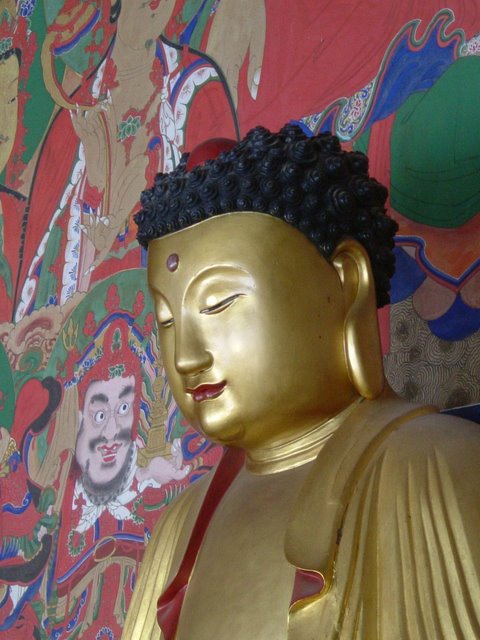
I thought a good place to start would be the main Dharma Hall at Hanmaum Seonwon.
An interesting, detailed description of the Hall and it’s art work can be read here on the Hanmaum website. I especially like that the wood-carver has been designated as Korean Important Intangible Cultural Asset No.108. Is he actually the 108th, or did they just decide to give him that number??
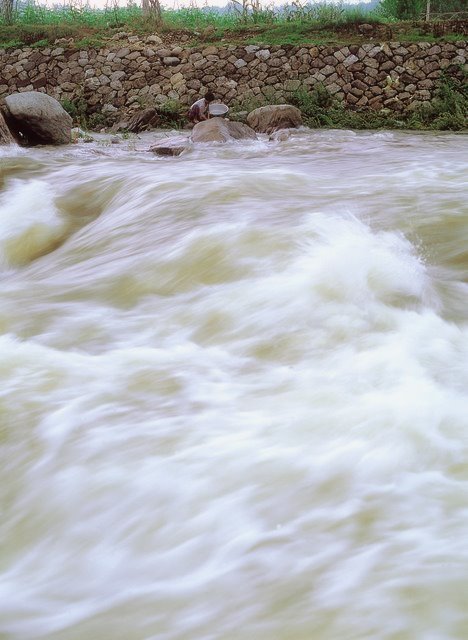
“Huge, violent, killer waves of our own making are bearing down on us, ready to smash us against the rocks.” I know this to be absolutely true. I’ve experienced some of it for myself already, across the moments, days and decades of my life. Every unskillful action I’ve ever performed either has, or will eventually, return to me. So when I think of what’s to come, the outlook really isn’t very pretty.
But, Phra Bhasakorn Bhavilai continues in his wonderful book ‘Karma for Today’s Traveler’, “somehow, we see more clearly, we improve ourselves, we reject our past behaviour and we embrace the five precepts. By changing our mental state like that… the power of our bad deeds to effect us has been reduced… The waves will hit us, we can’t stop them; but they only take a limb or an eye or some teeth. We are left alive. The five precepts will reduce the negative effects from our past.”
This is very practical stuff. It’s not about achieving Buddhahood through the perfection of precepts, something I know I am incapable of completing by my own efforts. Rather, taking refuge in the precepts is about developing the skills and habits to live with more peace and confidence in this very life, of being happier and having better relationships with everything and everyone around me, as well as making progress on the path.
I see how this works and rejoice in it, it brings results. And, though central to my personal practice, it’s still not easy. The trickiest for me, just as in Joseph’s insightful post yesterday, is the precept concerning speech. Partly formulated, in words from Thich Nhat Hanh’s Fourth Mindfulness Training, as “Knowing that words can create happiness or suffering, I am determined to speak truthfully, with words that inspire self-confidence, joy, and hope.”
The trouble, I find, is remembering. Sitting with friends, it is so easy to slip back into negative speech patterns. So easy to swear, to complain, to gossip, to exaggerate, to condemn and criticise. So easy to speak rather than to listen, to dominate the conversation, and to talk with urgency and anger rather than with kindness and peace. How can such behaviour not build up disasterous karma? How can I remember my vows?
I recently heard about a church minister in America who suggested to his congregation that they wear a wristband and that every time they catch themselves complaining or gossiping or otherwise engaging in negative speech, they simply move the band from one wrist to the other. What a brilliant idea. It’s a simple act that would re-enforce one’s aspirations and help break the habits of negativity.
I decided to try this out using the wrist-mala I wear everyday, and was surprised at the results. Although I was concentrating on speech, the first effect was that I became much more aware of my thinking too. The second thing I noticed was how often I had to move the mala. And thirdly, I was pleased to see how often I didn’t have to. Which is important, not because I imagine I can ever reach perfection, but because it improves my life here and in the future, reducing the size of those killer waves.
I also remembered Kun Sunim’s advice about striking back at negative thoughts and changing them into something positive, and I worked on just that. Of course the most positive thing you can do is to entrust everything to your own Buddha-nature, and this technique really helped me do that. I let go of the negativity, and found myself smiling instead. “When you entrust everything to the foundation” Kun Daehaeng Sunim writes, “with a single thought you can go a thousand miles.”
Mind is the forerunner of all things. Mind is chief; mind-made are they. If one speaks or acts with a wicked mind, suffering follows, as the wheel of a cart follows the hoof of the ox.
Mind is the forerunner of all things. Mind is chief; mind-made are they. If one speaks or acts with a pure mind, affection follows, as one’s shadow that never leaves.
—Gotama Buddha (Dhammapada)
In my determination to live skillfully, it doesn’t take much effort to realize catching myself about to act unskillfully usually happens during the thought process. It’s easy to see that the roots of our actions must pass a considerable length through our mind before reaching their tips.
Daehaeng Kun Sunim ends the third precept, “I vow to strive to keep my mind pure.”
Although it would be a proper finish to anyone of the precepts, it surely feels as though it’s in the right place. The third precept is the one I have the least concern with physically, but mentally is probably my biggest disaster. When I return to mindfulness from a rather unwholesome series of thoughts, I find myself asking, “Why bother planting these karmic seeds?”
This post continues the Venerable Ya-un’s Admonitions to Myself. Here he warns us about the limitations of desire, while encouraging us to pay attention to what lasts and what benefits us longterm.
Greed is the foremost cause of a suffering-filled rebirth.[1] Giving is foremost among the six good practices.[2] Stinginess and greed prevent you from attaining the true path, while compassion and giving help protect you from falling into evil ways. If a poor person comes to you begging for help, you should not be reluctant, even if you are in hard circumstances yourself. You came into this world with nothing and you will leave it with nothing. You should not cling to even your own possessions, so how can you think about other’s belongings? When this body dies, what will you take with you?
The only thing that will follow you is the karma that you have made. If you cultivate your mind for three days, it can become a treasure that lasts for a thousand years. However, the accumulated possessions of a hundred years of desire will all be reduced to dust in the span of a few hours.
Where does the suffering of the three evil rebirths come from?
From greed and desire accumulated over many lifetimes.
Contenting myself with the Buddha’s robe and bowl,
why should I accumulate ignorance?
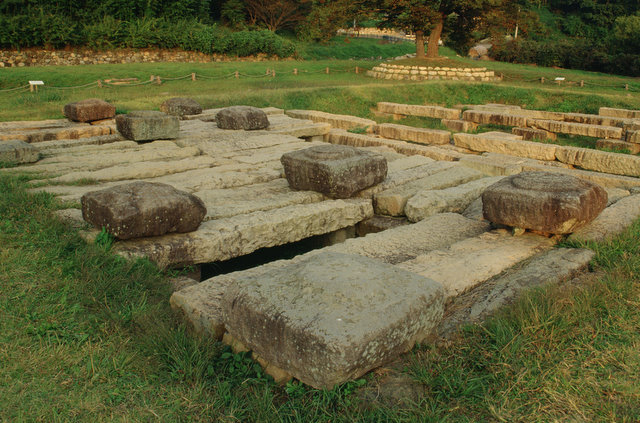
Kam-un Temple has been gone for over 800 years
yet to this day, the sincere efforts made by those long-ago practitioners still reverberate here. (The feeling of deep sincerity is so strong at this site that visiting it will make me teary-eyed.)
[1] In particular, rebirth in the hell realms, the hungry ghost realms, and the animal realms. [2] The six paramitas – generosity, disciple, patience, exertion, meditation, and wisdom.
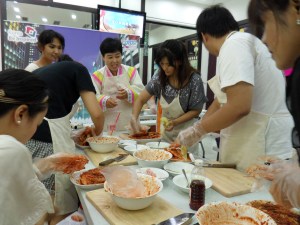
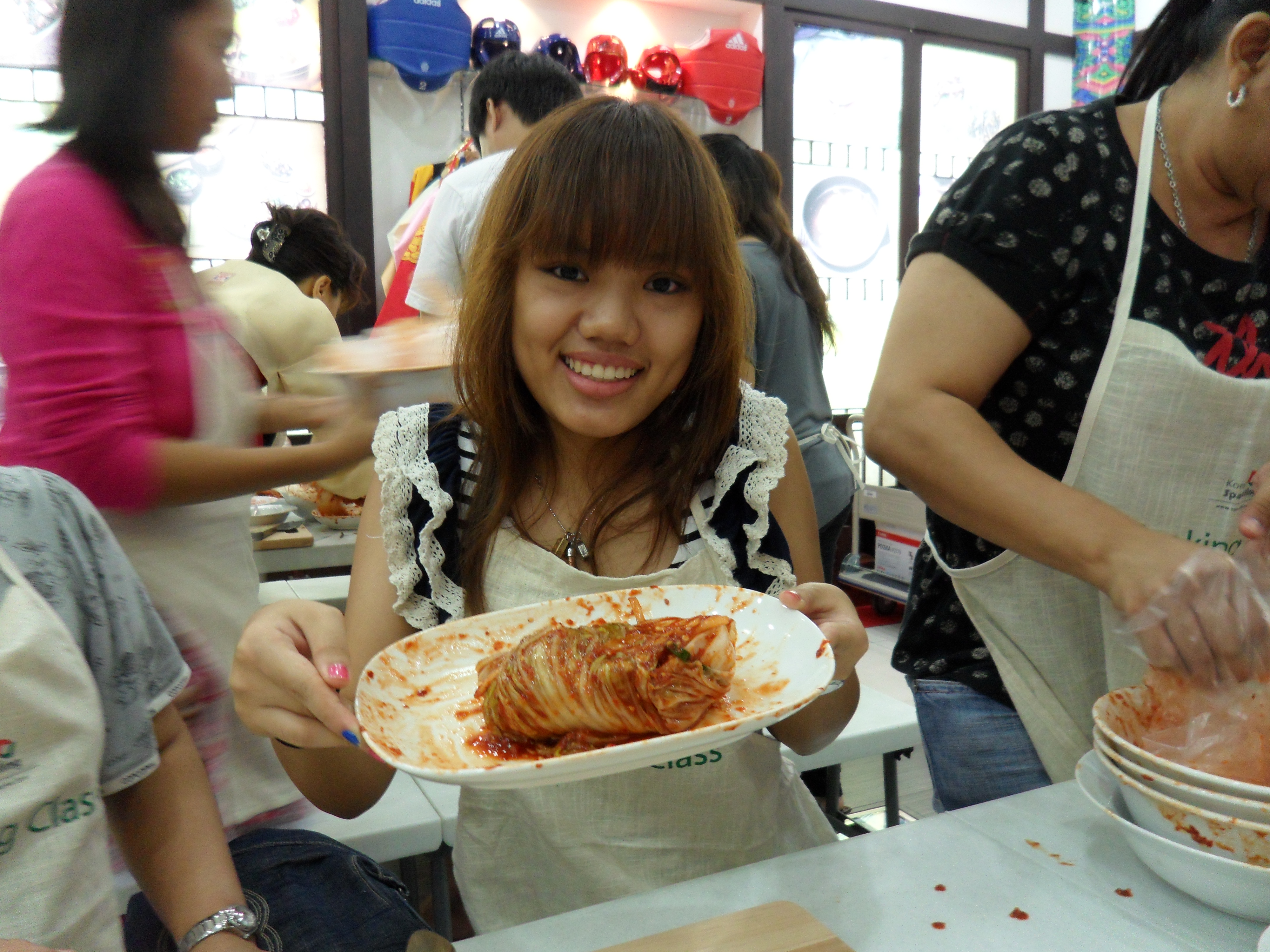
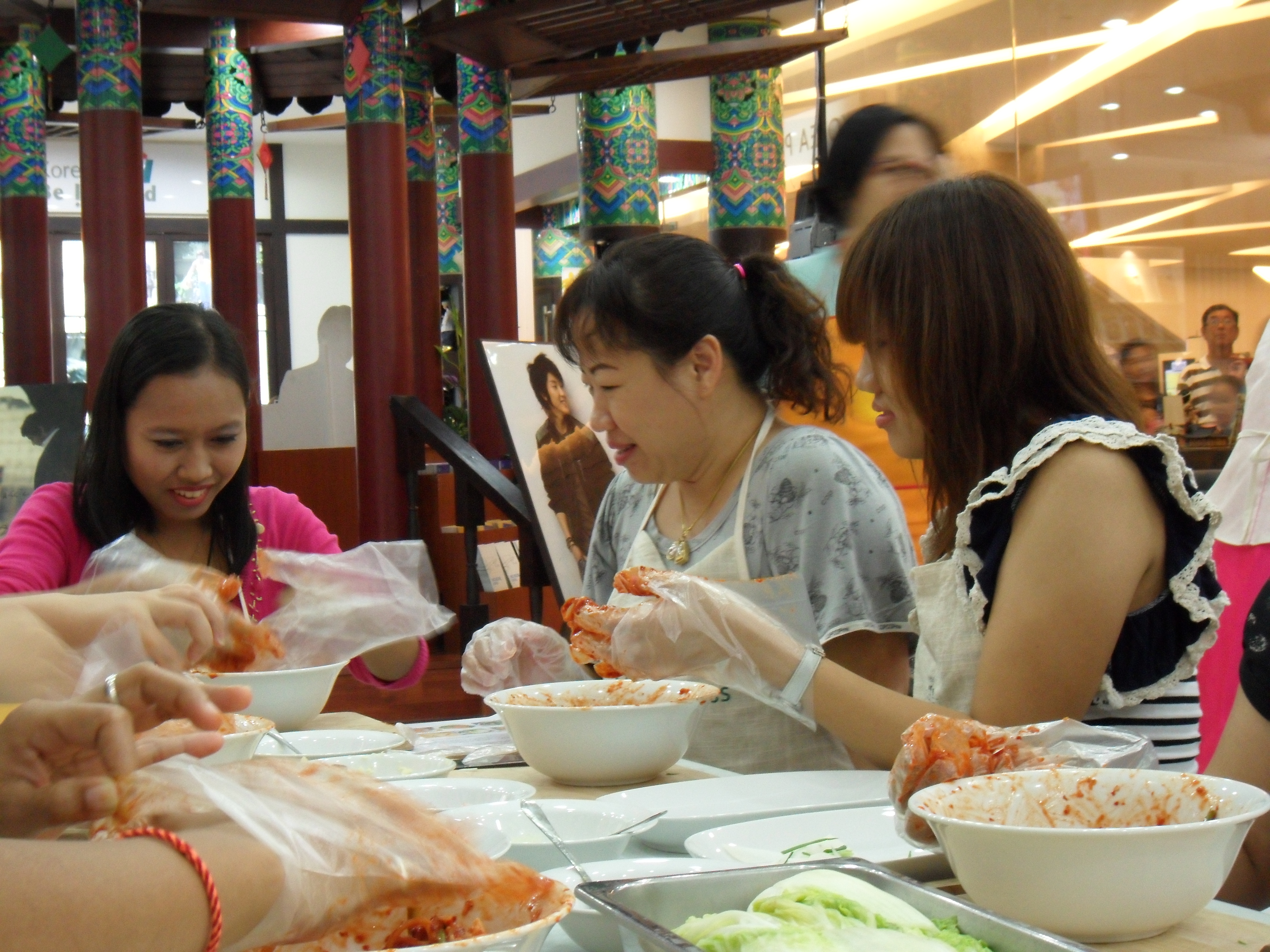
Just a few days after reading Chong Go Sunim’s fascinating post the other week about Korean temple food, and after having just finished a very fine Korean meal myself, I was asked if I’d like to attend a class in kimchi-making – part of a whole series of hands-on Korean cooking tutorials – right here in in Bangkok!
The classes are organised by the Korea Tourism Organisation and are held in their Bangkok office on the ground floor of the Esplanade department store on Rachadapisek Road, a beautiful showcase for Korean tourism with lots of free information, a little movie theatre and even a rack of traditional Korean costumes to dress up in.
Best of all, the cooking course, consisting of four subsequent Sunday afternoon sessions, is entirely free of charge and is available for the next six months. In the first session participants learn to make bibimbap, in the second they tackle kimchi, this is followed in the third week with gimbap, and the final week consists of a class making japchae.
On the day I went along I was not an official participant, I hate cooking, but more of an interested observer – mostly interested, of course, in the end result! I arrived early and helped set things up. There were tables to move and bowls to put in place and then I watched as the chefs arranged the ingredients and the cooks donned their aprons.
The teachers were four lovely ladies from the Bangkok Hanmaum Seonwon, which explains where my lucky invite came from, all volunteering their services for free. And with just ten student chefs, everyone enjoyed a really intimate learning experience. Then again, when making kimchi, intimate is certainly the word!
As the chilli paste got mixed with the garlic, ginger and whatever all those other ingredients were – I’ll never be a real food correspondant! – I chatted to some of the students. Everyone was a fan of Korean culture and cooking, and one woman at my table had visited Korea more than nine times!
Then I asked one of the ladies from the temple why she’d volunteered to give up her Sunday afternoons to help with this project and she said “well, first of all, I like the idea of helping to share Korean culture, plus I want to help the work of the Seonwon too.”
I later discovered that the funds raised by the Seonwon through this project are earmarked for the centre’s scholarship programme, which helps support a number of Thai students, who wouldn’t otherwise be able to afford it, study Korean at university. I met some of these students, and one of their teachers, about a year ago, and was impressed by their dedication and skill.
But of course the real winner of the day was me! I went home that evening with a huge bag of kimchi which I left out overnight to ferment before putting in my fridge. I’ve almost finished it now and I can tell you that it’s gorgeous. Crunchy and fresh and just the right tangyness and heat. When’s the next class?
In these fresh vegetables
I see a green sun.
All dharmas join together
to make life possible.
– Thich Nhat Hanh
At the Buddhist English Library of Seoul, we’ve been going over No River to Cross, by Seon Master Daehaeng. Chapter 2 has a nice section about cause and effect, and how our mind functions.
Mind is tilted towards the things that arise often. So, if you do not manage your thoughts well, they will grow and eventually become actions.
Any thought once raised, is perfectly recorded. You might think that a thought is finished because you’re no longer aware of it, but that thought did not disappear: it is perfectly recorded inside your mind. That thought is stored in your subconsciousness and causes a similar thought to arise next time. Further, the second thought is stronger than the first thought.
For example, if the first thought was bad, then the second thought is often a little worse. In this way, the thought keeps repeating time after time, and grows stronger and stronger. (page 17)
So, how do we manage thoughts? For one thing, we actually have a huge amount of choice in what we do once thoughts have arisen. It’s up to us if we want to continue to follow a thought, or to cease feeding it energy. But on a more fundamental level those can be dissolved, thus also dissolving the potential effects that would have resulted, had those thoughts continued unchecked.
If you record over a tape recording, the previous recording is erased and the new material is recorded. So it’s better to record good karma rather than bad karma. However, instead of just recording good karma, it’s even better to completely erase all of the recordings. The way to do this is by entrusting everything that confronts you, both good and bad, to your fundamental nature. It’s like cleaning a mirror. Even though the mirror has been covered by dust for a long time, once you wipe it off, it immediately becomes clean. (p 18)
We often naturally think that if we can understand the cause of something, we can control and cure it. But with karma, Daehaeng Kun Sunim explains that this is a futile exercise.
Karma is a tangle of uncountable causes and effects. Some people try to use their intellect to unravel their karma, but this is like trying to melt a frozen lake by pouring one bucket of hot water onto the ice. It seems to melt a little, but before long the water freezes, and you have only added more ice.
We’re stuck inside this barrel of “I,” and because what we do is contaminated with this smell of “I,” our efforts just makes things worse. The only way out of this mess is to completely jump over “I.”
So don’t get caught up in worldly things, just release them all to your fundamental mind, your Buddha-nature, and let them melt down automatically. When spring comes, the frozen lake will melt naturally and completely. Returning to your fundamental mind is like a warm spring coming after a cold winter. (p 18-19)
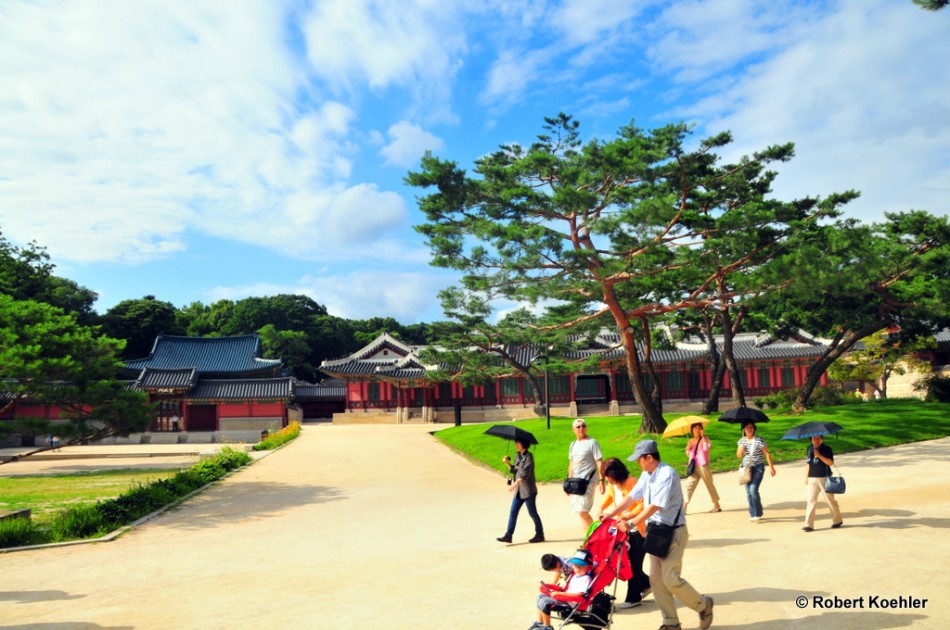
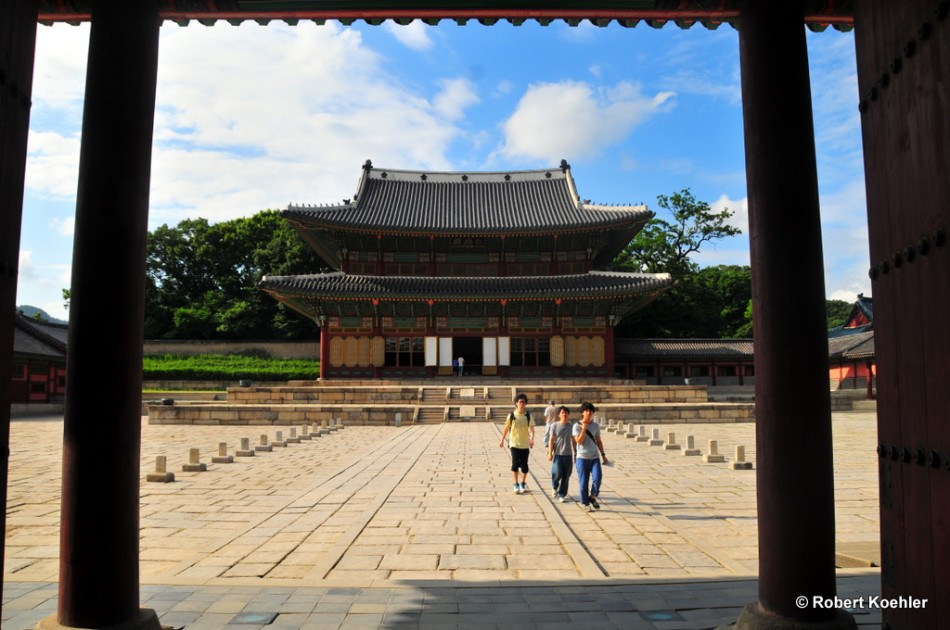
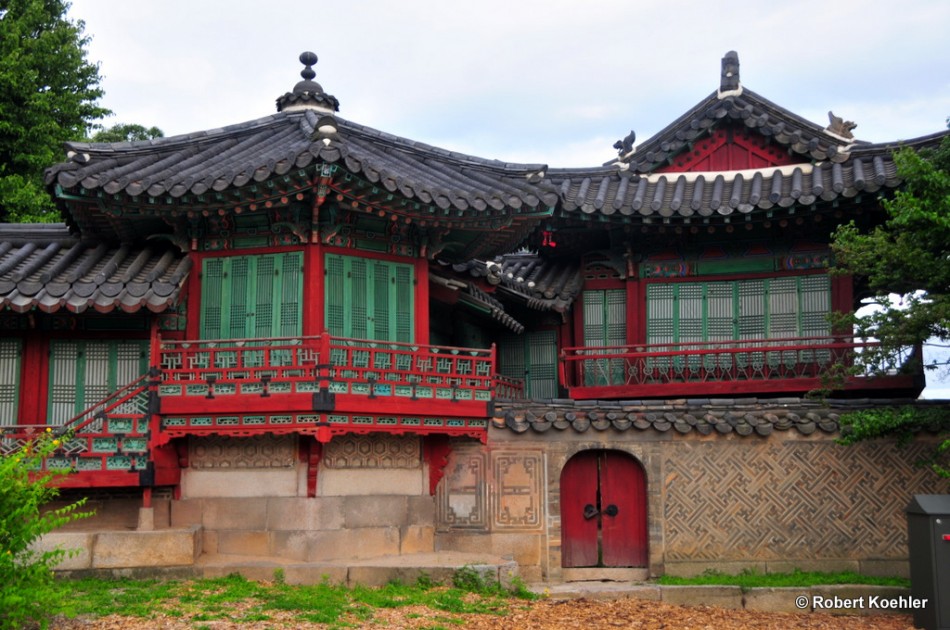
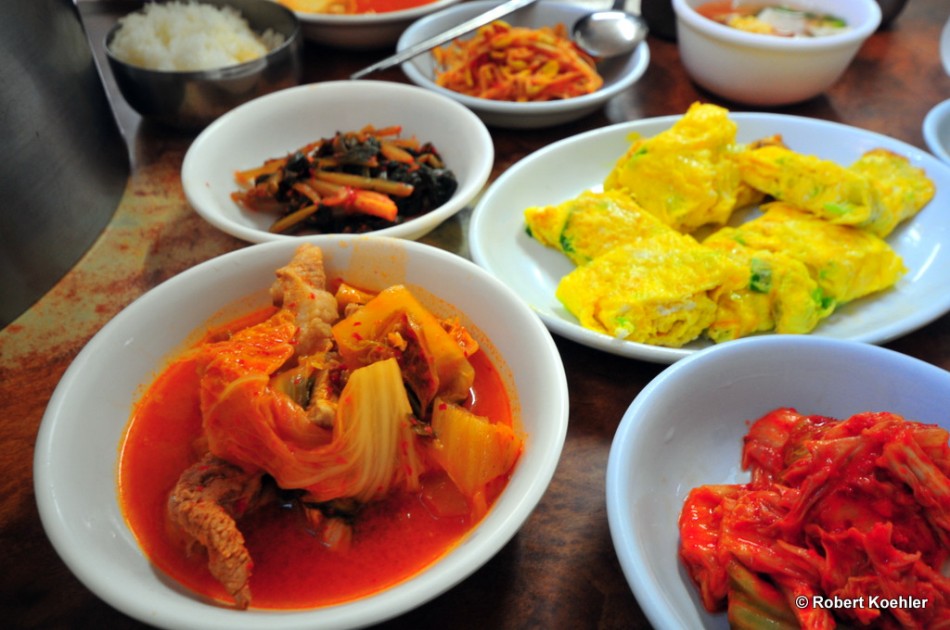
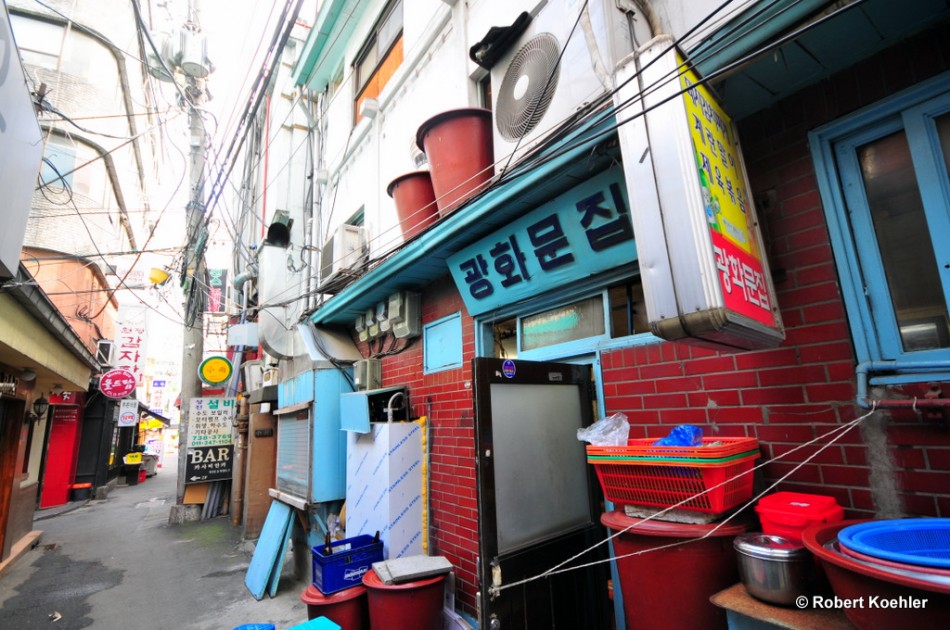
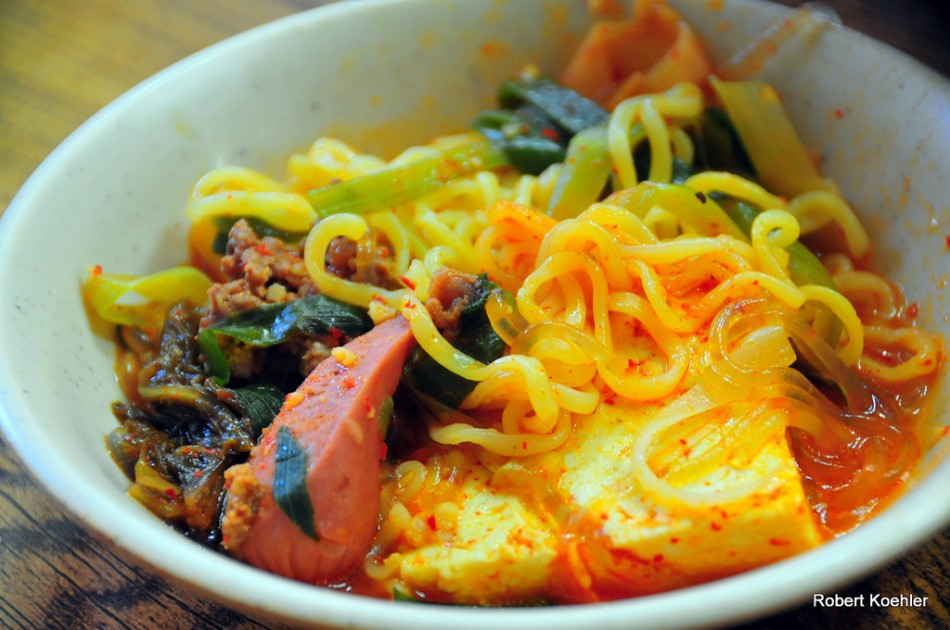
There’s a great new blog about Korea, Robert Koehler Travel & Photography, started up by the editor of Seoul magazine. Robert’s also the editor/author of the city guide to Seoul I mentioned a few posts back. With incredible photos, and great info and details about places to visit, this blog looks set to become an incredible place to go for information about Korea.
Aside from the historical places tourists may see, such as the Changdeokgung Palace (chang-duck-goong),
o
o
o
o
if you’re into Korean food, you’ll discover the great hole-in-the-wall restaurants.
o
o
o
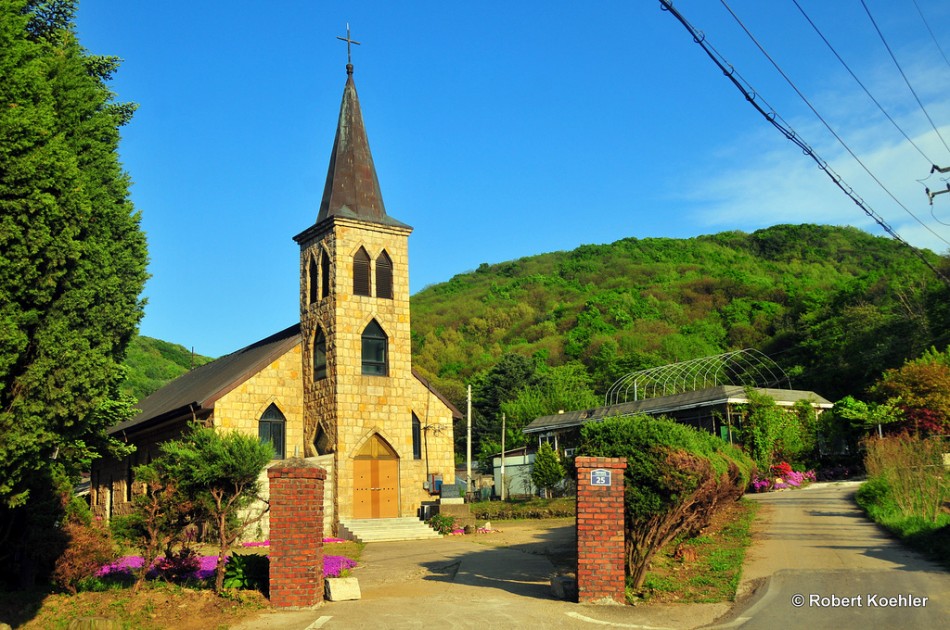
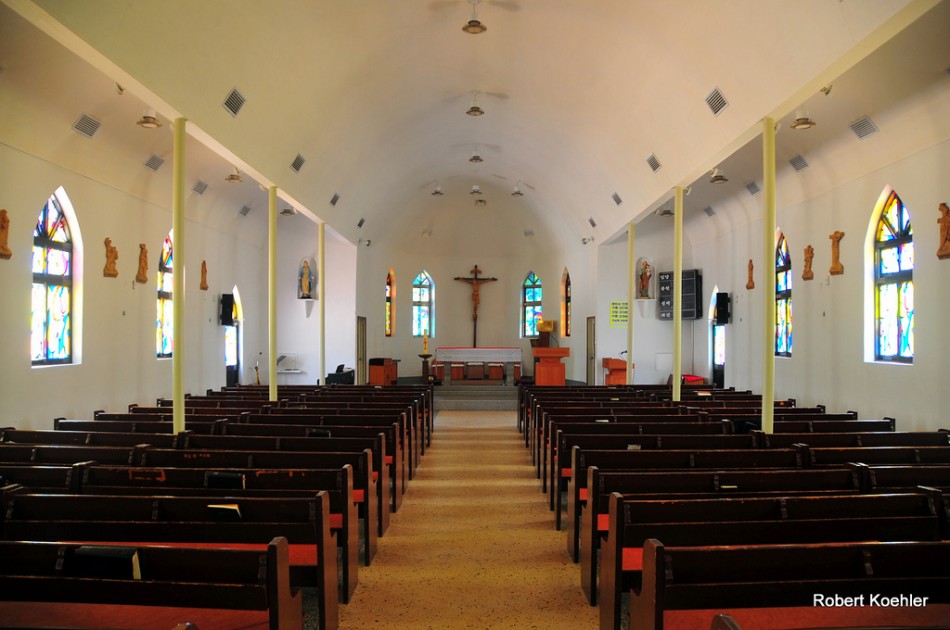
Robert’s other great passion is architecture, and he’s been known to travel half-way across the country to photograph an old building. 😉
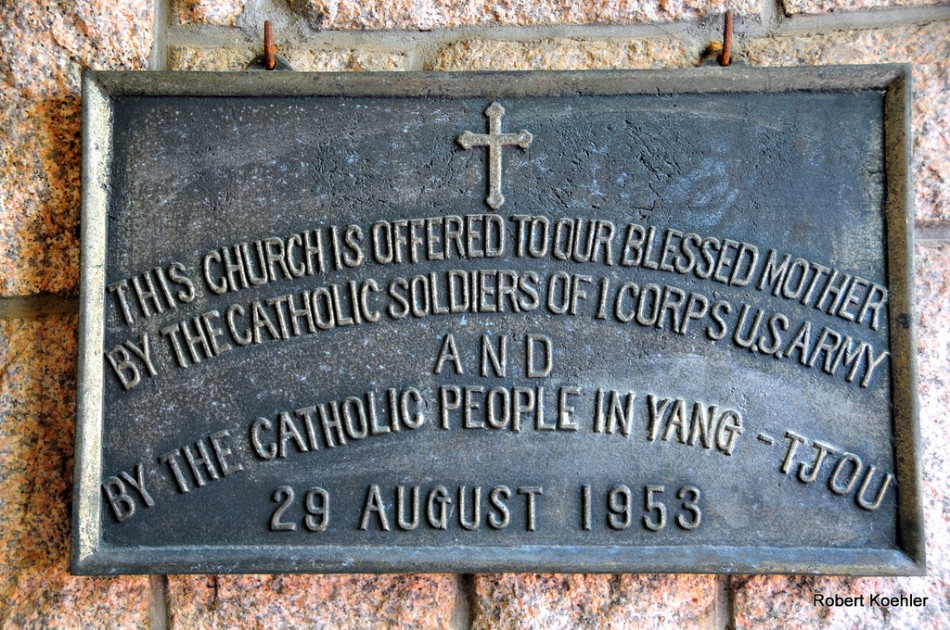
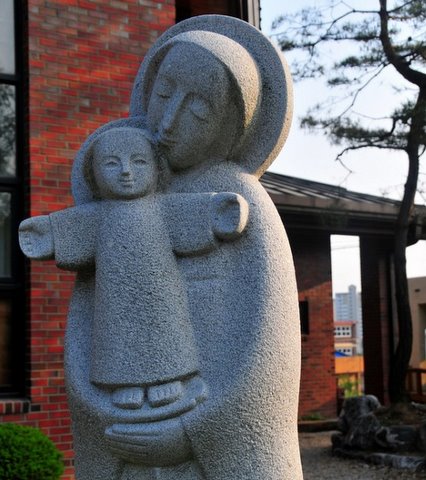
In one of his first posts, he examines the Catholic churches that were built just after the Korean War, many of them in cooperation between local members of the Catholic Church and Catholic members of the U.S. armed forces. They tend to have a very nice feeling of care and devotion. (I’m sure he’ll get around to some great temple posts!)
(All of the photos here are by Robert Koehler, and are from his blog.)
Start your study with experiences, with applying and experimenting with what you know. Don’t think that you can wait until after enlightenment before you have experiences. If you want to know your true self, experiences are the fastest way to go.
The Abbess, Hye Won Sunim
When I first became a monk, the abbess at the main Hanmaum Seon Center in Anyang said to me, “Without the experiences (that come from trying to rely upon one’s inherent Buddha-nature), it’s really hard to live as a monk or nun for very long. You need the sustenance of these experiences.”
Here is a bit more that she has said about spiritual experiences.
The more effort you make, the more results and experiences you will get. And the more effort you make, the harder your true nature will push you. The harder you study, the harder your true self, Juingong, pushes you.
If you are determined to study very hard, and try to do so, you will have some obstacles from other people, monks and nuns, laypeople, and various people around you. If you stop studying because of obstacles from other people, you won’t make any further progress. So don’t be bound or tied down by these.
The first thing you have to pass through is learning to ignore the obstacles from other people. To me, I’m focused on taking care of my practice, regardless of what other people are doing to me. I have seen many people, including sunims and laypeople who drop out because of obstacles from laypeople and hardships from their teacher.
Don’t try to have the same experience several times. Once you have an experience, try to let it go so that you can have other experiences.
The Rule of Fish
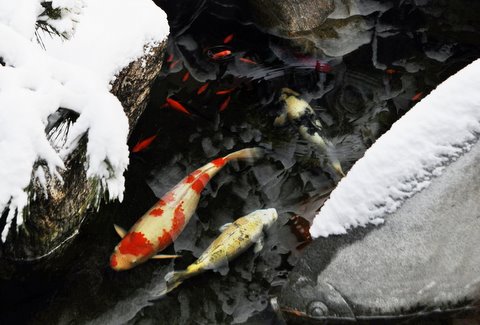
There’s an odd thing I’ve discovered about spiritual experiences – they have a lot in common with fish: They’re alive and vibrant at first, but unless we release them, within a day or two, they really begin to stink.
Unless we let go of them, nothing new comes, so it’s very hard to keep growing. In addition, if we don’t release them, they will become a foothold for “I” and the all the opinions and fixed views that go along with this sense of “me.” Without even being aware of it, a subtle thought begins to pervade our consciousness, “Look what I know.” From the moment this stink of I starts to pervade our outlook, things begin to fall apart. I can’t claim to know all the details about why this is, but my feeling is that the dualistic thought, of what I know, begins to cut us off from the whole and our source of energy and wisdom.
However, when we release what we’ve experienced and become one with it, even though we seem to lose sight of it, it’s still there, transforming us. And when we need it, it will return.
Trusting our root, our true nature, means that we entrust it with not just the bad things, but also the good things. We release them all to this root, remembering that is what’s really taking care of our lives and everything we encounter.
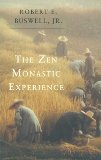 Written about life in a major Korean zen monastery, this is based upon the years he spent at Songgwa Temple. He lived here as monk for about five years, under the great master Kusan Sunim. Buswell also does a great job of explaining the different jobs and positions at a large monastery.
 All of the works in this book are full-length; it’s only the longer, and more obscure works of Chinul that were left out. Buswell was also the editior of Religions of Korea in Practice, and Currents and Countercurrents: Korean Influences on the East Asian Buddhist Traditions. This second one is definitely an under-appreciated gem. Most of us bought into the idea of a linear transmission of Buddhism. However, Buswell shows that this was much more dynamic, with Buddhist practitioners and teachers traveled throughout the region learning and influencing as they went.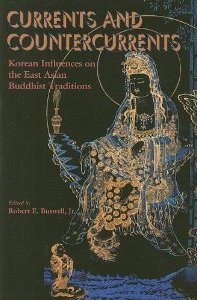


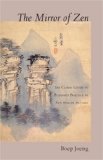 One of the great works in Korean Buddhism is The Mirror of Zen, by Seon master Sosan. This one is studied by most of the monks and nuns in Korea, and here is widely availiable in English for the first time. My only complaint, and it’s not a reason to avoid this book, is that this book is only one section of Sosan Sunim’s original work, Mirror of the Three Religions: Confucianism, Taoism, and Buddhism. (The only attempt at this work in English is a MA thesis at the University of Hawaii by Jinwol Sunim.*) In it, Sosan Sunim compares the three religions then prevalent in Korea, and shows their common characteristics and beliefs, explaining why there is no need for conflict between them. In a sense, Sosan Sunim’s original work may be one of the first “Appreciation of” textbooks in the world.
 Another neat book is Temples of Korea. With beautiful photos, information, history about a number of important temples in Korea, I doubt you could go wrong with this one.
 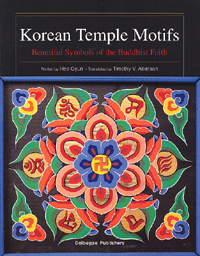 a nice, if expensive, book.
  copy at the Bandi and Luni’s at Jongno 1ga (in Seoul), but apart from that, it doesn’t seem to be in many other places.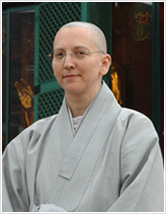

 The next time I met the Venerable Namgyal Rinpoche, I told him about this, and he said that I should consider becoming ordained, which meant going to Asia, as there was no monastic community in Canada. But after so many years of university study, I had almost no money. One day, a small ad in the newspaper caught my eye: “Teach English in Asia, no experience necessary, free air ticket, room and board”. So I got a job as an English instructor in Korea, not because of Korean Buddhism, which I had never heard of, but because of the free ticket to Asia. My idea was to save a little money and travel around Asia exploring the options for Buddhist study and ordination. However, not long after I arrived, I met some Korean nuns and was impressed with their dedication, their independence and the wonderful opportunities for study and practice. I found the Korean Seon tradition very clear and straightforward as well. That was in the spring of 1998, and I’ve been here ever since.