Happy New Year, everyone! I hope you all have a great 2020! We’ve just finished the subtitles for a new video by Daehaeng Kun Sunim, and as these go, this is a pretty important one, because it’s the very basics of how we can free ourselves from karma and habits, and take a new direction in life. (There’s also another video we found, that, to be honest, I don’t remember what it was used for, lol.)
It’s not particularly complicated, but as most simple things, it takes effort over time for it to really pay off. The parallels with weight lifting and school always leave me shaking my head. It’s always effort x time. Once you start doing that, then big lumps of gunk will sometimes all dissolve in a flash, but we still have to keep working at it. And once you’ve been at it for a while, you’ll wonder what took you so long to get moving!
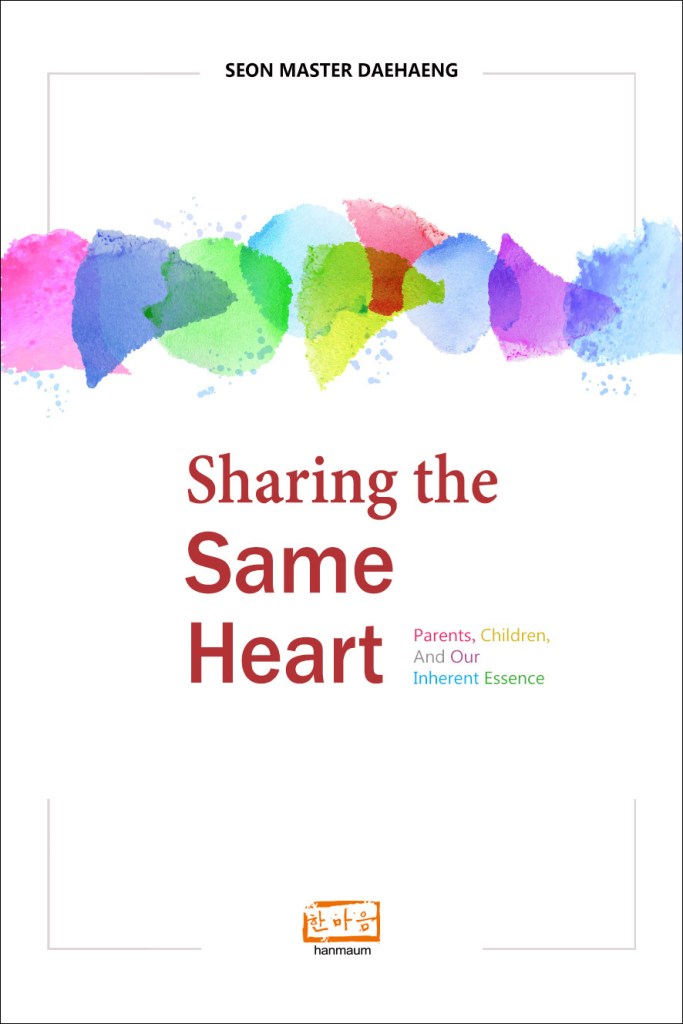
(Clicking on the image will take you to the book’s page on Amazon.com)
I’m trying to write a foreword for our latest English collection of Dharma talks, and happened to take a look at one of our earlier books. (Okay, I couldn’t think of anything good to say, so I looked at an older book for inspiration! Lol.) It turns out that the foreword was actually quite nice just on its own, so I decided to post it here. The book it’s from is advertised as Dharma talks about children, but that’s only a portion of the contents. The overall talks are a great teaching for anyone, regardless of age or whether or not you have children.
(from the Foreword) One day I happened to meet Daehaeng Kun Sunim as she walked out into the main courtyard of the Seon Center. There were two or three young children playing there, chasing each other and yelling with abandon. They probably lived in the neighborhood, and had found a wide-open space for their games. But they were being kind of noisy in the heart of the temple, and one of the sunims with us grumbled about it.
But Kun Sunim spoke up, saying, “I think it’s beautiful.”
Even now, twenty years later, I still remember this.
It showed me an aspect beyond the surface, the noisy kids, beyond the temporary disruption, and nudged me towards a more complete picture. For play is a sign of healthy kids. It’s good for them, and it’s a pretty good world where kids have the time and energy, and safety, to run and shout.
There’s an expression in Korean, that when the headwaters of a stream are clean, the water downstream will be as well. It flows from the top. If the parents are working diligently at entrusting everything to the fundamental, awakened true nature within us, which is also the connection we all share, then as they get a sense of this, their connection with their children opens up and becomes more vibrant. The children in turn respond to this, and as this energy flows back and forth, parents have a better sense of what they need to be doing.
Thus, while Daehaeng Kun Sunim often encourages parents to teach their children about this practice of relying upon our foundation, she spends most of her time talking with the parents, encouraging them to work on their half of things.
To be honest, there’s only so much parents can do. Children come into this world with their own personality, history, and karma. As any parent can testify, beyond a certain point, you can’t really make children do much. Yelling and threatening are always temptations, but even when they yield results, everyone involved is often left feeling a little terrible.
Instead, as we begin to discover the light within us, our own inherent teacher, then we begin to get a better sense of the situation, and how to respond effectively. We begin to see what we can do to help bring forth this light in others. And as our own light begins to shine forth, children too begin to sense this. They learn from how we respond to them, but they also learn from how we treat others and how we respond to the things that come up in our life.
In addition to the need for parents to work on their own spiritual practice, Daehaeng Kun Sunim also answers questions in these Dharma talks about prenatal care and education, and specific issues between parents and children. Because fetuses and young children are changing so rapidly, the positive influences they receive at this time are magnified throughout their life, so to her, this was an excellent opportunity to help deepen a child’s potential for spiritual growth.
When the energy of our own fundamental Buddha nature shines bright, then it can automatically connect with and support the people in our lives. And as children experience the taste of this energy, that becomes a standard, an idea of what’s possible, and so they don’t easily fall into dark paths. And while the topic of this book is children and parents, this is also true for the people around us.
When our hearts and spirits are bright, that light shines on everyone we encounter. And while we’ll likely never know the effects of this, just by being in the world, we can be a source of hope and compassion for others, whether they be our children, parents, or just passing by on the sidewalk.
Here’s a short Dharma talk from volume 82 of Hanmaum Journal.
The Path to Nirvana
When others do something wrong, it’s easy to feel resentment and even hatred towards them. Yet everything you experience happens because you are present in the world; if you weren’t here, how could you have met those people? So just set aside who did what, and reflect upon the fact that you too contributed to that situation. This is the way to discover yourself, and the wonderful path to Nirvana. Here on this path there is no need for worrying about cutting off delusions or flaws. For there is no place for reasons and judgments to stick to. So why do we need to cling to those? If you are caught up in “that is right,” “this is best,” then your practice has already gone astray.
Woohoo! We’ve finally got a new subtitled video Dharma talk up! This one addresses the issue of memorial ceremonies, and ceremonies to help the dead move forward (Cheondo jae). In this video, that got translated as “spirit-guiding ceremony”. Part of me thinks I must have been tired to let it go as that (it sounds a bit clunky), but, on the other hand, that’s a very accurate description. The more I think about this, the more I wonder if the topic doesn’t need a larger introduction. Anyway, as is, there’s a lot of good stuff here, but be sure to ask questions in the comments if you have them.
Here is the next interview in the ongoing plan to post the English articles that have appeared in Hanmaum Journal.
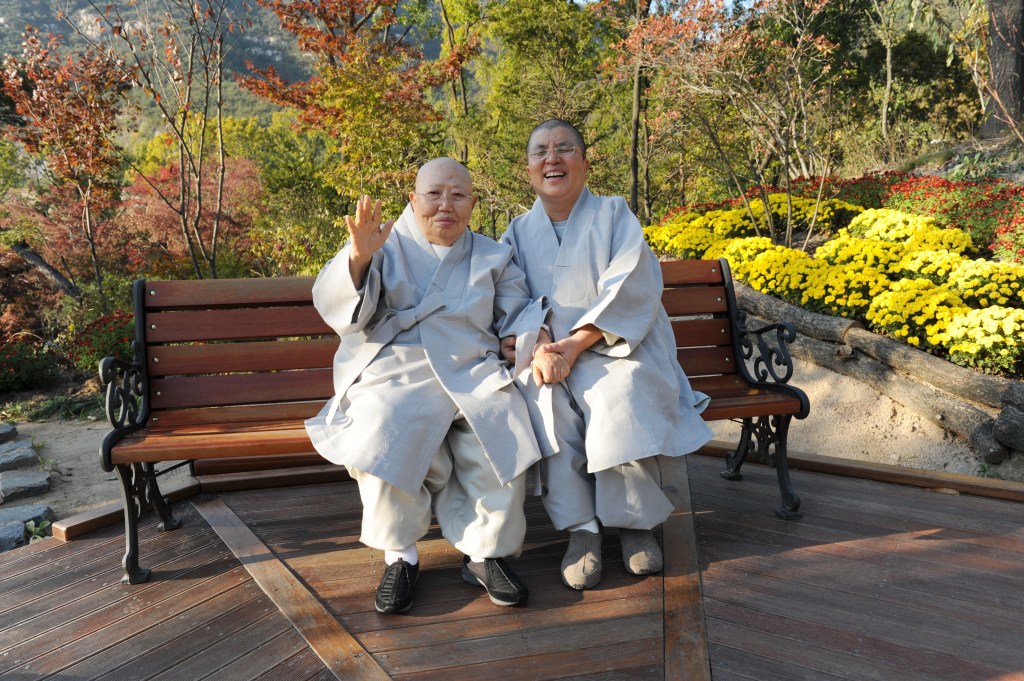
Chong Hyu Sunim
“Becoming a Sunim Was The Best Decision I Ever Made – An Interview with Chong Hyu Sunim“
Chong Hyu Sunim has helped with the memorial pagodas at the Gwangmyeong Seon Center for many years now, and if you visit and see people working among the pagodas, he’ll often be one of them. This interview was first published in Hanmaum Journal, in issue #101, August-September 2018.
Karmic Affinity with Kun Sunim
I was born in a small village near an old Silla Dynasty
temple, which often became the playground for me and the neighborhood kids.
Sometimes, in my dreams, I would be living there and practicing with the
sunims. When I think about it, it may not be an accident that I was born in the
neighboring village. More than once I’ve wondered if I lived there in a past
life.
Eventually, my family moved to Seoul, and then about ten
years afterwards we moved to Suwon. One day as I was riding the subway up to
Seoul for school, as we passed through Gwanak Station, I saw a temple with a
bright, golden pagoda on the roof, and thought to myself that I should go visit
some time. Then one day, my sister-in-law took me to the temple she attended,
and it was that same temple! It was the Anyang Hanmaum Seon Center. I was so
surprised. It was the last day of 1991, December 31.
When we got to the Seon Center, we were able to go meet Kun
Sunim. The people who were waiting to speak with her filled the room. If the
person in front of Kun Sunim had a sad question and was crying, then Kun Sunim
was crying too. If they had a happy question or said something funny, she was
laughing with them. It was really interesting to see and kind of surprising. It
felt like she was completely in tune with the person she was speaking with. Kun
Sunim was kind of short, but the feeling she left me with was so huge!
That was how I started coming to the Seon Center. Not long after, at the third Sunday Dharma talk in April (1992), the audio recording of Kun Sunim’s translation of The Thousand Hands Sutra (chanted by Bo Won Sunim) was unveiled. They played it at about 9am for those people who’d come to get seats for the Dharma talk, and I almost immediately started crying. I cried throughout the Dharma talk, and had no idea why! I was embarrassed to be crying like that, but I couldn’t stop. It was years before I fully understood why I had cried so much.
Daehaeng Kun Sunim’s Korean translation of the Thousand Hands Sutra, chanted by Bo Won Sunim. There’s an English translation of this text in the older posts, under the Sutra’s title.
Around the time I was 24 or 25, I began to occasionally tell
my mother that in my next life I was going to become a sunim. It was what I
wanted to do in this life, I guess, but if I said I was going to do it in my
next life, then my mother couldn’t really object!
However, around the time I was 29, I’d seen Kun Sunim that
day, and felt strongly that I wanted to become a sunim. I told my mother, and
after a moment’s thought, she just said, “okay”! I still think that becoming a
monk is the best decision I’ve ever made.
The Karmic Affinity We Make
About ten years ago, an
anti-aircraft missile base was established nearby (the Gwangmyeong Seon
Center). Some of the soldiers would attend the Dharma talks and services here,
and among them would be one- or two-star generals. One of the things I learned
from talking with soldiers is that their career paths can be unpredictable. A
person may be advancing upwards getting promotion after promotion, and then
suddenly just stop, and never get a promotion again.
Well, near that base there’d been an
ugly battle during the Korean war, with a lot of people killed in the fighting.
I suggested to the two-star general that it would be a good idea if they held a
cheondo ceremony to help those who’d died move forward on their own path. He
immediately agreed, and arranged for the ceremony and for our sunims to hold
it.
It took place in June, and we’d had
continuous rain for weeks. However, when we came to a part in the ceremony that
required everyone to go outside, the sun came out and the rain disappeared.
That part of the ceremony lasted for about ten minutes, and after it was
finished and we’d gone back inside, the rain started again! It definitely made
you stop and think!
About six months later, that general
received his third star, and was made a general of the Army. A bit later he
received his fourth star, and was made deputy commander of UN forces in Korea.
Later I came to find out that he’d also been central to the efforts to find and
recover the remains of soldiers missing in the Korean War. I suspect that his
promotions and his rapid rise didn’t just happen!
I did ceremonies and gave Dharma
talks at army bases for around eight years. Usually there’d be between 70 and
100 soldiers attending the talk, and a lot of them found Kun Sunim’s teachings
to be helpful in dealing with the stuff of their daily life. As you can
imagine, there’s always some soldiers who look like they’re sleeping, but there
are also others who are paying close attention, with bright eyes taking in
everything.
Meeting together like that is also
forming the seeds of karmic affinity. One of the soldiers was having a lot of
trouble with army life, and it looked like he was going to get kicked out for
mental instability. After talking with him, I told him to often entrust the
thought that “Juingong! I’ll always remember that you are my foundation!” He
did this, and was able to complete his military service and receive an
honorable discharge.
We also have several “Temple Stay”
style sessions for students at our center down here, and at one of those, I met
a first year college student who was circling the Dharma hall with tears in his
eyes. I had a chance to talk with him, and he said he was circling the Dharma
hall out of gratitude for having learned about this practice and being able to
apply it to his life. Karmic affinity, these kinds of karmic connections, are
so precious! That said, ultimately, we have to go beyond even karmic affinity.
Taking Care of the Pagodas
I’ve been helping manage the memorial pagodas at the
Gwangmyeong Seon Center for the last seven or eight years now. One of the
things about this job, is that you need to do it with your whole heart. You
have to be completely sincere with anything you do. Kun Sunim also said this to
us. You have to think of everyone else’s ancestors as if they were your own.
It’s so spread out that we can’t use hand tools to cut the
grass, and the mower weighs about 300 kilos, so it’s not easy to move around
the spaces between the pagodas or the inclines. You also have to be careful
about any rocks or metal that might be deep in the grass.
Sometimes people think that everything is finished and taken
care off once they’ve set up a pagoda and have a cheondo ceremony, but that’s
not always the case. One fellow was a professor at a big university, and had
arranged for a pagoda for his ancestors. (Translator:
There are no remains stored in these, just paper tablets with the names of the
deceased. After cremation, the remains are spread on a large river in the area,
where they can flow down to the sea.)
But even afterwards he continued to suffer from debilitating headaches,
where he felt as if his skull was being slowly ripped apart. Well, as part of
setting up the pagoda, he was having his family graves exhumed and the bones
cremated. When they dug up his father’s grave, they found a tree root had grown
through it, and into his father’s skull. After cremating the bones, his
headaches completely vanished.
(Translator: Ideally, the remains of
family members are cremated because cremation makes it much easier for people
to move on. Throughout our lives we tend to think of this body as “me,” and
because this habit is so ingrained, for many people it continues after death as
well. But when the body too is gone, they tend to have an easier time letting
go of this clinging.)
I also had a family pagoda set up about fifteen years ago.
After the ceremony for this, I had a dream in which my ancestors were flowing
out of the mountains, and happily exclaiming, “We’re going to Hanyang!” (Hanyang was the old name for Seoul, and
for someone from deep in the countryside, it represented a bit of a mythical
place where the king lived, where everyone was rich, and life was good.)
They really seemed happy about it!
So, as part of this, about four years ago, I set about
excavating my great-great grandmother’s grave. I had to climb for about five
hours up a mountain before I finally got to the site. It was a really nice
location for a grave, and when I began to dig, the soil was a golden color.
When I finally got down to the coffin, I found that it hadn’t rotted a bit,
even though she was buried 150 years ago. When I opened it, her bones were a
beautiful golden color, and laid out perfectly in the shape of a person (Translator: this often isn’t the case. Many
times the bones have shifted around.)
However, the right side of the coffin had collapsed a bit,
and was pressing down on her right shoulder. I had to laugh when I saw that,
because among my family, there have been a lot of people who’ve had problems
with their right shoulders and arms.
As I’ve worked at helping people locate and exhume old
graves, one of the things I’ve seen time and again, is that families become
more harmonious afterwards.
Although Kun Sunim encouraged people
setting up memorial pagodas to exhume graves and shift the focus to the pagoda,
a lot of families can’t do this, because it takes agreement from everyone in
the extended family. Especially when people are still centered around the idea
that the body is “me,” they have a hard time letting go of attachments to
graves. That’s one reason why this practice of relying upon our fundamental
mind is so precious: We learn to live in tune with this flowing, ever changing
world. This is something I’m always working at.
Don’t
Cut, Untangle!
One of the things
I’ve noticed as I’ve had a chance to meet so many people at the Seon Center is
that everyone agrees on the importance of spiritual practice, but I have to say
that actually using our minds wisely isn’t so easy. It takes a lot of work to
make our thoughts gentle and wise, versus just using our minds roughly or
severely, as often seems our natural inclination.
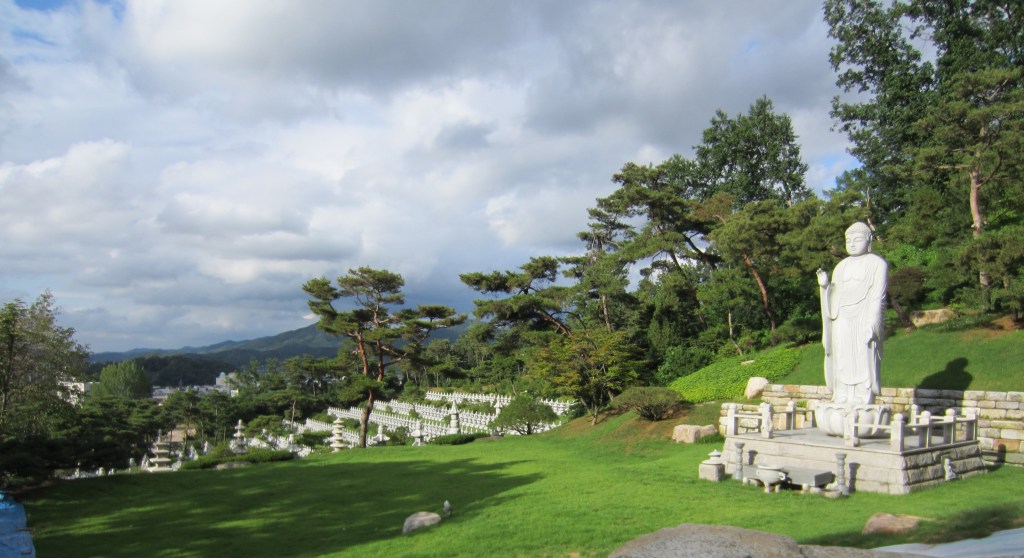
Memorial pagodas and Buddha at the Gwang-myeong Seon Center
Kun Sunim once
said that if we create a world of rough and violent thoughts, we’ll end up
becoming an angry spirit. Essentially, if we use our mind like a demon, we’ll
become a demon. People need to be aware of what results from the thoughts they
give rise to, and so use their minds wisely. With a single thought, we create
karmic affinity and send forth this unseen energy of mind that surrounds us.
The people with
the closest, strongest karmic affinity with us are usually our family. They’re family,
but it’s because of our tangled up karmic affinity. What’s tangled up should be
untangled. Just in your one family, just among the few of you, how many
complicated and awkward things have happened? How many new karmic tangles have
been made? All of that should be untangled.
My mother used to say something similar. She always told us to live as if we were untangling a ball of yarn. She’d emphasize “untangle it, don’t chop it up.” This is something everyone can work at. We need to work at it until handling things this way becomes automatic.
You could say
that, in reality, “spiritual practice” is “deep sincerity.” The sunims here
often told me that, and said to do everything with the utmost sincerity until
it becomes such a deep habit that I could never forget it. In doing everything
with the utmost sincerity, we’ll become aware of who we really are. Then when I
laugh, others join in and laugh with me.
One of the things
Daehaeng Kun Sunim emphasized over and over was to always take whatever we
encounter and experience, and entrust that as something we’ve caused. She told
us to see that as something that’s our fault, or that we are at least
responsible for. Her basis for this is the fact that by existing in this world,
we are experiencing the things here. If we hadn’t created all of the karmic
affinity that led to our birth, we also wouldn’t have encountered any of the
rest. So every experience we have is something that we’ve had a role in
creating.
I always emphasize
this when speaking with young people. “If you entrust everything as something
you’ve helped create, you’ll be successful in life.” You really will. Members
of our youth group have brought this up later, saying that after they got
married it helped them a lot. “Things were really rough, but we were able to
overcome them.” “I took it as my homework, and was able to work my way through
those difficulties.”
Live
while entrusting every single thing!
After
I decided to become a sunim, I had a strange dream. I found myself trying to
walk forward, but all around me was a sea of garbage as high as my chest. With
all my strength, I was barely able to take one step at a time.
About
a year later, I had a similar dream, but this time the garbage was only as high
as my knees. It was still hard to move forward, but certainly easier than
before. I had one more of these dreams after I finally became a sunim. This
time, there was only a thick layer of dust on the road, and I had no trouble
moving forward. That was the last of those dreams. Dreams are not just dreams,
I suspect!
Though,
not too long ago, I had another dream that really made me realize what a
special place the temple is. I was looking at the temple, and there was an
unseen net of energy that completely filled the temple all the way to the main
gate, the Ilju-mun. It was the net of
the Dharma, and I realized that we have to build this net in everything in our
lives. We have to bring this net of energy to everything we do, otherwise we’ll
be swept away by hardships and suffering. I had such a fresh appreciation for
being able to live and practice within the temple, and felt so grateful and
filled with bliss. It really woke me up to just how much we have to work at
entrusting every single thing in our lives.
In
this practice of returning everything to our foundation, there must be a quiet
persistence, where we just keep at it day in and day out. One time when I was
meeting Kun Sunim, she said to me that it’s important we keep working
tenaciously at applying what we know and then experiencing it in action. I’ve
never really left the grounds of the Seon Center, nor do I feel the need. I
just keep going inwardly, experiencing, and as I do so, deep, deep faith keeps
arising.
About
four years after I’d become a sunim, I was sitting in meditation after the
morning ceremony, when I remembered something Kun Sunim had said, “You
sometimes need to forcefully raise the thought, ‘Juingong! Prove that you
exist!’” So I thought to myself, “Juingong, prove yourself!” And in that
instant, my right hand shot up into the air. On the one hand, I was really
surprised! But on the other, my faith became that much deeper.
Ultimately,
it’s experiencing. Experiencing!
Last
year, when the summer retreat season began, I started going up to the Mountain
Spirit Shrine after the morning ceremony and chanting Kun Sunim’s translation
of the Diamond Sutra. I ended up
doing this for the next 150 days. (Translator:
The shrine is a bit quiet and isolated, so it’s great for meditation or
chanting by yourself.) While Kun Sunim’s version of the Diamond Sutra is my favorite, I’ve
always felt something special for the Diamond
Sutra. The more I chanted it, the more I loved it. As the words moved
across my lips, the meaning of those words that I’d chanted so many times would
suddenly become clear to me. This happened over and over, “Ah! So that’s what
it means!”
What
the Buddha taught us, and its underlying truth is so incredible. Even a single
word contains all the truth of the world. This practice! It’s not only sunims
who can practice relying upon and discovering their foundation. While there are
Dharma talks that Kun Sunim gave to just sunims, in terms of content, they’re
no different from her talks to lay people. She talks about the same exact
things. Experiencing! Applying and experiencing!
You
have to eat your own meals, don’t you? This is the foundation on which you can
stand up straight. You have to actually have faith in your own Juingong, your
foundation, and know that “This came from you, so you’re the one that can take
care of this. Here you go!” When people do this, they really become more
confident, and stand up straighter. We have to really put our hearts into
practicing, and experience this for ourselves.
If
you’re sincere about letting go and entrusting, then to the extent you keep
working at it, it’s as if there is a spring flowing from within us, guiding us
forward, and never drying up. You asked about the necessary attitude for
practicing, didn’t you? Well, it’s knowing that your foundation — your one mind
— is your source, and that inherently all beings share the same life, the same
mind, the same body, work together as one, and freely give and receive whatever
is needed. There’s plenty of times when, even though we’re practicing, we find
ourselves completely blocked or overwhelmed, but if we just silently go
forward, pushing forward one step at a time while entrusting everything, then
all Buddhas will be there together with us.
Daehaeng Kun Sunim always told us to teach people to have faith and to go forward letting go and observing. That way, they can experience this fundamental Buddha nature in practice. These days when life is so busy, we should at least find a few moments in the mornings and evenings to focus on entrusting whatever’s coming up, and then observing. Instead of making more and more karmic affinity with all sorts of things, we need to be spending some time unraveling what we already have. Go forward unraveling and unraveling!
“Become a great being, who’s the most ordinary person, yet also the most extraordinary.” (Daehaeng Kun Sunim with Hye Su Sunim)
So at last, I’ve done the Dharma talk for the fifth (and last) week of the Daejangbu Project! This was a bit of review, but also covered the second version of the song “A Great Being”.
There’s actually two rather different songs with this same name, one is called “A Great Being(I)” and the other is called “A Great Being(II).” So while it might seem like there’s a certain lack of creativity in the title, (lol), they are kind of bookends, with the first song showing what it takes to evolve and grow to truly become a great being, while the second describes one’s functioning at this level.
audio file of the English Dharma talk
A Great Being (version 2)
This mountain, that mountain, great mountain, green mountain. Stepping down into the world, reaching up and grabbing heaven and earth, making them my hat, hanging the moon and sun from my staff, taking a drink of clear water. This life of one who has truly awakened, what more could anyone want?
This mountain, that mountain, great mountain, green mountain. Gathering all the loose strands together, forming them into a top knot, using my staff as a hair pin to hold them all steady.
Oh, what more could anyone want, than this life of a free person?
Looking up at the sky as I strike the earth with my staff, a pillar of energy rises up and penetrates the heavens, and the heavens begin to rotate around this pillar.
Pierced and connected by this lion’s pillar of fire is every being in the universe. Crossing back and forth between the realms of the living and the dead, flowing with the truth, nothing left undone, this life of a truly awakened one.
How’s that for a title! Lol. The whole idea of “Great being” (Daejangbu) is not a sense of superiority, but rather that we learn to live, to grow, beyond the animal habits that have gotten us this far. Instead of just repeating the patterns that have (sort of) worked for us up to this point, we are working at getting in touch with this energy of the whole, and trying to live in tune with this great flowing energy.
Week 4 of the Daejangbu Project – Evolution and learning to connect with the whole
“As your practice of letting go and relying upon your foundation becomes deeper, you will go through innumerable strange and weird experiences. It’s not remotely possible for me to describe them all. How could a few words grasp this flowing that is life? If you’re walking along and you find something blocking your way, you move it or go around. You just do this and continue on.
“I’ve told you that when you unconditionally entrust something to your foundation, it responds to that because everything shares the same fundamental connection. It’s this response that’s sometimes called “Bodhisattva.” But this “Bodhisattva” functions according to the needs of the whole, and ordinary people are unable to see the overall picture.
“So when you’re dealing with all the ordinary, little things of daily life, it’s best to let go of your opinions about how they should go, and just unconditionally entrust that situation. Do this, and let go of any stray thoughts of “me” or “I did.”
“Take it all, whether it’s pleasant or unpleasant, going well or not, and entrust it there. Just go forward like this, doing your best to take care of things as they arise. If it seems like you’re surrounded by filthy water, or even clean water, don’t fall into blame or resentment. Just entrust it all to your foundation. Then it can change into water that’s useful to you.”
(From Finding a Way Forward, pages 33-35. This Dharma talk is also included in the collection, Sharing the Same Heart, which combines the English text of this Dharma talk as well as two others. This edition is also easier to find outside of Korea.)
Hi everyone, here’s the Dharma talk from the third week of this series. As the title says, “fearlessness” is the thread that runs through this week’s talk. The audio file and the basic text are below. Enjoy!
The Daejangbu Project, Week 3, Dharma talk
“However, if someone else doesn’t know how this one mind works, it’s not right for you to tell them what their past life was like or what their future will bring. Telling people things like that is contrary to the path, because through mind, through just one thought, everything can be changed. Try to experience for yourself how a single thought entrusted to your foundation can transform the things in your life.
You can apply this principle to every part of your daily life, according to your level of spiritual development. So, no matter whether the things you face are big or small, don’t be afraid of any of them. Don’t be overwhelmed; stand up to them courageously and go forward. Even if the sky were to collapse and you could see no way out, you should still be able to smile at it all.”
Over the years we’ve translated a number of interviews for the bi-monthly magazine, Hanmaum Journal. They’re usually interviews with sunims, discussing their lives, challenges, and spiritual practice. There are a number of these, so I’ll try to make them a regular feature.
Practicing Diligently — Chong Muk Sunim’s Story
For over twenty years, Chong Muk Sunim has been living and practicing at the Hanmaum Seon Center in Tucuman Argentina. Tucuman is located in north-west Argentina, in the shadow of the Andes Mountains. It’s located in the country’s smallest province, but it’s the heart of Argentina’s traditional culture. Although the area has a population of 1,300,000 people, only about fifty are ethnic Koreans. Thus the majority of members at the Seon Center are native Argentinians.
The
Book He Couldn’t Let Go Of
From
the time I was young, there was something that concerned me. On a
hill outside the small village I grew up in was a cemetery. When I
started middle school, I had to walk past it every day, and when I
did, I often had a strange, uncomfortable feeling. Looking around
there, I couldn’t help thinking of all people put underneath the
dirt. Once that happened, everything about their life just vanished,
and all this left me feeling that our lives are so insubstantial, and
almost pointless. I couldn’t help wondering what the point of
getting married and having kids would be, if they too would just end
up going through the same thing and feeling the same way about life.
Thoughts like this would suddenly hit me out of nowhere.
Because
I had a tendency to think like this, I was always interested in the
spiritual. I would find a book or group I was interested in, and
follow that for a while. That’s how I became interested in
Buddhism: I read a book by Seong Chol Sunim, and wanted to know more.
It was during that phase that I saw an announcement for a Dharma talk
by Daehaeng Kun Sunim. That was in 1988 or so, at the newly
established Gwangju Hanmaum Seon Center. So I wandered over there,
and met the sunims in charge, and had quite a pleasant time talking
with them. Being around them and the lay members felt incredibly
natural and peaceful.
The
Center had a collection of Kun Sunim’s Dharma talks, and as soon as
I saw those, I was completely captivated by them. I’d never felt
like that before in my life. Once I started reading a few pages, I
just couldn’t put the book away. I was too filled with joy, but it
took me about six months to actually finish the book. Others had read
it a bunch of times, but to me, the contents were so deep and
profound that I kept rereading the same sentence over and over.
It
happened that a friend of mine had heart problems. One day her
husband called me and said that something had happened. When I got
there and saw her, she looked almost dead. There was nothing anyone
else could do for her, so I taught her about her foundation,
Juingong, and encouraged her to firmly rely upon that.
She
felt like she was about to die, and was even scared to fall asleep.
For a week she barely slept, and just kept reminding herself, “Hey,
Juingong! You’re the one who has to take care of this!” after
about a week, a thought arose within her, that “this won’t get
any worse” and she begin to relax. It was a tough situation for
her, but she had a strong feeling of “just take even this and eat
it up.” So she did her best to completely entrust the situation and
move forward.
I’d
had a hard time seeing her in that state, but I found my courage and
went and saw her. She still looked like she hadn’t improved much. I
went back to see her three more times, and each time I talked with
her about taking whatever arose and just eating it up. It took that
much work before she seemed to improve. That experience really
deepened my faith in Juingong, and afterwards I was able to overcome
difficulties fairly easily.
The
Path Everyone Has to Travel
A
lot of the members of the Gwangju Center’s youth group from that
time went on to become sunims, and I too had thoughts of becoming a
sunim. Anyway, everyone has to work on their own evolution, and it
just seemed to me that, having met a true teacher, this was the best
way forward for me. I just felt so strongly that this is where
everyone is going to have to eventually end up. So I made up my mind
to become a sunim. I was so excited to even think about the
possibility of studying with such a respected teacher. So in December
of 1993, I spoke to the head of the GwangJu Center about it, and went
to our temple for monks, the Gwangmyeong Seon Center.
I’d been there for about two weeks, when the call came to go up to Anyang and see Daehaeng Kun Sunim. Up until then, I hadn’t been formally accepted as a postulant, a haeng-ja, and so my hair hadn’t been cut. We went to see Kun Sunim, and she cut my hair. She cut three pieces of hair (the rest was cut off later), and as she did, she said, “Like hair, ignorance always tries to grow back, so you have to be diligent about cutting it off.” Kneeling in front of her, I was overwhelmed with emotion. All I could think was that I would always return to and rely upon my Juingong, my foundation. This was my eternal teacher, and for as many lifetimes as it took, I would work on brightening this inherent light and awakening.
With
that, I formally began the life of a haeng-ja. We would wake up long
before the morning ceremony (which starts at 4am), clean and set up
the altar, do the morning “wake up round” with the wooden moktak,
attend morning ceremony, and then afterwards begin preparing
breakfast. And that was the beginning of the day. I would try to
focus on what Kun Sunim had said and apply it, “everything in your
life is being done by Juingong.” I mostly kept this in mind, but
there were naturally conflicts and differences of opinion, so there
were times that I had to work hard at keeping this in mind.
Living
as a haeng-ja is sometimes called the practice is dying, because
completely letting go of what’s confronting us is similar. Still,
I’d get caught up in something, and only then later realize, “I
got deceived again.” I’d feel frustrated with myself, but I also
recognized that this was part of the process of growing. So I’d try
to take each thing that arose and try to entrust it to my foundation
and let it melt down there. There are still times I forget, but I
keep working at it.When I do, I try to remember to view it
non-dually, and return it to my foundation.
In
Tucuman
I was ordained in August of 1994, and then in April of 1995 I was sent to our center in Tucuman, Argentina. The Tucuman center was founded in 1991, by one layperson who sponsored it and asked Daehaeng Kun Sunim to establish a branch there. When asked where they should build it, Kun Sunim replied, “If you look behind your house, you’ll see a small hill. Go over that, and there’ll be a small river. Build the center on the far side of that river, below the mountain.” The layperson was quite surprised and uncertain what to do, because in the twenty years she’d lived there, she had never heard of a river in the area. But Kun Sunim reassured her, “It shows up when the rains comes. Build on the other side of that.”
The lay member looked into it, and it turned out that there was indeed a river there, which didn’t show up on the maps. It was called the River of Death, and was a dry river bed most of the time. It was the site of one of the worst massacres of the Spanish invasion. There they killed a huge number of native Americans who had lived across the river, below that mountain.
I
thought a lot about Kun Sunim during my first few years there. I
wished I could have practiced next to Kun Sunim for at least ten
years or so before I had to go overseas. When I first arrived, there
were only three Korean families that came to the Center, and about
twenty local people. I couldn’t speak any Spanish, and there was no
end to the frustrations that caused. But I still tried to take and
use that as part of my practice. I really had no choice but to keep
taking that and try to entrust it to my foundation.
Because
the language problem needed to be solved, I enrolled in an adult
elementary school, and studied there for about two years. It turns
out that there are a lot of adults in the area who didn’t have much
chance for an education, so this school taught adults up through the
sixth grade level. I was just there to learn Spanish, so with some
skipping around, I was able to study up through the fifth grade
level.
There are a lot of native Americans living in the Tucuman area, and they tend to be quite gentle, but perhaps because of the influence of shamanism, they are also quite focused on looking for something outside themselves. Perhaps it’s the influence of the Catholic Church? I don’t know. But one result is that like to touch the Buddha statue when they come in or leave. We ask them not to, but so many people have rubbed it that they’ve worn the gold plating off in some areas!
Although
this is a traditionally Catholic area, because people haven’t been
able to find what they need, they’re open to other spiritual
traditions. Because they can truly find something here, I think the
future of Buddhism in Argentina is bright.
In 1997 or 1998 I called Kun Sunim in Korea, and while talking with her, I asked her about how I could explain spiritual practice to the people her. She told me to use the example of a tree, where every single leaf and branch depended upon the tree’s root. Like this, if people depended upon their own internal root, and entrusted everything to it, having faith in it, then through this root of theirs, they would be connected with everything and able to communicate with it all. There are a lot of people who are searching for inner peace, and when they come to the Center, this is what I teach them.
Spreading
the Dharma
The Tucuman Hanmaum Seon Center
There are no few difficulties in spreading Daehaeng Kun Sunim’s teachings in Argentina. First off, there aren’t many Koreans in Argentina to reach out to, which leaves mainly native Spanish speakers. The Buenos Aires Hanmaum Seon Center has been working hard to translate texts into Spanish, along with making subtitles for Kun Sunim’s video Dharma talks, but it’s slow work and we always need more. Videos are particularly nice because then people can see Kun Sunim and hear the energy in her voice. It would also be wonderful if we had more published collections of Kun Sunim’s Dharma talks, so that anyone visiting a bookstore could find them.
It’s
hard to underestimate the importance of having more sunims and people
who are interested in helping foreigners. Although it’s hard to
suddenly increase the number of sunims who have some ability with
Spanish, in the long term, that’s something that can be increased
with education. Foreign language education, along with a familiarity
of the local culture are going to be essential to increasing interest
among native speakers.
Dying
There
are more things than I’d like to admit where I’ve had a hard time
letting go of, where “dying” to them happened slower than I would
have liked. I try to remember that all things are being done by our
foundation, Juingong, but sometimes when something happens, it’s
“I” that arises and responds. Then I find myself trying to think
my way out of the problem instead of letting go. I understand that
this “I” doesn’t exist, at least in theory, but in practice,
it’s still there when I look at how I respond.
To
work on this, sometimes I compare what I’m facing to being on the
edge of a cliff. “If I’m already dead, then jumping off shouldn’t
be any problem!” And then try to let go as if I was jumping off. At
first this was difficult. Who likes to let go, to “die” to what
we cling to? But once I experienced this kind of letting go, it
becomes easier. If I can really let go like this, then things that
were so heavy and worrisome suddenly become as light as a feather.
This
was all just my internal dialogue, and done through this fundamental
mind, but it was as desperate as if I was on a real cliff. It can be
that hard to let go of things. But what Kun Sunim says about “dying”
is really true, and something that people have to work on and find
their way through. It would be wonderful if it all happened just like
snapping your fingers, but there are lots of times when I regret
having lost my way.
Ultimately,
there’s nothing to handle or let go of, but in terms of practice,
you have to be the equivalent of a college graduate to reach the
point where you can say “There’s nothing to let go of.” With
effort and practice, we can realize that inherently there’s nothing
to have faith in and nothing to let go of, “Ah, it’s just all
being done by Juingong. Everything is empty and flowing.” But we
have to get to the point where we can let go by reflex, where we can
entrust without needing to even think about it, and do this with
everything. Then our perspective will really change!
Like students passing through elementary school, going to middle school, and then high school, we have to take each thing and do the best we can with it, in that time and place. Then we can grow. If someone just tosses around words like “Everything is empty,” without the deep practice that underlies them, then it’s like an elementary school student imitating a college student. They won’t be able to act on the implications of that, nor will they have made any progress on dissolving ancient habits of thought and behavior.
Even
now, after all these years, I still think that there is nothing more
important than spiritual cultivation and growth. From ancient times,
people who had awakened to this inherent nature have been more
numerous than hairs on a cow, yet those people who continued on and
truly applied this and awoke to its full potential seem to have been
fewer than the horns on that same cow.
Once
you awaken, that isn’t the end. Even though you’ve awakened, if
you don’t keep working at dissolving these ancient habits, your
path will become more and more hazy. Awakening is just the beginning.
We have to keep letting go without cease or end. We have to keep
letting go again and again. Even if we’ve already let go of
something, we need to keep letting go if it arises again. This is
what practice is to me.
Repaying
my teachers kindness
It’s been over twenty years since I’ve come to Argentina. Even though Daehaeng Kun Sunim’s body was far away, being able to study under such a teacher has been my happiness. Really, where could you find anyone like her? Even though she left her body several years ago, I still feel like she’s always with me and guiding me forward, as one.
Years
ago, when I heard Kun Sunim was going to the US, I took a plane and
flew to Chicago just to see her again. Seeing her at the center
there, I started crying. It suddenly hit me so hard that Kun Sunim
was always with me, that we were always as one.
Whenever
I saw her, she’d gently tell me, “Practice diligently.” And I’m
always trying to fulfill that. She really showed us the way, and
utterly guided us, even though I’m not able to follow through on
everything. I feel bad about this sometimes, but I also think that if
I’m doing the very best I can with whatever is arising, then maybe
that will be good enough to pay her back for her love and guidance.
I’m going to keep trusting this foundation and turning over
everything to it. That’s all there is! Thank you.
This week’s talk looked at the idea of fearlessness and lucid dreaming. Lucid dreaming might not be the first thing you think of, but it’s got some nice overlap, because of the fearlessness that arises when we understand that it’s a dream and can’t truly hurt us.
It also teaches people to stop and actually be aware of exactly what’s going on at any random moment. And so the exercises are a nice inspiration for stopping and just checking in with ourselves.
the audio recording of the Dharma talk for week 2 of the Daejangbu Project – Lucid Living
Lucid Dreaming (자각몽), Lucid Living At random times during the day, just stop and try to ask yourself the first two questions, along with a few of the others. Keep doing this, and see if you can also do it in your dreams.
Am I awake right now? Am I dreaming now?
Am I entrusting this situation to true nature? My true nature, this fundamental Buddha-essence can take care of me.
What can I learn from this? This is all flowing, so it can all be changed.
(further questions for awareness and letting go)
What am I worried about right now? What have I been thinking about? What am I feeling? Where am I hurting?
What am I seeing?
What am I hearing?
(Remember, always interpret dreams positively! Even if it seems difficult, find a positive view, because everything is flowing and reacting to the thoughts we give rise to. )







 Wake Up and Laugh!