
My one mind is the Bodhisattva of Compassion,
so I return to my one mind and rely upon it.
Believe and believe in this one mind,
give rise to firm intention,
and everything will be accomplished.

Learning to see the world as it truly is
My one mind is the Bodhisattva of Compassion,
so I return to my one mind and rely upon it.
Believe and believe in this one mind,
give rise to firm intention,
and everything will be accomplished.
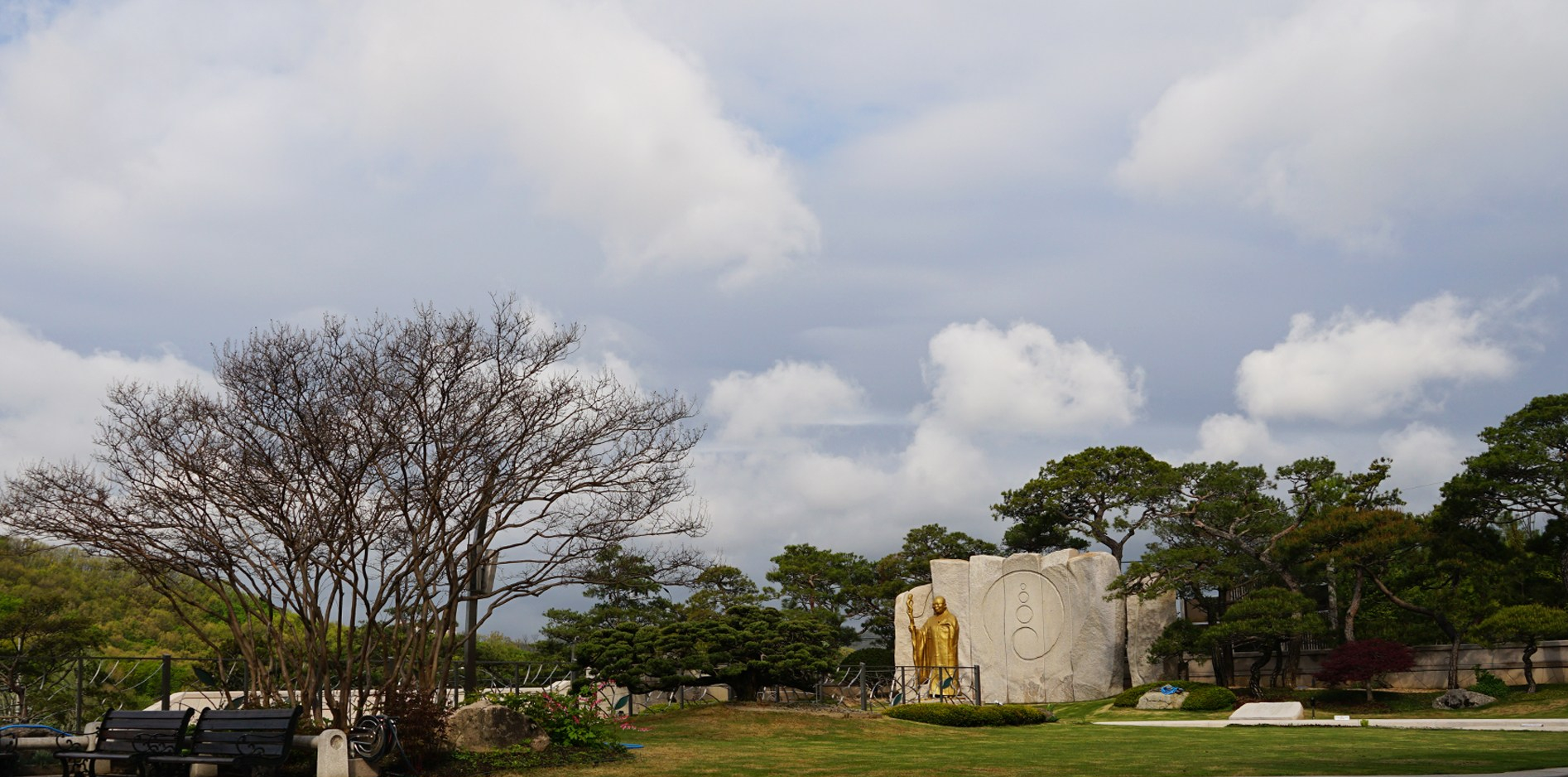
Again, just a reminder, try to recite these 3 times once or twice a day. I really like reciting them right after I wake up and right before I go to bed. Either time can really set a nice tone for the rest of the day or night.
Knowing that the wisdom
and enlightenment of all Buddhas
is my one mind,
I fully trust my one mind
and follow its compassionate guidance.
Believing in my one mind
and following its profound truth,
I will become free from all attachments
and able to use the infinite ability within me.
Inherently there is no path to find,
nor obstacles to overcome.
One mind is the foundation,
so just as it is,
it is truth and fully present throughout my life.

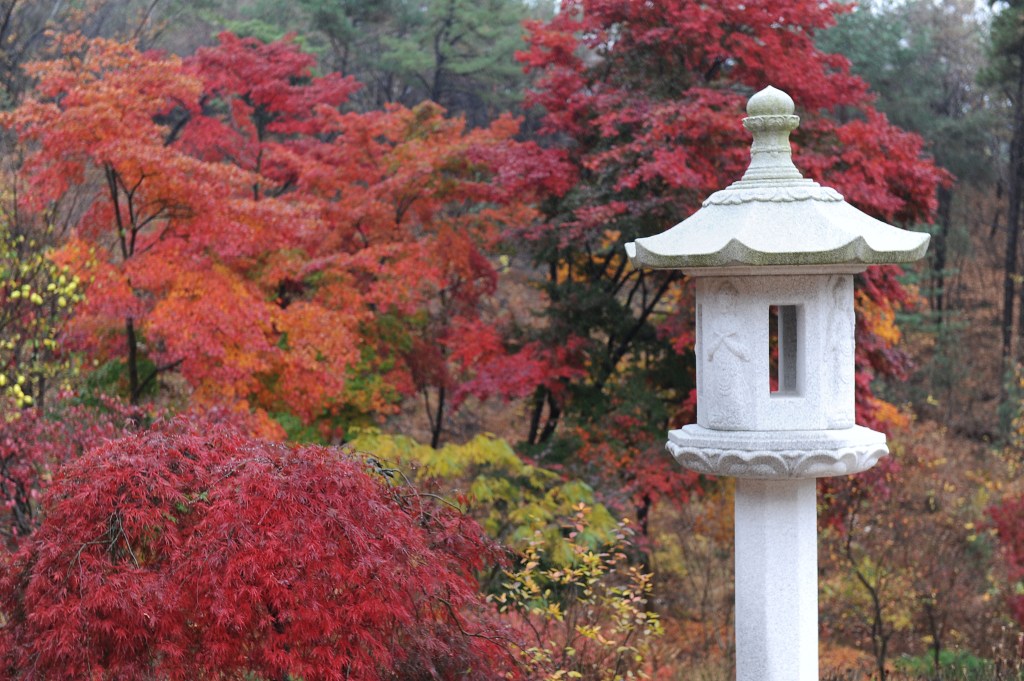
I’m keeping these short, in part because daily posts become a burden if they’re too long, but also because, just these single verses have so much good energy, healing, and guidance for us. Just repeating this verse and letting it sink down within me, somehow I feel lighter.
The foundation of the universe is my one mind.
It manifests every instant
illuminating the path for all beings,
both those with life and without.
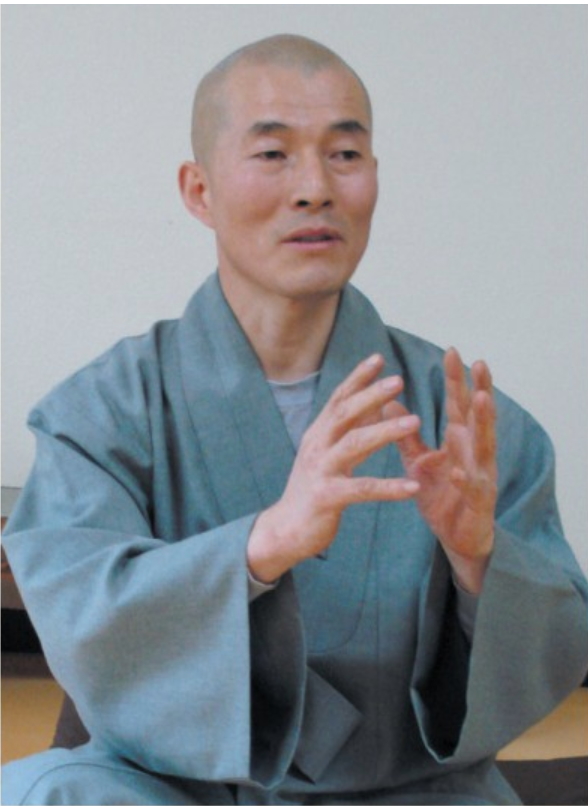
An interview with Chong Hyup Sunim of the Tucuman and San Paulo branches of Hanmaum Seon Center. This interview was first published in the January/February 2007 issue of Hanmaum Journal.
Hanmaum Journal: You lived overseas for quite a long time. Although you took it all as your practice, from the perspective of ordinary people, living in such distant, foreign countries is quite difficult.
Chong Hyup Sunim: At first I didn’t have any feeling that it was particularly difficult, but as time went by and I was living so far away from my teacher, I did occasionally feel that way. But even those kinds of feelings are something to be used for our spiritual practice. We need to practice taking those and completely entrusting them to our foundation, and then go forward while being aware. That’s an important aspect of spiritual practice that we have to learn. If we can transcend the things we think of as difficult, then we can learn to make a peaceful life for ourselves wherever we are. In a way, it’s like a test or a development stage to help us learn to go forward brightly into whatever we face. It’s just a matter teaching ourselves to be unhindered by these things through the process of taking what confronts us and entrusting it so that it can melt down.
If I’d let myself dwell on the thought that the situation was difficult, how could I have stayed there? If I’d let myself get caught up in ideas of “difficult,” those would have imprisoned me. Whenever I’d return to Korea, Kun Sunim would always say, “Think of that as a hermitage in the mountains.” Looking back now, I don’t think I really appreciated what she was saying. Only now does it seem like I’m beginning to have a sense of what that really means.
Hanmaum Journal: A lot of people would have tried to avoid those difficult circumstances, but it sounds like your practice actually flourished there?
Chong Hyup Sunim: Absolutely. Although that situation didn’t look promising to others, it forced me to practice harder, to learn to leap over those things, and, it broke up my fixed thoughts, and reformed my views of things, so it was definitely a great situation. Who would be unhappy about those benefits?
You all know what our goal is, right? It’s to be free. To be free from suffering, and to never be tangled up by any situation that we encounter. And in this way, to truly evolve. To truly evolve into what we are all capable of. Since we know our goal, and, thanks to Kun Sunim, we know what we have to do to get there, then the various circumstances we encounter aren’t anything to make a fuss over. Regardless of what arises in your life, there’s no need for disliking it, thinking of it as a bother, or blaming others for what’s going on. Everything is part of our practice.
Even when something completely unreasonable or unfair stands up and whacks us across the face, that’s something I created in the past when I didn’t know any better. I likely created that without even realizing what I was doing. Even if it wasn’t something I’ve done recently, if you think about all we’ve gone through from life as microbe forward, how likely is it that we didn’t do some behavior like that? Even when someone thrusts a difficult situation upon you, how likely is it that you haven’t created even worse situations for others?
When you look at your situation from that perspective, then instead of feeling resentful to others, you can’t help but feeling a bit sorry for what you’ve done. So when something like that confronts me, I feel like I have to work that much more diligently to raise and entrust to my foundation a compassionate and supportive attitude and thought for others.
Hanmaum Journal: How did there come to be a branch temple in Brazil?
Chong Hyup Sunim: Let’s see, I came to the Tucuman branch in the Spring of 1994, so it must have been around the end of 1995 when Hyewon Juji Sunim came to visit the Argentina branches. She brought it up that there were lay members in Brazil, and she was headed there to visit them next. She said that it would be wonderful if there was a branch in Brazil, but there wasn’t enough support to sustain a branch at that time.
Later, a member who’d lived in Argentina moved to Brazil for a while, and introduced Kun Sunim’s teachings to other Buddhists who were living there. Through that connection, in 2003 I began making trips to Brazil to visit the lay members there, and we began a lay members’ group that started having regular Dharma talks. That continued for a while, until we were able to open a center in March of 2005.
Hanmaum Journal: Living overseas like that, there must have been a lot of problems and difficulties related to the different languages?
Chong Hyup Sunim: Before I became a sunim, I’d often thought that I’d like to experience living overseas. And within months of being ordained, I got sent overseas! Thinking about this made it clear to me once again, that once you entertain a thought, events and your life will begin to flow in that direction, even when you’re not fully aware of what you’re thinking.
It really made me realize just how important it is that we work at maintaining positive thoughts during our regular, daily life.
In Argentina, people speak Spanish, although in Brazil, they speak Portuguese. When I first went to Argentina, I learned Spanish by going to night school and private lessons from our laypeople, and after a while was able to get by in it.
For Koreans, Spanish is easier than English or German. It isn’t as complicated, nor is it as strict about the word order. You can be much freer in changing the order of the words, and the subject can be condensed or even left off. It’s a very flexible language. It’s relatively easy to learn, and it doesn’t take nearly as long to be able to freely converse with others. If you’re motivated, you can learn everything you need for daily life in a year. Fortunately, Portuguese and Spanish are fairly close to each other; it’s like the difference between standardized Korean and the Jeju dialect. If you can speak Spanish, you can pretty much get by in Portuguese.
Hanmaum Journal: So it sounds like you were able to communicate and teach Brazilians right away?
Chong Hyup Sunim: That’s right. The Brazil branch hasn’t been open very long, and we’re still working at making connections with native Brazilians, but the situation will improve in the future. There’s a lot of descendants of African slaves here, and among them are a lot of very kind people, with a lot of heart. Among the well-educated people who’ve come to the temple, most of them had studied Catholicism but felt limited by it. Eventually, they came across Buddhism as they tried to find something that could explain more about life. What could be more worthwhile than to help people like these encounter Kun Sunim’s teachings?
I didn’t appreciate it at first, but after I’d been here for a while, I began to realize just how important it is for everyone around the world to experience what Kun Sunim taught. Everyone needs to know about this ability we all have within ourselves to evolve and step forward, finding our own path forward.

Hanmaum Journal: Kun Sunim once said that no matter where else in the world you go, almost no one is teaching people how to truly practice going within themselves. You just made me realize that, in part, this may be simply due to language problems, and that so, what you’re doing in Brazil is so important.
Chong Hyup Sunim: We all have to become a guide who can help all the world understand about the functioning of this fundamental mind all beings have. Everywhere you go, people really are looking for the solutions outside of themselves. Few people have a sense of this nondual connection, and instead are focused on praying to some outer being to have pity on them, and, unconsciously perhaps, thinking of themselves as lives created and abandoned by some outer god. They don’t realize this inner connection we all have to the foundation of everything.
Those people who have a sense of it, have a duty to go forward in the world, being a light to one person at a time, and in this way, raising the spiritual level of the Earth. We absolutely have to do this.
If you look around, you can’t help but notice how many people’s lives are filled with suffering. How their circumstances allow little but suffering. Unfortunately, often times, no matter how much you try to help them, they quickly fall back into the same patterns and the same suffering. In those cases, it’s clear that the problem is the level of their minds, to use a Korean expression. The solution is likewise clear, to help them, we have to help them raise the level of their mind, or to put it another way, to deepen their spiritual functioning and perception of themselves and the world. As their perspective changes, as they experience this deeper level of connection and functioning, the things that caused them suffering will likewise begin to fall away.
Even though foreigners don’t have any knowledge of this or Kun Sunim’s teachings, when they begin to hear about it a bit and apply what she taught to their lives, they begin to experience this deeper awareness, and little by little things in their lives improve. What we have to do is increase the opportunities for this to happen.
Then, eventually they will realize that they are connected to everything and endowed with everything.
Because we are endowed with everything, there’s nothing to gain. Instead of gaining, it’s an issue of cleaning away. We have to take everything that’s accumulated and built up until now, and let it all go. Then what’s already there can shine forth. It’s all these acts of letting go that’s the hard part. Letting go as stuff confronts and hurts you is not easy. But when we let go of everything, we can discover what’s always been there. It’s because we didn’t know it was already there that we thought we needed to find it outside of ourselves. That’s why knowing about this fundamental mind and it’s functioning is such a precious treasure. This right here is the heart of teaching overseas. If you look around at the world, you can’t help but see how people need to understand this. People have been trying to live without knowing this. Not just in South America, but it Asia, Africa, and so on. Any place that speaks a foreign language needs to know about this fundamental mind and its functioning.
Hanmaum Journal: It seems to me each branch has it’s own, unique situation. What has been the hardest thing for the Korean members in Brazil?

Chong Hyup Sunim: A lot of them seem to have also had difficult circumstances in Korea as well as here. Coming to another country, man of them had to start with farm work, which isn’t easy. So often people have had a hard time earning a living, there’s the loneliness of living in a foreign country, and people often end up feeling like life seems to have no purpose. Not to mention all of the inner conflict over their situation and choices. So a large part of a sunim’s job is to be source of comfort.
There’s also the difficulty of helping them to learn to rely upon and experience their own fundamental mind. Many of them have only experienced Buddhism as simply praying to the Buddha for good outcomes. They’re still locked into the idea of something outside themselves providing the help they need. There’s also a tendency, not that it’s really “wrong,” to look at the Seon Center as a place to connect socially with others, meeting and consoling and making friends.
All of these things colors their view of things, so it’s not easy to overcome this and get them to focus on going straight in and relying upon their foundation. It’s often hard for them to listen to Kun Sunim’s Dharma talks; it’s a topic that’s so different from how they’re used to living that they have a hard time even sitting through a long Dharma talk. However, as time goes by and they let the ideas sink down within them, they start wanting to hear more from Kun Sunim. As they start trying to rely upon their foundation in their daily life, they also begin to experience for themselves what Kun Sunim was talking about, and this gives them inspiration and direction going forward.
Hanmaum Journal: Thank you for helping me to understand the circumstances of people at the overseas branches, and to get a sense of the importance of helping people overseas experience Kun Sunim’s teachings. To conclude here today, would you say something about practice for those people already living in Korea?
Chong Hyup Sunim: Well, I’m sure you’ve heard this before, but Kun Sunim always talked about putting our understanding into practice and being there to experience what happens when we do this. It’s not easy at all!
However, if we don’t blame or resent others, and return everything inwardly, understanding that we are the source of what we’re experiencing, then little by little, we can advance and grow. Blaming others doesn’t help my own practice at all. Not even a tiny bit. Nor does is benefit others, actually. But when I return everything inwardly, as something I’ve made, then my past karmic chains begin to collapse and disappear, and I can go become aware of my foundation and go forward grounded in that.
I’d also like to encourage people to remember how they felt when they first started on the path of spiritual practice. What was it that seemed important to them? What were they feeling when they first became interested in spiritual practice? Unfortunately, there are more than a few people who lose the sense of this after time goes by.
Then they fall into arguments more quickly, they blame or criticize others, they see people and things dualistically, and although their practice once seemed to be going well, at some point it seems like it went off course. Back when they first learned about this practice of relying upon their foundation, they weren’t pursuing things like position or role.
When someone cuts off their hair and becomes a sunim, they don’t put on these grey clothes hoping to be respected by others. They didn’t do it hoping to become well-known, or to live comfortably. Their initial purpose was to learn to be free, to connect with this greater thing they may have sensed. Their purpose was to take all they things they keep finding themselves caught up in or lead astray by, all of that gunk and random pieces, and completely melt it all down so that their inherent nature can shine forth. This was their purpose. Like this, regardless of who we are, lets remember our original intent, our original purpose. Let’s keep shining a light on our inherent nature.
Regardless of whether you’re a sunim or a lay person, remember why you began to practice, and don’t let the host and guest change places. Don’t let what’s unimportant act as if it was your owner. If you do this, if you can entrust even your body to this foundation, they you can go straight forward, without going astray, and without any huge roadblocks to your practice.
I deeply hope that everyone will fulfill their practice, and through one mind, as one mind, I truly feel grateful to every single one of you.
This is the last post for this week. Pay attention to how you feel when you quietly read these out loud. If you’ve missed some posts, don’t worry about trying to get caught up. Just look at the one in front of you.
The foundation of the Earth is our one mind,
The foundation of the sun is our one mind,
How could there be something
not taken care of
by our one mind?
The source of the entire universe is our one mind;
it guides every single thing
in this interconnected world.
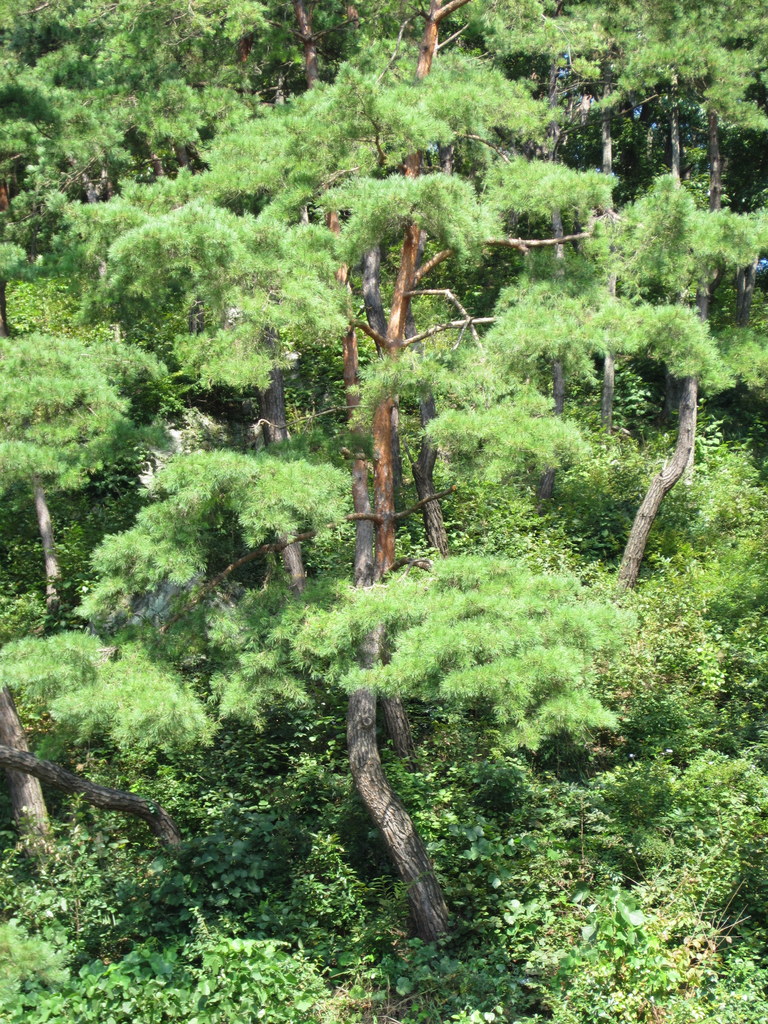
The deep sincerity of all Buddhas is the sincerity of my one mind.
It always brightly leads me
using all manner of seen and unseen methods.
With infinite compassion
it reveals the precious truth
of how everything in the universe flows.
The mind of all Buddhas functions together with my one mind.
Endowed with everything,
encompassing everything,
it is utterly complete.
My past, present, and future consciousness all become one.
Completely let go of everything,
and even this “one” disappears.
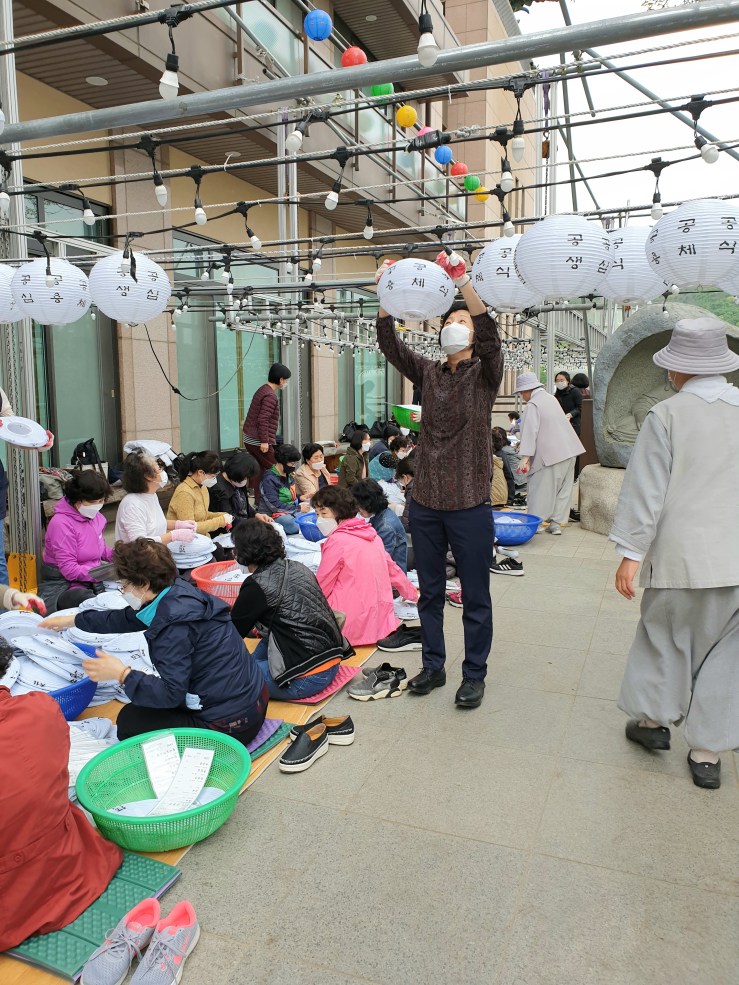
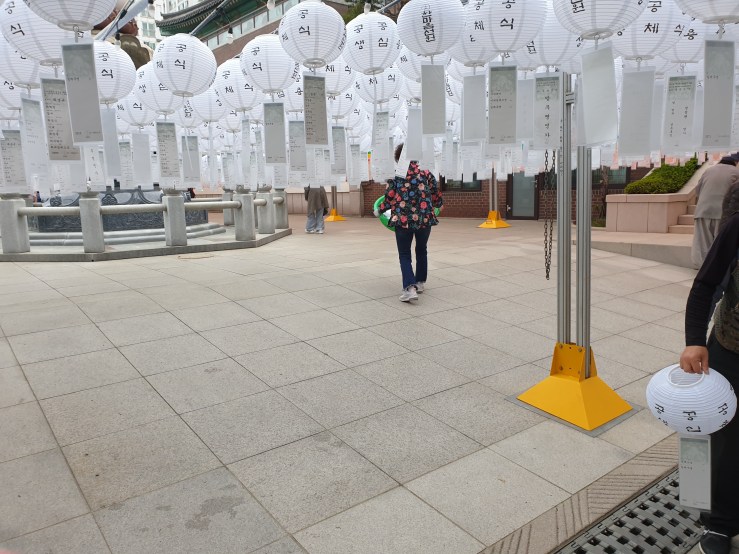
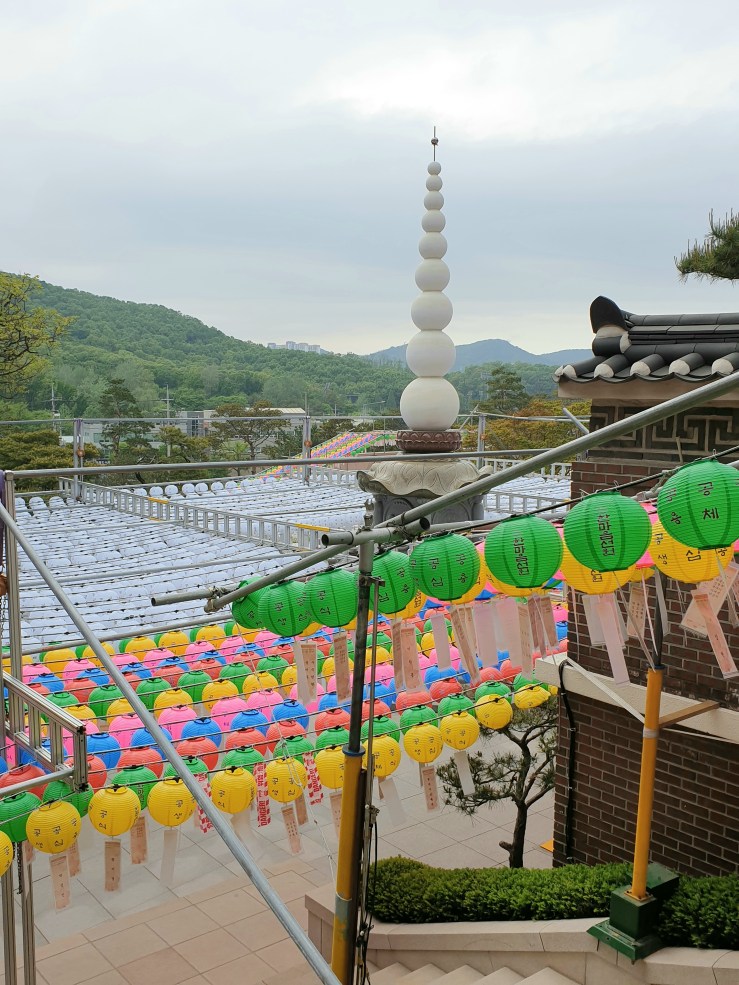
A little bit of a mystery in the last two lines. Don’t worry if you don’t understand it, just let it sink down within you. Even if your brain doesn’t understand it, your body will begin to.
The compassionate hands of all Buddhas
are the hands of my one mind.
Their touch harmonizes all seen and unseen realms.
How can words express my gratitude?
The bright eyes of all Buddhas
are the eyes of my one mind.
Through their vision
see the entire universe as it truly is,
and by clearly seeing the dead,
fully understand the living.
Are you remembering to recite this before going to bed? Have you noticed any effects?
The minds of all Buddhas are my one mind, so I ask my one mind
to take care of everything in my life
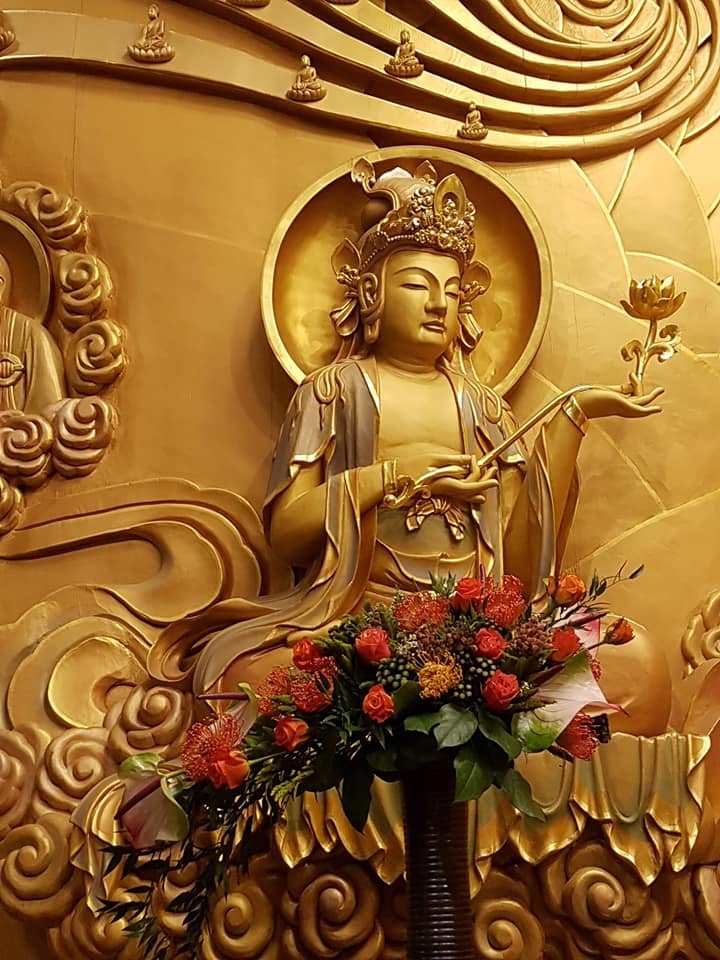
Avalokitesvara,
the Bodhisattva of Compassion,
who hears the cries of all the world,
resides within my one mind.
How can I express my gratitude?
The great saving power of all Buddhas
becomes the saving power of my one mind.
With it I can live every day free of entanglements.
So wonderful!

Here is today’s section of the Thousand Hands Sutra. Try to recite it three times in the morning and three times before you go to bed.
I was so amazed when I first started to understand this sutra, because each little section is a treasure in itself. The entire sutra is great, but just one little piece has so much power. It can change our lives, break up a habit that was holding us back, and touch something deep and quiet within ourselves.
(I’m going to schedule these for Monday through Friday, to give people a chance to get to these without being buried in a pile of endless notifications. ~ CG)
This world we live in is none other than the realm of Buddha.
Here it is forever Spring, flowers bloom without end,
and the fragrant path is ever open.

