While letting go of all wrong behaviors and deluded thoughts if my mind becomes completely empty, this can be called true repentance.
죄와 망심 모두 놓아 마음 모두 공하여야, 이를 일러 이름하여 진실한 참회라 하네.
Repentance doesn’t erase what we did or its consequences, but in returning to our foundation, we start dissolving the chains of thoughts that led us to that action, and the chains of regrets and blame that cripple and distort us. And if, from this completely empty place, we raise an intention for the well-being and growth of those that were harmed, then perhaps, we can truly settle that debt.
There’s a new subtitled video by Daehaeng Kun Sunim on YouTube! It took a while, but there are some really nice points here! I hope you find something that helps you break through wherever you are.
Evil thoughts and actions do not just appear on their own. They emerge according to the thoughts I give rise to. Thus, when those thoughts disappear bad karma also vanishes.
죄는 본래 자성 없고 마음 따라 일어나니, 마음 만일 없어지면 죄업 또한 스러지네.
Literally, the first line says “Evil thoughts and actions do not have self (true) nature.” Well, that’s a little vague in English! The nuance is that they are not separate, independent things just floating around out in the world. Also, perhaps most importantly, they are not permanent things. They don’t have some existence that lasts forever or that exists apart from us.
In a way, you might be able to read this as “They are empty.” This is a description you have to be very careful about, because people lacking wisdom have used it to justify all kinds of harmful actions. While evil actions may not have true, inherent nature, they sure can generate a lot of painful results! And trigger unimaginable chains of causes and effects, so know that your own shortcomings are not permanent, and will change when your thoughts change, but don’t disregard them. You’ll still experience the results of whatever mischief they get up to!
That aside, this is such a hopeful verse! Change the way you’re thinking, start entrusting what you’re feeling and worried about to your foundation, and things will begin to change. It probably won’t happen immediately, but it will change.
With one thought, evil karma accumulated over endless eons disappears, leaving nothing behind, like dry grass in a fire.
백겁 천겁 쌓인 죄업 한생각에 사라지고, 마른풀이 불에 타듯 남김없이 소멸되네.
This is such an awesome verse! While when you start changing your thoughts, when you start entrusting things to your foundation and try to respond from that, you likely won’t see any instant changes. Most of the time, you’ll just realize later that things have changed, but you can’t quite pinpoint the moment that they did. You just know that now, things are different. But once in a while, it’s as if things reached critical mass, and all of a sudden, great burdens just start falling away. Old resentments or fears just collapse one after another, including things you didn’t even know you felt.
It really can feel like everything burned away and there’s nothing left. Though, in my experience, you should still be careful, because while it seems like so much stuff fell away, there’s often a tiny bit remaining. And if you aren’t careful in the kinds of thoughts you give rise to and dwell upon, that tiny bit will start to grow back. It will be like a seed crystal that your old garbage forms around and uses to grow back.
I now deeply repent of having been ignorant and deluded.
어리석은 큰 죄 오늘 참회합니다.
Interestingly, the Korean here leans towards “having been stupid, and done stupid things,” lol. Usually when we see “ignorance,” it means more not understanding the non-duality of all things. Ultimately, that amounts to the same thing, though. But, sometimes taking a narrower view and being as specific as possible helps us see what we were doing and not get get caught by it the next time it arises. So if there is something specific, some specific circumstances where you stumble, try to be as specific as possible as you can about repenting of it. And also be as harmonious as you can in viewing how you want to respond to it in the future. Hating ourselves doesn’t clear away a path for us.
If we clearly sense our connection to all beings, even the ones behaving badly, we couldn’t hurt or despise them. Sometimes, when we’re having a real problem dealing with someone, reminding ourselves that, “That’s what I used to look like when I didn’t know any better,” will really help our anger and resentment melt away. “Sigh, yeah.”
I now deeply repent of having been overcome with desire and attachments.
탐애한 큰 죄 오늘 참회합니다.
I wish I had some magical advice on how to sweep away desires and attachments! As near as I can tell, desires and attachments are the remnants of things that have allowed us to evolve this far. They may not have been perfect, and may have caused problems down the road, but at some point in our evolution, in that moment, they provided something that was helpful.
Because that worked at a certain point, we keep trying it to see if it still works. If it does, then we keep trying it again and again. But as we evolve, we need to move on and learn better ways of handling things, but those habits worked for so long, it’s easy to default to them. They aren’t “bad” in themselves, just limiting. They aren’t what we need to grow and move forward.
How do we move forward? As best as I know, by being present even when caught up in these, and once we become aware of them, by trying to entrust them to our foundation. Two things are useful here: One is to entrust the thought that, “When these arise, I want to remember to let go of them,” and two, “When I’m in the midst of these, provide the strength and willingness to actually let go of them.”
If you’re aware when in the midst of these, gradually you’ll sense the limitations and harm these cause you, making it easier to see them as they are, and let go of them, instead of being caught up in the sense-memory of the good they once did you, and desiring to experience that good again.
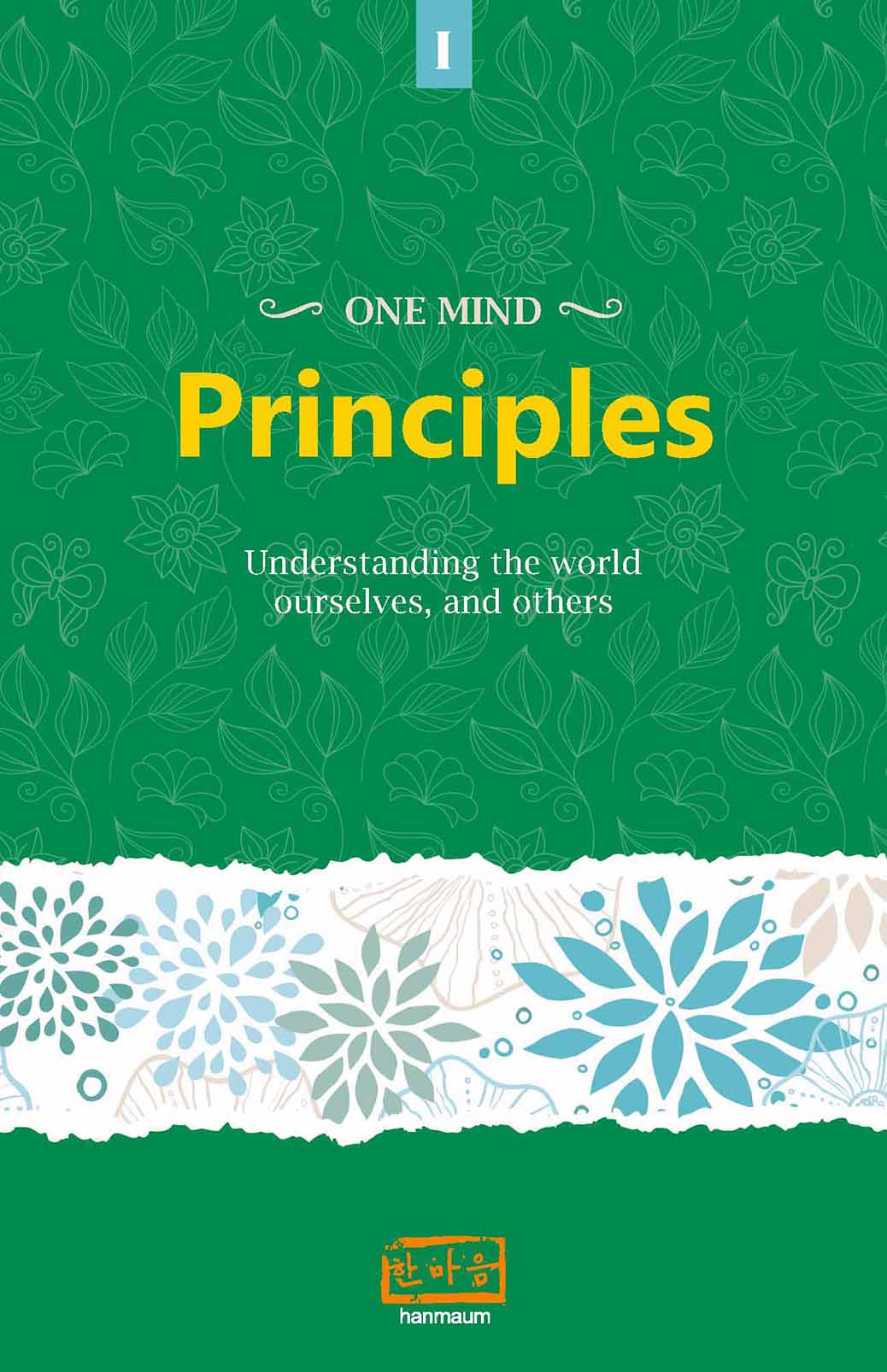
We have a new (35 page) ebook out! This is a nice book about the basics of, well, everything important! lol. Here are the links, as well as the table of contents. We’ve printed this book in Korea, so if you’re here, we can send you a print copy in English or Korean, but due to shipping problems arising from Covid, we currently can’t ship paper books overseas.
epub formatKindle (mobi) format (A basic “ereader” app for your phone or tablet will open and read these files, if you aren’t already using an ereader.)
Table of contents: Your True Worth! What is spiritual practice? Why bother with it? Some cautionary points about spiritual practice
Section 1: Common Buddhist ideas and their deeper meaning 1. Buddhism and Buddha 2. Mind, One Mind, and Juingong 3. My True Reality
Section 2: Basic principles that make spiritual growth possible 1. The Principle of Non-Duality 2. The Principle of Ever Flowing – Emptiness 3. The Principle of Cause and Effect 4. Samsara and Evolution
This is a tiny section of the morning bell chant. We do it everyday, but in the older, Chinese character version, so it’s nice for me, too, to read this again in English. Just this one piece, even without the rest of it, it so good. If we just truly did this, can you imagine how much we would grow, and how sweet our lives would be?!
In praise of our Buddha-nature I vow to always follow one mind, regardless of what others may do. My heart will always be with one mind, my thoughts will never leave one mind.
Deeply observing the Dharma realm, I realize that there is an unseen thread that connects absolutely everything. This non-dual one mind exists in every single place.
In order to awaken and perceive this, which has always been here, I take refuge in one mind, ever present, taking care of everything throughout all realms. This is not something that can disappear or be caused to appear. Namu Amitabul
Repenting is what allows us to move forward. Until we do this, we are often stuck trying not to admit to ourselves that we did something wrong. We can spend so much time and energy going over a thing, coming up with justifications and excuses (which may even be mostly right!) for what we did. But when we repent, we return that event to this completely empty place, allowing us to move forward.





 Wake Up and Laugh!