This is an interesting verse. The “only” might be a touch too far, but still, it seems to be the point that you have to want to find it, to know it, in order to do so. If you aren’t raising the intention that you want to know this for yourself, even if you do encounter it, you would just slide by, I think. Raising the intention puts things in motion, in my experience. It’s the difference between just sitting someone being thirsty, half wishing you had water, and actually getting up to get some. Or to at least ask someone nearby for some water. If you don’t ask, they’d never know you were thirsty. Give rise to a firm intention, and then let it deeply sink down within you.
This foundation of ours, is found only by those who cherish its fragrance.
This wisdom of one mind, with no barriers of learning nor material limitations, taking care of everything far and wide, is the Bodhisattva of Manifestation, just as it is.
With my whole heart, I vow to be present in the world, and with all embracing wisdom, will realize the truth that is ever present. Thus awakened, a single thought raised from my foundation can free whomever I encounter. This is manifesting the Dharma.
제 마음을 다 바쳐서 이 세상에 사람으로 걸림없는 지혜로 온 누리에 항상한 진리를 통달하여, 한 생각에 일쳬를 제도하시니 달마야중 이니라.
With my whole heart, I vow to remain calm and unstained by whatever confronts me, taking care of it all while leaving behind no traces of myself. This is fulfilling the role of a Buddha.
제 마음을 다 바쳐서 시방 삼세 주인으로 걸림없는 침착한 지혜로 온 누리에 항상하여 함이 없이 떳떳하니 불타야중 이니라.
We followed the Thousand Hands Sutra and the Heart Sutra for quite a while, reciting a verse every day, because they seemed like good intentions to input. In reciting them, they become instructions and guides to our consciousness as well as all the lives that make up our bodies.
Yet more than ever, it seems like we all need a bright consciousness if we are to go forward in the world today. So after some reflection, I decided to start over with key parts of the morning ceremony. In particular, the sections called “The Seven Homages,” and “the Morning Blessing.” A couple parts get really long, so I’ll break them up into smaller chunks.
I’m not sure how long it will take to post these, but I’ll put them up one verse at a time, Monday-Friday. (I’m skipping weekends so people don’t get overwhelmed with emails!) Try to read each verse three or more times, just so that it really sinks in. with palms together, Chong Go
With my whole heart, I vow to be the loving guide and teacher of all beings, throughout all realms. The foundation within me is my teacher, and is none other than Shakyamuni Buddha.
제 마음을 다 바쳐서 삼계의 길잡이로 사생 자부 하리이다. 지금 나의 근본은 바로 나의 스승이니 석가모니불이라.
The Columbia Gorge (I’m not sure who to credit for this photo.)
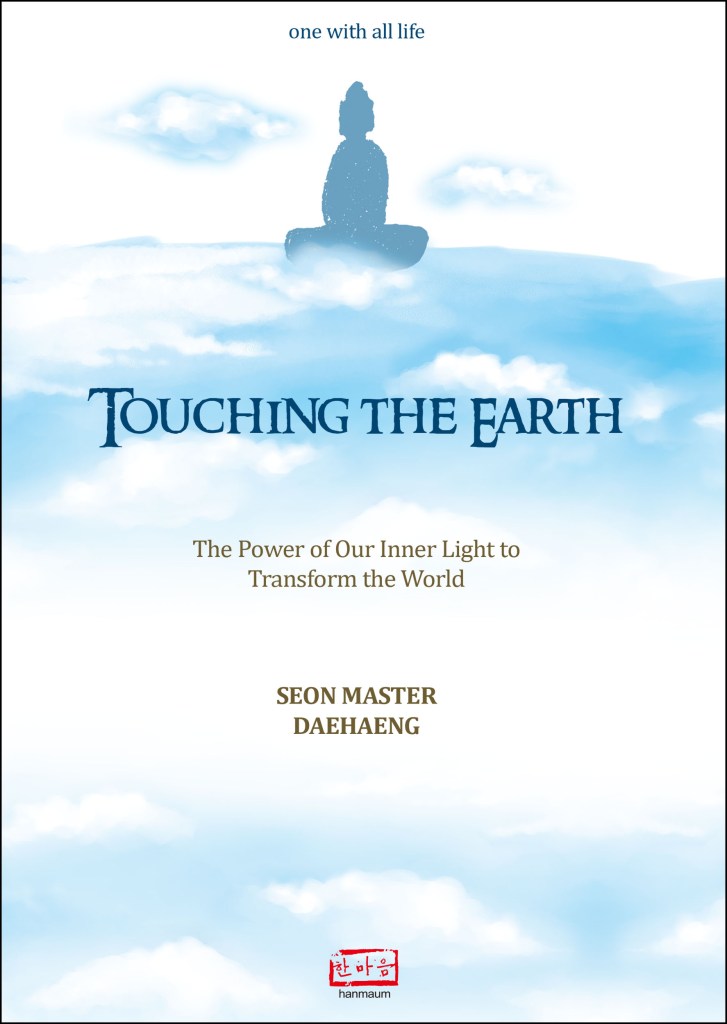
Here’s another small section from a Dharma talk in the collection “Touching the Earth.”Although this is fairly short, barely a page, there’s so much here! if we could just do this much, how many of our problems and suffering would just disappear? How many roadblocks and deadends would just vanish, leaving us free to move forward?
Deepening Yourself
If you would improve the level you’re living at, take all of those things that you would throw away or exclude, and entrust them all to the great furnace within you. There, they will all be melted down, and will come back out as something good. You’ll never be able to raise your level by manipulating the material world, or through scholarly knowledge or cleverness. Take all the things you know, and all that you’ve learned, and dump them entirely into this furnace; then, your true self will come alive, and your level will change.
What I’m saying is that your life right now, just as it is, should be meditation, and meditation in action. So live while taking everything that comes up in your life and completely letting go of it to this furnace. Don’t give yourself a headache by searching around outside of yourself, chasing after famous practitioners, looking for holy relics to worship, or searching for “special” places to practice.
What’s the origin of everything? It all arises from our true self. This true self perceives and responds to everything through our sense organs. It’s the one that does everything, the one that has been leading us and taking care of us for untold billions of years. Now that you know what it does, trust that it will take care of you. Living like this is the essence of meditation, and if you keep doing this, that which you’re seeking will be revealed.
If you have to meditate by sitting down and crossing your legs, then as soon as you stand up, your meditation is over. How could that truly be called Seon(Zen)? Sitting meditation and other kinds of physical training may be useful sometimes, and if you train your body hard enough, or sit long enough, your thoughts will calm down and you’ll feel a sense of peace. But that’s not enough. That can never lead you to the great meaning. Those kinds of practices can never help you penetrate the silver mountains and iron walls.
Go forward entrusting everything to your foundation, without missing a single thing. Know that although everything enters and leaves you, there’s no place for even the tiniest piece of gunk to stick to. Don’t let anything trip you up, including what you hear from inside. If you think it’s acceptable to steal others’ property because it seemed like your true self said so, well, that’s just nonsense. Anyone born as a human being has at least a basic sense of good judgment, fairness, and propriety. So it’s not necessary for me to say more about things like this, things that are so far outside the realm of common sense.
People who are serious about spiritual practice need to throw everything into this furnace that is our fundamental mind, including all ideas of Buddhism, Christianity, Islam, and so forth. Melt everything down there; then what arises again from that will be a treasure of this world.
Names and labels are made by dividing things, but is there anything that could exist outside of the truth? No. The ship you are now on isn’t some pleasure cruise. You don’t even know where it’s going. You’re just helplessly along for the ride. On this vast ocean, you don’t even know where you are, let alone where you’ve come from. Just following along with things, it never even occurs to you to try to look outside the boat. Not knowing where the boat has come from or where it’s going, how could you be so certain in your opinions, insisting that you know so much, criticizing others, and getting into all kinds of arguments?
Let’s compare the Earth to your body. The Earth also has organs that function like the stomach, liver, kidneys, and intestines. In order for each part to live, they have to cooperate. They have to work together. But what happens if they are always arguing with each other? If they start laying claim to different areas, and building walls around “mine” and “yours,” your body will die! The Earth, too, will die if something like this happens. If one place goes bad, soon everything that depends upon that area will collapse. Yet if minds become one and harmonious, then that collapse can be prevented. And then the direction of our society changes as well. Listen! When you don’t even know how to take care of yourself, when you argue with others and close yourself off to them, how could you be able to clearly see, to clearly hear, and to wisely respond to even your family, to say nothing of society, the world, or the universe?
They are building a traditional “Il-Ju Mun” type entrance at the Gwangmyeong Seon Center in Chung Cheong Buk Province. The main construction and tile roof have just been finished, but the “Dancheong” painting is next, and will take a while. Here’s a link to a photo montage construction process so far.
(I like this image because Buddha was already there in the rock….)
Here’s a nice section of a Dharma talk from a collection of talks called “Touching the Earth.” I particularly like the aspect that the practitioner doesn’t try to change things by getting rid of something, or someone. Instead, they try to embrace them as one and help them evolve. To be fair, you still use your own good judgement. Sometimes running away from dangerous situations is wisdom too. That said, think about how many things we dislike or look down upon from a distance. Wouldn’t it be better if we tried to embrace those and encouraged them to evolve in a positive direction?
The Power within Us
There is a power that arises from deep and consistent practice, and if this becomes strong enough, we can even bring forth and use the energy from other stars and planets. “Far” and “near” don’t exist. Although some place may be many light years away, it’s all within the palm of Buddha’s hand. It’s all right here, because there is nothing that’s not also yourself. If we try to reach out to something without going through our fundamental mind, then even though it’s right in front of us, it may as well be a thousand miles away. However, if through our fundamental mind we become one with something, then even though it’s a thousand or a million miles away, it’s as if it were right next to us.
Therefore, at this critical moment, you have to know how to take care of others, as well as our planet. What’s the path forward that will allow us to help develop our nation and the world? How can we ensure that there will be enough energy and resources? You need to know that we have within us the power to answer all of these questions. The ability to provide sufficient energy and other resources is within us. As you practice relying upon your fundamental mind, how to take care of all these things will become clear to you.
(You can click the image for a link to Amazon.)
In the old days, you had to use your body to protect the nation and to do things like politics or commerce. Now, all of those things can be done without moving your body. You can become one with other people, and other people can become one with you, because mind has no form and nothing to grasp. In ancient times, this ability was called the power of manifestation. For example, in order to lead the country in a positive direction, I can also become one with the defense minister. If I become one with a politician, then it’s as if I’m lending them my wisdom and spiritual ability so that they can do good for the country.
Similarly, the time has passed when we can choose people for such positions based upon their appearance, their background, or how well they give speeches. Instead, we have to be able to know their minds. We have to know how, through our fundamental mind, to become one with people and function together with them.
A person involved in politics needs to be aware of the unseen aspect that underlies politics. Could this be called something like a god? No, not really. It’s not this and it’s not that. Yet, it’s there in the middle of everything. It’s this fundamental mind that can embrace and take care of anything in the entire universe. It can bring in and send out anything through the sense organs, and if you’ve awakened to this mind, you can become one with politicians and act through them. There’s nothing that’s not myself — there’s no pain that’s not my pain, no circumstances that aren’t my circumstances, no words that aren’t my words. So how could you not become one with someone? Because of this, we can change the direction of our society, we can ensure upright development, and we can ensure that our culture blossoms and is harmonious.
For example, there are insects and parasites that harm plants and animals, right? Through your fundamental mind, you can gather their consciousnesses all together and help them evolve. If you can do this, then you can use this method to embrace everything. There’s no one and nothing that you need to throw away. Otherwise, you’ll have to chase after so many things, trying to get rid of them one by one. There are just too many things to deal with them like that.
Here’s a short Dharma talk from Daehaeng Kun Sunim that appeared in the last issue of Hanmaum Journal.
What are you going to believe in? Buddha’s shape? Perhaps his renown? No. Know that his mind and your mind are not two. These bodies of ours have so many limitations, and will eventually fall apart. Mine, just as well as yours. It’s this non-dual mind. This non-dual mind where you and I are not two. This mind never decays.
부처님 형상을 믿겠습니까, 이름을 믿겠습니까? 부처님 마음을 내 마음과 둘 아니게 믿으라고 한 거지, 형상은 언젠가는 부서지고 한계가 있는 겁니다. 그러기 때문에 네 형상이나 내 형상이나 둘이 아니고, 부서지는 건 다 똑같다 이거예요. 그러나 부서지지 않는 게 한 가지 있는데 그것은 네 마음이나 내 마음이나 둘이 아닌 그 마음이 바로 부서지지 않는 것이다는 얘기죠.




 Wake Up and Laugh!