Running Errands for the Dharma-realm

If you’re doing what the Universe needs done,
the Universe will support you.

Years ago I read this by the thinker and inventor R. Buckminster Fuller, and was really impressed.  He went on to say that if no support is forthcoming, you’re probably not working on what the Universe needs, and you need to change direction asap. 

My own teacher says something similar:

A practitioner is someone who is merely running errands for the Dharma-realm.

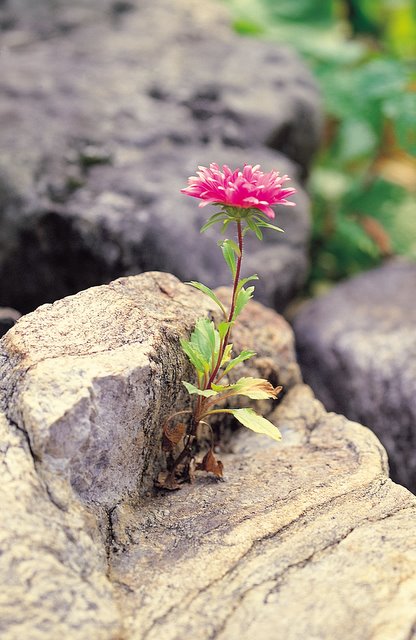
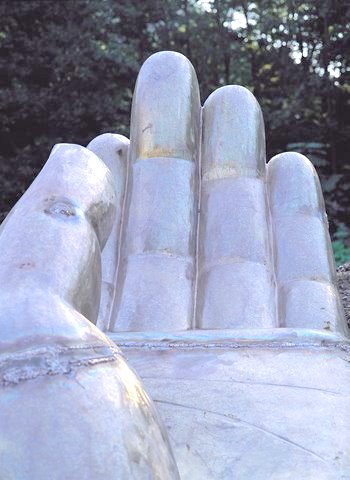
the all-reaching hands and feet of Buddha

I’ve found practicing like this has so many amazing aspects. One of the first is the feeling, the change in focus when I quietly ask, “What does the Dharma-realm need done?” 

Life also has a different feeling of worth when things are no longer about what “I” want, or just entertaining my desires. And I’ve found that when I’m making an effort to live like this, what I need seems to naturally appear.  [Need, not want :-)! ]

One of the effects of this is sometimes I’m called to do things or go places that don’t fit into “my” plans, or that “I” can’t stick an explanation onto. Sometimes I can later see why that was needed, but other times I still have no idea what was truly going on. Just that I met people I would never have met otherwise, or shared a kind word with someone I wouldn’t have encountered had things happened according “my” plans.

Of course, I have to be careful that I’m not just listening to my karma, (the precepts are real handy here!) but the analogy that comes to mind is water. You can’t make a hole in water for more than an instant, because the water all around it responds and fills in the hole. Likewise, you can’t pile up water, because where there is extra, it spreads out and automatically goes to places that need more.  I suspect that we also become like this as we learn to work on behalf of the whole, and dissolve the barriers of “I” and “mine” that imprison and cut us off.  With this wall gone (or at least weakened!), if we lack something it flows to us, and when we have extra, we naturally send it where there is lack.

working on behalf of the whole

doing what the Universe needs done

running errands for the Dharma-realm
 
These seem like such wonderful guides – please share your experiences!

Everyday Korean Buddhist Practices

Following on from my piece a week or so ago about entusting and devotion, I’d like to post an updated review I wrote last year of the little booklet called “Everyday Korean Buddhist Practices” by Seon Master Ilta, translated and very kindly gifted by Brian Barry. I think Master Ilta says so much better than I can just how there need be no contradiction at all in combining a very devotional approach with the practice of uncovering one’s own true nature.

‘Everyday Korean Buddhist Practices’ is a translation and abridgement of Saenghwal Sogui Gidobop by the late Zen Master Ilta, Grand Preceptor and member of the Elders Committee of the Jogye Order. Brian Barry, temple artist, Dharma Instructor, and translator of many key Korean Buddhist texts, translated, published and distributed this work free of charge as a Dharma gift dedicated to all beings throughout the universes. He is also active on the Seoul Dharma Group and is a thoroughly nice man.

The book is divided into five sections. The first chapter is called ‘Effective Chanting’ and deals with the lay person’s approach, and the three empowerments practice brings. Part two is the main part of the book, and concerns daily practices. Many people outside of Korea who come across Seon Buddhism might perhaps think that this would deal with meditation, but most Buddhists, even many Zen Buddhists, do very little meditation at all, and this chapter deals mostly with the practices of prostrations and chanting.

I personally find it hard to maintain a prostration practice, especially here in Bangkok. There have been times I’ve started each day with 108 bows, and have benefitted enormously from it, but my favourite practice is Avalokitesvara chanting, about which Master Ilta has some interesting and useful things to say in this small book. He says it’s useful to have an image of the Bodhisattva while chanting, and I noticed with delight that Brian Barry generously included in each copy a postcard of one of his own gorgeous paintings of Kwan Seum Bosal.

Master Ilta talks about how, wishing to receive compassion, “it is both natural and essential that you lead a compassionate life yourself” and he emphases the importance of maintaining one’s resolve. He also discusses visualisation, prayer, and using beads. My own beads were a beautiful gift from my Dharma brother Joseph. Each one has the hangul for Kwan Seum Bosal carved into the wood, and they are a joy to hold. Not all the advice Master Ilta gives will apply to everyone of course, his suggestion about making as many repetitions as possible in a single breath, for example, is not something that works for me.

The final sections of the book are on special methods and spirit guidance, in which he talks about the practice of Namu Amitabul chanting, Namu Jijang Bosal chanting, chanting the Great Light Mantra, and reciting the Teaching for the Departed, the Musanggye, which Brain Barry adds as an appendix. Finally, Master Ilta concludes with a story, illustrating his central theme of one-minded devotional practice.

It is a book devoted to the everyday practices of, especially, chanting and prostrating, with a real ‘other-power’ feel to it. “In Buddhism” Master Ilta writes, “our practices are our very faith, and this faith is in the power of the buddhas and bodhisattvas to help us in times of need. So it is necessary to put our faith in them and their powers”. So how, it might be asked, does this fit in with the idea of relying upon one’s own inherant Buddha-nature?

For Seon Master Ilta there is no contradiction. The devotional practices he outlines exist for the very purpose of reaching one’s own foundation. “The nonduality of the practitioner and Buddha is the True Self” Master Ilta writes. “The only difference is that the Buddha recovered his essential nature, while we have not. The objective of our practice is to discover this true nature and to realize our full potential.”

This reminds me very much of what Daehaeng Kun Sunim also has to say about the practices of bowing and chanting. “True bowing” she writes “means keeping yourself humble and respecting Buddhas, Bodhisattvas and sages. But at the same time, know that their mind and your mind are not two, and never lose your determination and resolution.” In a section of ‘No River to Cross’ on reciting the Buddha’s name she warns against simply looking for light from outside. For Daehaeng Sunim the power of chanting is from the power of the foundation.

What ‘Everyday Korean Buddhist Practices’ does is provide a wealth of advice and suggestions on some of the technical aspects of these practices, in a way that never loses sight of the main goal – to, as Mastar Ilta puts it,  “bring about the force from within”. This marvellous little book has been widely distributed, entirely free of charge, to Seon centres around the world, and Brian even kindly sent some extra copies for the Hanmaum Seonwon here in Bangkok. It is well worth finding for both its insight into everyday Korean Buddhist practice, and for inspiration too. Thank you Brian.

Links:
Brian Barry’s webpage
Entrusting and Devotion

Herding the Ox (part 1)

The Ten Ox Herding verses describe the process of uncovering our inherent, enlightened Buddha-nature, represented here by the ox. Variations of these are popular throughout East Asia as a way of describing the spiritual path. This translation is from Daehaeng Kun Sunim’s Korean version.  For Barry, at Ox Herding 🙂

 
1. Searching for the Ox
 
On plains that stretch forward without end,
pushing through the tall grass and brush,
looking for the ox.
Going here and there,
following a nameless river
and unknown paths deep into the mountains.
Utterly exhausted,
yet still no trace of the ox,
In the gathering dusk,
only the sounds of the crickets.


                                          2. Finding Tracks of the Ox

Suddenly,
on a river bank,
under a tree,
hoof prints of the ox!
And there,
under the sweetly flowing water,
an ox print clearly seen.
Stretching out before me
as plain as day,
hoof prints!
  
                                                                                         3. Glimpsing the Ox 

Somewhere a bird is singing.
Under the warm sun,
a peaceful breeze.
On the banks of the river,
the willow trees are brilliant green,
how could an ox hide here!
But look at that massive head,
and those wide horns.
What kind of strength will it take
to drag it back to the path?

4. Catching the Ox

It was a difficult fight,
but at last I’ve caught the ox.
So stubborn and willful,
its strength seemed endless,
like it could tear through mountains.
But at last the ox has come to a standstill.
Long accustomed to roaming here and there,
at last it has come to a stop.


5. Taming the ox

To tame this ox
requires a whip and some rope.
I tied the rope through its nose ring,
but still have to use the whip.
Otherwise the ox will rush about,
rolling in the mud,
or getting stuck in the marsh.
But when he’s tamed,
his gentle, true nature will show,
and he’ll follow me,
even without a nose ring.


(to be continued…)

Illuminating the Buddha Within

This is a short Dharma talk Daehaeng Kun Sunim gave for the Buddha’s Birthday.

We celebrate the Buddha’s Birthday every year,
but this year I feel strongly that we need to use this opportunity
to exert ourselves.

As you light lanterns this year,
and brighten and develop your mind,
think of the Buddha’s teachings, which showed us this path.
 

This life we cling to
lasts only for a season,
yet within an instant of our daily life
are all of the truths and principles
of the universe.

These are what we must awaken to;
this is what is truly urgent.
So don’t light lotus lanterns
trying to create
some small bit of good luck.

Lighting a lotus lantern reminds us that
our mind exists everywhere
throughout the universe,
and because you exist, others exist,
because others exist, everything exists.
 
This instant of our daily life,
where everything works together peacefully
to the extent we are harmonious,
shows us that, just as it is, light fills the world and
the Buddha is brightly present within each of us.

Each of you has the exact same Buddha-nature as Sakyamuni,
each of you was born in a Buddha realm and are being guided by the Buddha.
So just as the Buddha teaches us,
if you throw away “I,” if you throw away your egotism,
you can live brightly, free of suffering,
able to draw upon the unlimited ability within,
and send forth radiant energy.

Under the lotus lanterns

If you are continuously letting go of “I,”
if you’re truly living in the present moment,
the effects of a single thought
can reverberate
throughout the entire Dharma realm.
Living like this,
the true worth of life
becomes abundantly clear,
and as a disciple of the Buddha,
with gratitude towards the Buddha,
you can live freely, as a true human being,
able to take care of everything in creation. 

            –Daehaeng Kun Sunim

Happy Birthday

Seon Master Toeong Seongcheol, the late Patriarch of the Jogye Order of Korean Buddhism, wrote a wonderful poem for Buddha’s Birthday in 1986 which was printed in ‘Echoes from Mt. Kaya’, a book of his teachings now sadly out of print. The book was translated by Brian Barry, the Korean-based artist who painted, among other things, the platform doors in the preaching hall at Wat Suthat here in Bangkok.

The poem, which you can read on Barry’s site under the section entitled Dharma Drumming, or at the website of the Jogye Order of Korean Buddhism, is a hugely energetic birthday greeting to all living beings, and beyond. Happy Birthday, Seongcheol calls out, to the Buddhas in prisons, in taverns, in gardens, and in the skies.

“To all you Buddhas who have become endlessly changing clouds drifting across the sky, to all you Buddhas who are quietly biding your time as boulders — a very happy birthday to you, too. / And happy birthday to all you cute little Buddhas swimming in the waters. To all you lively Buddhas soaring about the sky. To all you reverential Buddhas singing hymns in churches, and to all you handsome Buddhas chanting in temples”.

Written when he was 74 years old, the poem goes on to wish a happy birthday to farm workers, factory workers, and students. Everyone, and everything, he says, is a manifestation of Buddha. Every place is “a site for liberation from suffering and ignorance”, and every day is a day to respect and congratulate each other. It’s a call to happiness. Happy Birthday! Happy Birthday!

Links:
Brian Barry’s webpage
Jogye Order: Brian Barry
Jogye Order: Happy Birthday
Wikipedia: Master Seongcheol
Return to the Center: Happy Buddha’s Birthday

It is gratitude for somebody who wanted to teach us. It is not a coincidence that Parents’ Day and Teachers’ Day are always around Buddha’s birthday. In this sense, its gratitude to teachers, but also a reminder of the potential within each of us.”
Chong Go Sunim

No Master Criminals Here

Tongdo Temple, one of the three treasures of Korean Buddhism

The Jogye Order had arranged for a professional nurse to be present during our 23-day ordination training session. A Buddhist nun herself, she had already probably saved the life of a male postulant. He had such a terrible cough I half wondered if he wasn’t there for some spiritual benefit that might come from dying as an ordained monk. Hearing him cough as she passed by, the nurse read the riot act to the overseers and had the trainee brought to her office, where she immediately started injections of antibiotics. By the time the training was over, his cough had almost completely disappeared.

           As time went on, she became concerned that some postulants weren’t getting enough calories. With over 1,000 full bows a day, and only two moderate meals, we were certainly going through the calories. On top of this, many of the men were already quite skinny when they arrived; I would have guessed that some had less than five percent body fat. Seeing this, the nurse began to surreptitiously give out food, usually pastries, chocolate, or bars of sweet, red bean-paste.  A trip to the nurse’s office became more and more popular!  Disappointingly, whenever I went, I was always escorted by one of the overseers. The result: no food for me. For which I was soon to be grateful.

             Sunims, I’ve noticed, are not particularly good at deception!

The hall where we had lectures, and did most of our bowing (photo by Jung Yeon)

Part of me, the one that spent my last year in high school trying to buy beer, shook my head in disapproval at seeing chocolate and bean-paste wrappers just sitting on top of the toilet wastebasket. “You have to hide the evidence better than that,” I wanted to tutor the unknown snacker.   The inevitable soon happened: A postulant was walking by the front doors, in front of everyone, eating a bean-paste snack. He walked right past an overseer, who twisted around so fast that he must have sprained something.             

        Within the hour, all 150 men were lined up with their grey backpacks in front of them. The overseers started with first person, thoroughly searching all of his belongings. We didn’t know what would happen to those caught with food, but we all knew it would be serious. Expulsion was a real possibility. But for all of the postulants’ incompetence at deception, the overseers had no better understanding of the sport. As four of them focused on the first few people, nobody was looking down the lines at the other postulants. At least a dozen of them were slipping pastries and other food out of their bag and down their pants legs where the material bugled out over their leggings. Further, while the overseers diligently checked the contents of pockets, it never occurred to them to actually frisk anyone.

             Disgraceful, I thought, as I stood there, with a rumbling stomach. I couldn’t help smiling though:  I suppose it speaks well of those choosing a spiritual path that they were so unpracticed in the ways of deception.

Dawn at Tongdo Temple. The pudo with the relics of Shakyamuni Buddha (photo by Jung Yeon)

Buddha’s Birthday parade

Here are some photos of the Buddha’s Birthday celebrations in Seoul on Sunday. It’s always amazing to see, and Korea feels like a crossroads of Buddhism. In addition to all of the Korean-flavored events, there were booths or floats from every Buddhist country, offering culture and information, food and art. These are a few pictures from the day, with some nice ones contributed by Joseph, of Somewhere in Dhamma.  Go ahead and click on the photos to see a larger image.

the street in front of Jogye Temple
Must be a convention somewhere!
playing a scaled-down version of a temple drum
Buddhists from Mongolia
Friendly folks! (by Joseph)
I really loved the horn section! (A great offering by the Tibetan monks of Korea)
Enthusiastic Nepalis! (by Joseph)
Make your own mini Lotus Lantern
or your own wrist mala
with beads for all ages!
or you could make your own incense (It was really good!)
sign me up!


Traditional Korean dance and music


A river of lanterns (by Joseph)
Watch out for the Dragon! (by Joseph)
Under the lanterns at Jogye Temple (by Joseph)

red, yellow, and white

“There is a beautiful place in the mind, peaceful, bright and aware, that shows itself when you put everything down. It is free to all who undertake the search.”
Phra Cittasamvaro Bhikku

For most of the last eleven years I’ve lived in Bangkok, and it’s here that my interest in Buddhism started. But to be honest at first there was very little support on this path for an English (only!) speaker like myself. That all changed three or four years ago when the Venerable Phra Cittasamvaro Bhikku delivered his first series of rains-retreat talks at the Baan Aree Library and Community centre.

To accompany the talks Phra Cittasamvaro, popularly known as Phra Pandit, set up the Littlebang website, which he still runs and which is the main centre for information on English-language Dharma events here. From the website a real Sangha has emerged, with a regular weekly meditation session very kindly hosted by the gorgeous Ariyasom Villa, frequent retreats, social events, and a growing network of Dharma friendships.

That network also encompasses the Bangkok Hanmaum Seon Centre. The Littlebang site regularly makes announcements of upcoming Seon Club meetings, and last year Phra Cittasamvaro joined Chong Go Sunim in delivering a joint talk on Buddha-nature at the Bangkok Seonwon, which was well attended and which presented a fascinating insight into areas where these two wonderful Buddhist traditions overlap and agree.

The reason I mention all this today is to thank Phra Pandit and the Littlebang Sangha for their support of our English-languge Seon Club over the past year, and to point out a very wonderful blog post made by Phra Pandit today in response to the news many people may have seen coming from Bangkok regarding recent political violence. I know that I’ve had a few emails from some very kind people asking if I’m okay, and today’s Littlebang post would be a wonderful response.

“For most of us here the only real impact is loss of that precious Skytrain service” Phra Pandit writes, “and some inconvenience travelling around. In terms of danger, you are far more likely to lose your life or get injured on any normal day in a taxi ride, than you are by any violence in Bangkok protests.” And I agree with this completely. You are more likely to come to harm crossing the road in Bangkok, even breathing the air, than at the hands of political demonstrators. 

But this has always been the case in my experience. Of all the hundreds of demonstrations I attended when younger, when I was very much a left-wing activist,  the vast majority were perfectly peaceful. And when violence did break out, as deplorable and as awful as it is for the victims, the chances of someone being caught up in it who did not want to be is very remote indeed.

Phra Pandit addresses just this I think when he compares the numbers involved in demonstrations (the Red and Yellow Shirts) with the numbers of people who regularly attend Dharma events in the city – ‘the white shirts’. “Much as the protests grab headlines” he writes, “there is much more going on that is wholesome, but does not get headlines. Dhamma is greater here than any political movement.”

But Phra Pandit’s post today isn’t just about reassuring people of the safety of Bangkok or countering the usual sensationalism of the news media; he takes from the political situation here a Dharma message that applies to each and every one of us. If you want real change, he suggests, using the Buddha’s analogy of the two acrobats, the place to start is within.

“By doing so” Phra Pandit writes, “you learn, bit by bit, part by part, about your own motivations, and thoughts. You observe from the angle of a witness, and let wisdom bring a growth in consciousness.” And I think he is completely right in this. It’s not that the practitioner drops concern for and engagement with the world, but that he or she is re-orientated.

Starting from the basis of one’s own fundamental wisdom, the Buddha-nature within, engagement on social and political issues becomes not the addiction to political strife and pushing of views that Phra Pandit describes, and that I experienced as a young radical, but more like the hand of compassion that reaches for the pillow in the night. In the words of Thich Nhat Hanh:

 
Namo Avalokiteshvara
Please come with me to the war zones
to stop the killing and bombing.
Please walk with me to the places of sickness and suffering,
bringing compassionate nectar and medicine.
Please walk with me to the realm of the hungry ghosts
bringing the Dharma food of understanding and love.
Please walk with me to the realm of hell
in order to cool the heat of afflictions.
Please walk with me to places of conflict
in order to remove hatred and anger
and help the source of love to flow again
.

“If you live harmoniously, knowing that there is nothing that is not yourself, you will be able to take everything in the world as material for your spiritual practice. If you are truly able to live like this, your every thought and word will manifest in the physical world. At this stage, you will understand the meaning of ‘the all-reaching hands and feet of Buddha’.”
 – Seon Master Daehaeng Sunim

Link: Littlebang: Red, Yellow and White Shirts…

Teachers’ Day

This Saturday is Teachers’ Day in Korea, when people go to pay their respects to those teachers who’ve had an impact in their lives.  Seeing a group middle-aged men, made up of sun-burnt farmers in cheap suits and manicured business men all laughing and joking together, everyone passing by knows they were once fellow students, now come  together to greet their old teacher.


Korea’s Song for a Teacher

My teacher’s heart is like the sky above,
the more I see of it, the more noble and wonderful it seems.
Teaching us what’s true and upright
like a loving parent,
how can I express my gratitude?
Ah, how can I repay such kindness and love?

(Well, in Korean, and with the melody, it’s much more touching!)  It actually has a lot of the same feeling as To Sir, With Love.

 
Thank you to all who have been my teachers
to all the Buddhas and Bodhisattvas,
as well as the heretics and demons.
From a mountain in Korea,
I bow to you all.

The Blame Game

As soon as you concern yourself with the “good” and “bad” of your fellows,
you create an opening in your heart for maliciousness to enter.
Testing, competing with, and criticizing others weakens and defeats you.

Morihei Ueshiba, The Art of Peace, page 55 


This is such a wonderful verse. Like other truly profound teachings, it causes everything within me to settle deep down. It’s a lot like the deep-centered feeling of sitting in the full lotus posture (assuming one isn’t being tormented by rending knee pain!) 

I think the reason for this is that it acknowledges and reinforces the fundamental truth of our lives: that we are not separate.  We’re living together as one, and anything I direct towards someone else is felt equally (or more!) by myself.  It’s as if we’re living in the same room, breathing the same air, and eating from the same plate.  If I said I was going to poison the plate of food we’re eating from in order to “get” one person, everyone would think I’m nuts.

 
“But you’re eating the same food!?!  It’ll kill you as well!”  To poison the air we all breathe, thinking “Hah! I really showed you!,” would be the act of a lunatic.  Yet the actions and thoughts we give rise to continue to act through this unseen connection we all share.  This isn’t to say don’t ever have harsh thoughts; everyone has them, and they tend to arise out of habit before we realize it.  Rather, when you realize you’re caught up in them, stop feeding them energy.  Entrust that situation, as best you can, to your inherent Buddha, the source of all energy, and that which is truly taking care of things.

Another thing about blame and criticism, is that it’s often dumping the entire cause for something onto the other person(s). When in reality, if there’s something going back and forth between us, then I also share partial responsibility for it.  At the very minimum, I’m at this place now as the karmic result of the choices I’ve made, so there’s no use in blaming others. And in fact, acknowledging that I have a share of the blame often feels very liberating.  Look at how you feel when you get caught up trying to defend yourself and justify your actions. Now look at how you feel when you say “I’m sorry,” even if only silently, to yourself.

 
Daehaeng Kun Sunim often teaches that everything gathers together because of its similar level of growth and its similar karma. She gives the example parents and children, saying that they’ve gathered together because they created similar karma, although it’s not always apparent. Parents chose their children, and children chose their parents, because that was the level that looked most appealing to them. 

Thus, for all these reasons, Daehaeng Kun Sunim has always emphasized that blaming and criticizing others is one of the most spiritually harmful things we can do. She tells people to be generous in how they view others, and to interpret the things in their lives positively. For everything in this world manifests according to the thoughts we give rise to. Whether this world is a hell realm or a heavenly realm depends upon the thoughts we choose.

 
Over these many kalpas of our evolution, there’s no one who hasn’t been our father or our mother, our son, our daughter, our husband or our wife. Let’s remember the love we once felt for them, and raise the desire to see them grow and succeed, and know peace and liberation.