The trail up the small hill at Waujeongsa is lined with some very interestingly designed pagodas.
In April, when the cherry blossoms are in bloom, they become magical!
Learning to see the world as it truly is
The trail up the small hill at Waujeongsa is lined with some very interestingly designed pagodas.
In April, when the cherry blossoms are in bloom, they become magical!
Those who have not yet been saved
will be saved
those who have not yet been set free
will be set free
those who have had no rest
will have rest
those who have not yet attained nirvana
will attain nirvana.
The Lotus Sutra, ch. 5

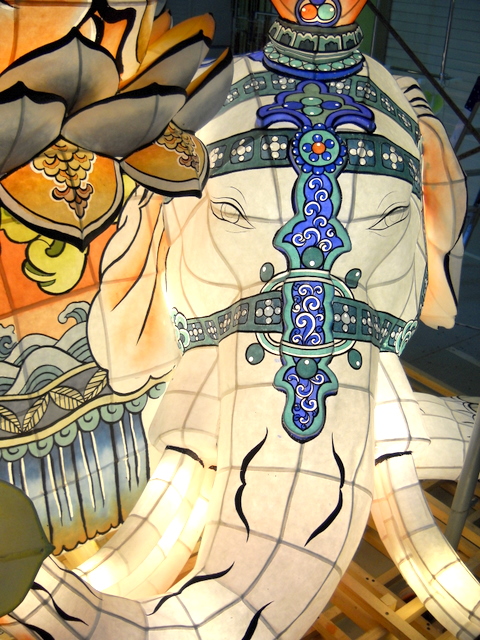
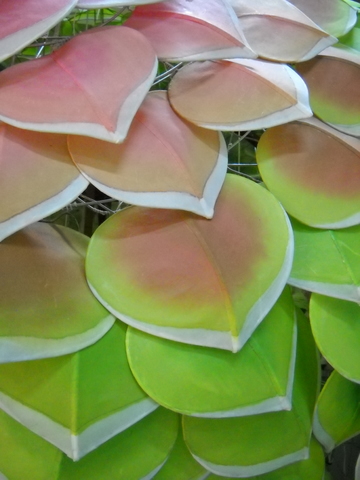
The Buddha’s Birthday (May 10, this year) is far and away the most important celebration on the Korean Buddhist calender. The preparations start nearly a year ahead of time at our center, and by January preparations are in full gear. By the time things are finished in April, the lanterns and floats will be gorgeous! (Click on the images for a bit higher resolution image.)
For everyone in the Seoul area, there’s been one important change this year: the main lantern parade will begin at dusk Saturday, May 7th, and will go from Dongguk University to Jogye Temple. Sunday, May 8th, will be the street fair in front of Jogye Temple, with a celebration/party in the evening. The actual day is May 10, Tuesday, and so temples big and small across the country will be having their own celebrations.






Gyungju, in general, is probably the best place to see blossoms in Korea, and any trip to Gyungju isn’t complete without a visit to Bulguksa.
This will the be only the second year since I’ve lived in Korea that I won’t be making a trip to Gyungju, but I’ve got enough photos stocked up to last a decade of Sunday Photos!
I hope you enjoy this one!
Here’s a guest post from Ojichan about his experience (and lack of) with people’s reactions to the disasters in Japan. I’m posting it here not to embarrass anyone or beat anyone up, but just to encourage us all to be a bit more aware of what’s going on in our surroundings. I’ll post a link below to the original comment and my response, but for now I’d like to let people think about this for themselves.
And congratulations to Nat, who raised nearly 8,000 bhat for Japan through her yoga classes!
Thank You and Metta to you all for your discussion here about our Buddhist response to the Japan disaster. So glad as well that your immediate friends and family were OK.
I am troubled about my practice and am hoping some of you might offer me some helpful advice or guidance.
I have Japanese family in Tokyo, Kyoto and Aomori and friends in Sendai. They have all now been found alive and OK. However, the first several hours we were very concerned that our family in Aomori were gone. They live near the harbor at sea level. When we called early, they answered “Hello…” and then the phone lines went dead. It was about 48 hrs. before we knew everyone of our close family and friends had survived. No tsunami in Aomori. Our friend in Sendai was evacuated.
I have practiced Vipassana, mostly off and on, for 42 years. But in the past 4 years I have been very committed. Daily practice, active leader in my sangha, several retreats and recently accepted as a student by a well-respected teacher in another city.
Here’s my dilemma: All my teachers, all the dharma talks, all the Sangha members are always talking about the importance of compassion for others and practicing metta.
All the people in my sangha are always so appreciative about the many gifts of sushi my wife has made for their gatherings. But when this happened, for a full week after, only one person called or even asked when I walked past them on the street. I tried not to notice, to surrender, to accept. But the silence was deafening and painful. My wife understands and responds with the stoicism of the Japanese. I can only attempt to imitate it.
In an effort not to go into victim hood I wrote a letter, describing the events and deep emotions for our family in those first few days of unknown. I added a very helpful letter I received from a Buddhist friend who was amongst the survivors at Sendai, describing all the enlightenment she and others were experiencing as they supported each other to recover and survive. I sent it t the one person who called. She sent it on to the entire Sangha. I then got about four very brief condolence emails. That felt a little better. But since then, nothing more… I myself lead a Tonglen meditation for the People of Japan the next week. There was good turnout. But since then, silence again.
I sent a copy of our experiences with our family, the letter from Sendai and the materials I organized on “A Buddhist Response for the People of Japan” to my personal teacher. I suggested she might find it useful for any of her presentations or retreats. No response. Then last week she emails me that she wanted to reschedule our next 1:1 talk because she was too busy…again, no comment about our family or any of the events in or the Buddhist people of Japan. I checked her website, her sangha’s website, hoping to see that she had responded in some way with an offering of metta for Japan. No comment at all. I’m scheduled to attend another retreat this weekend with another prominent teacher. I checked his website. Nothing there either.
I googled the internet looking for anything from Buddhists in response to one of the greatest disasters ever. Very little there either.
I was so pleased to see your comments here, but I’m very troubled and honestly don’t know what the truth is about why our fellow Buddhists, our world-wide sangha is so silent at a time like this. Perhaps, what I’m hearing from myself, is that the lesson in this is to build my trust and faith only in my own daily practice. To not put other’s words or opinions, even teachers above my own mindful observations while following my breath, and through my own metta, even in the midst of such apparent mindlessness all around me. But so many teachers, even the Buddha, also urge us to take sanctuary in the Sangha.
I honestly don’t know what to do with that now! I ‘m also unsure about how I should respond to my teacher when I do speak next with her. I know I need to surrender somehow and not add to the suffering. But it also seems unskillful and nonloving to simply repress this and never ask my sangha or my teacher to look more mindfully at what appears to be a pretty huge gap between their dharma talk and their actions in a time of real need amongst their fellow Buddhists in Japan. I have no idea what right speech or action, might be in the midst of this apparent silence.
I’d very much appreciate, anything you’d care to offer here in the way of wisdom, understanding or guidance.
In the meantime, my wife and I are going to Japan in a few weeks. We will roll up our shirt sleeves and pitch in what ever humble opportunity we can find there in our neighborhood and I’m planning to go find the local monk, and ask him if he has something I or my sangha can help. “Gambarimasu!”
Namaste,
Ojichan”

I’ll be posting a bunch of blossom photos this month, I hope no one minds!
Here is the trail to Tapsa, Pagoda Temple, at night lined with cherry blossoms. It’s one of the many special places in Korea to see cherry blossoms on display.

It’s just about cherry blossom time in Seoul.
I’ve heard from my friend that they’re already out in the southern parts.
When I think about what I’ll miss when I finally leave Korea, mountains, temples, and cherry blossoms are the first things to come to mind.

I feel like the bells are ringing all around the world right now.
I finally started to understand Daehaeng Kun Sunim’s meaning of entrusting. I’ve stopped paying much attention to the news, it doesn’t feel like there’s a whole lot of concern in the news for a good outcome, but merely sensationalizing the situation and creating panic. I know there’s a whole lot going on in the world, the best I can do is intrust that my intentions for everything to be well, and keep going in my life.
Chong Go Sunim once told us that if you know something bad is going to happen, it’s better not to add to it by just talking about it, but instead to entrust it and know that it will be taken care of. He added that Daehaeng Kun Sunim once said, “Before there was the nuclear bomb [or nuclear power, or demonstrations, if I may add] there was mind.” It would be much more useful to entrust the situation to our fundamental mind right now than to get caught up in the panic.
I’ve been sending many thoughts of Metta to the engineers working in Japan. I feel they are truly Bodhisattvas. They aren’t doing this only for their families, or the Japanese people, but potentially all sentient beings on this planet. What ever their fate may be, may the merit of their sacrifice carry them a great way!
At the risk of sounding like a cheese ball, I’ve been thinking about the Mayan prophecy that now would be a time of great change. The reason I’m not too shy to share that is, well, change isn’t exactly a foreign concept to Buddhism. There is always change, so it’s always a good time to practice, but maybe now more people may start paying attention!
Next week, Nat from A Summer Day in the City of Angels will be offering a series of yoga classes as part of a fundraiser for quake victims in Japan. This will start Tuesday the 22nd and runs through the 30th; all the proceeds will be used to help victims in Japan. See the link above for details
Although this will be held in Bangkok, I’m writing about it because
A) it’s a good cause,
B) Nat is an incredible yoga teacher,
and C) hopefully, her generosity will inspire others to similar acts.
I’d also like to ask everyone to please keep the people of Japan in your thoughts, and raise as much metta for them as you can. Please remember the workers at the nuclear plant, and deeply input the thought that the situation there should settle down and be resolved without any further problems.
with palms together,
Chong Go Sunim
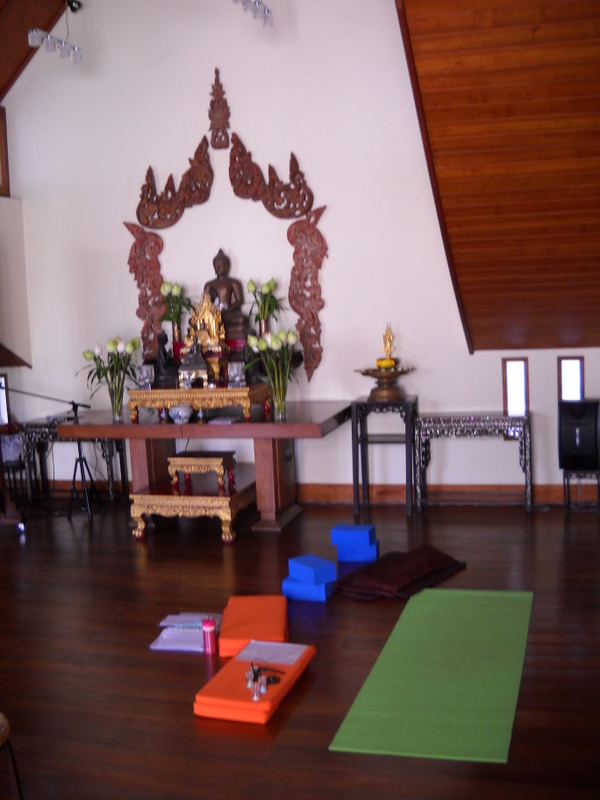
(Here are some slightly fuzzy shots of Nat’s studio at the Aryasom Villa.
If you’re going to be in Thailand sometime, be sure to check out her classes. She’s great, and the fee is very reasonable.)
 n
n
n
n
n


The ground may not have moved, here in Korea, but I still feel a little shaken. Not only by the disaster in japan, but all the other recent ones along with it.
Today, I’d like to share one of my favorite shots from my trips to Japan.
May things settle, maybe not exactly as they were before, but to some sense of normalcy for all those who have to keep going on in the midst of their world having been shaken up and washed away.