Daehaeng Sunim’s funeral – the last day

(You may be wondering what happened to the first days, but I’ll get those up after I get the photos.)

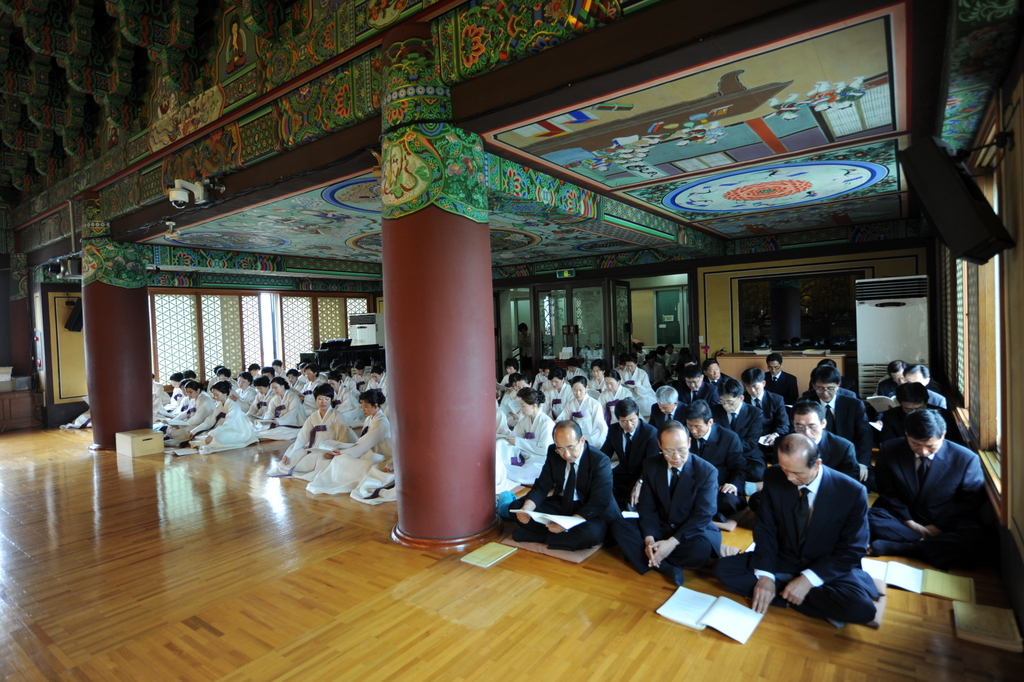
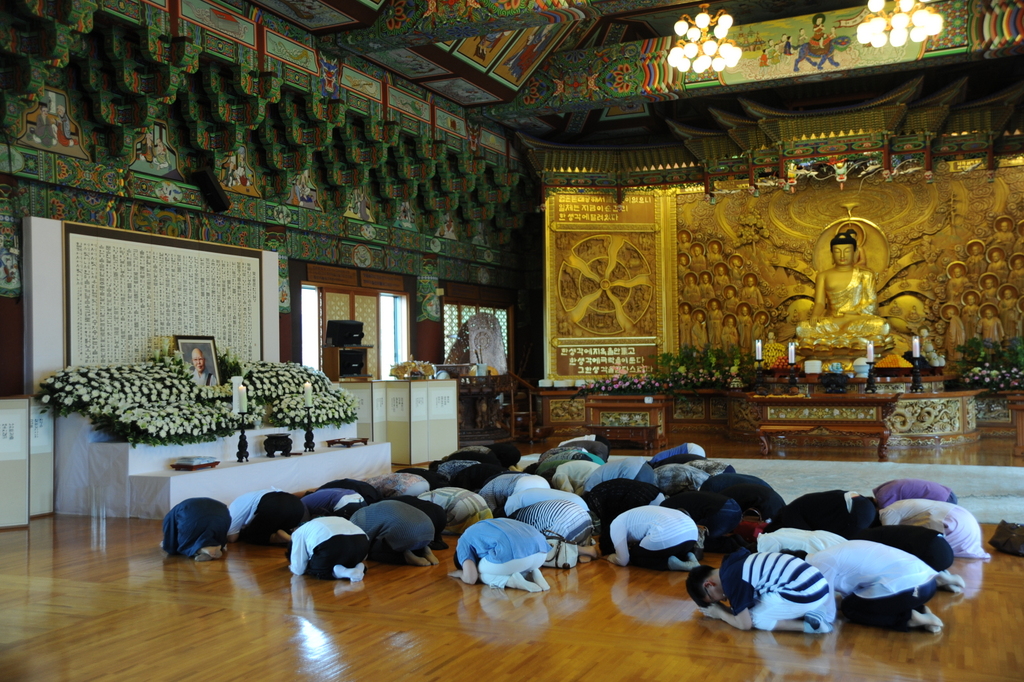
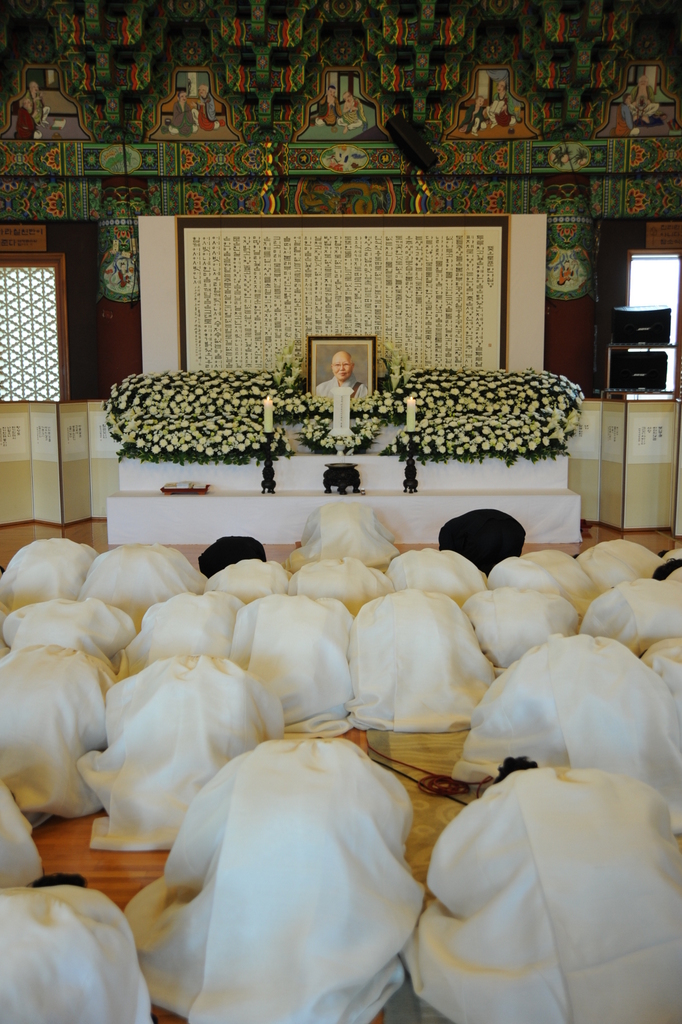
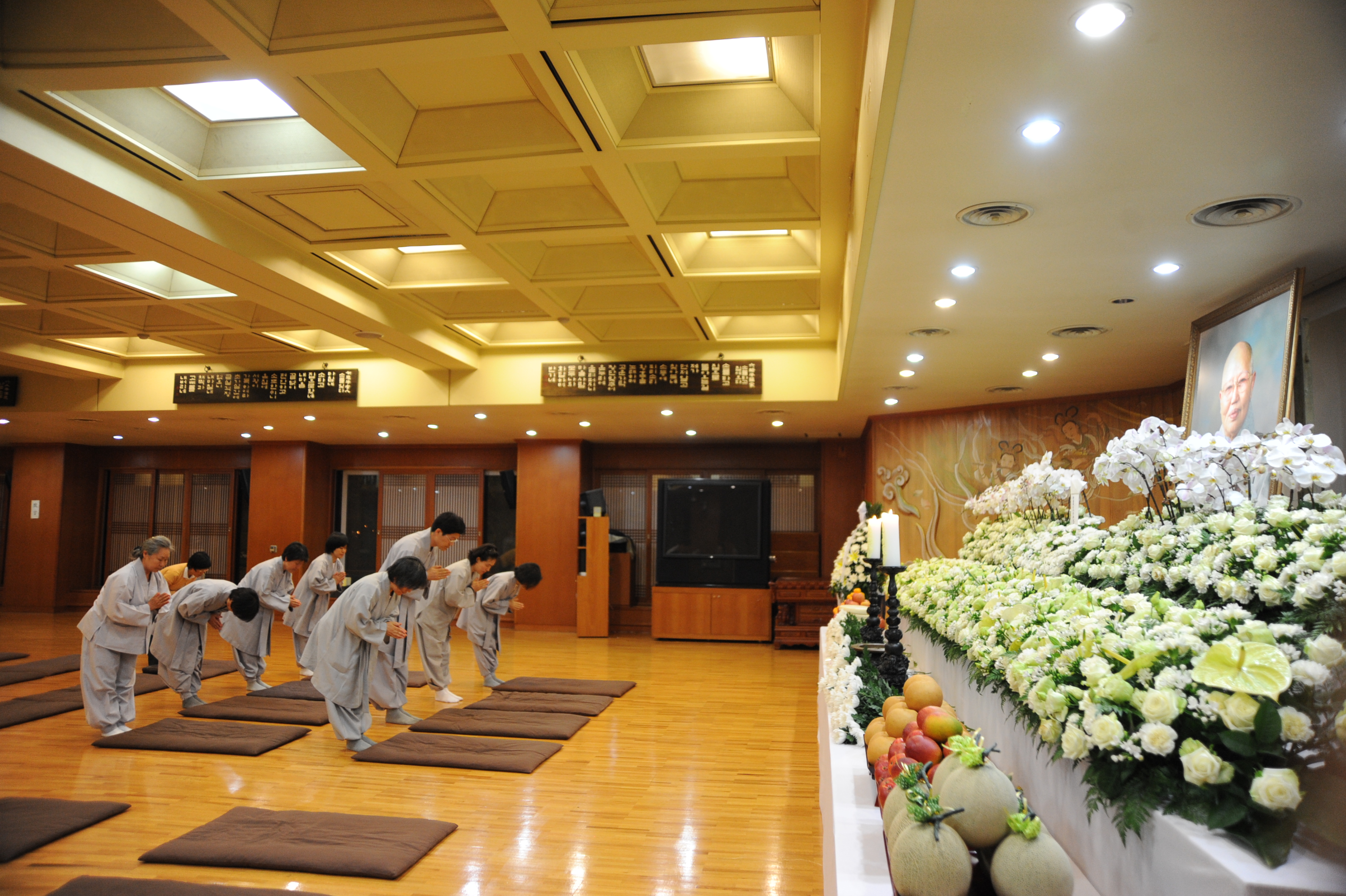
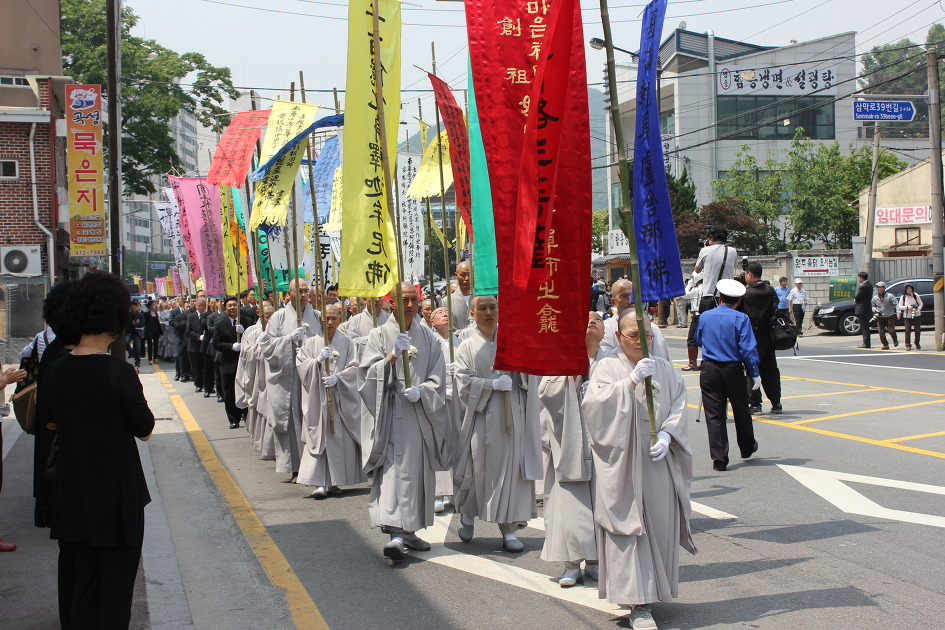
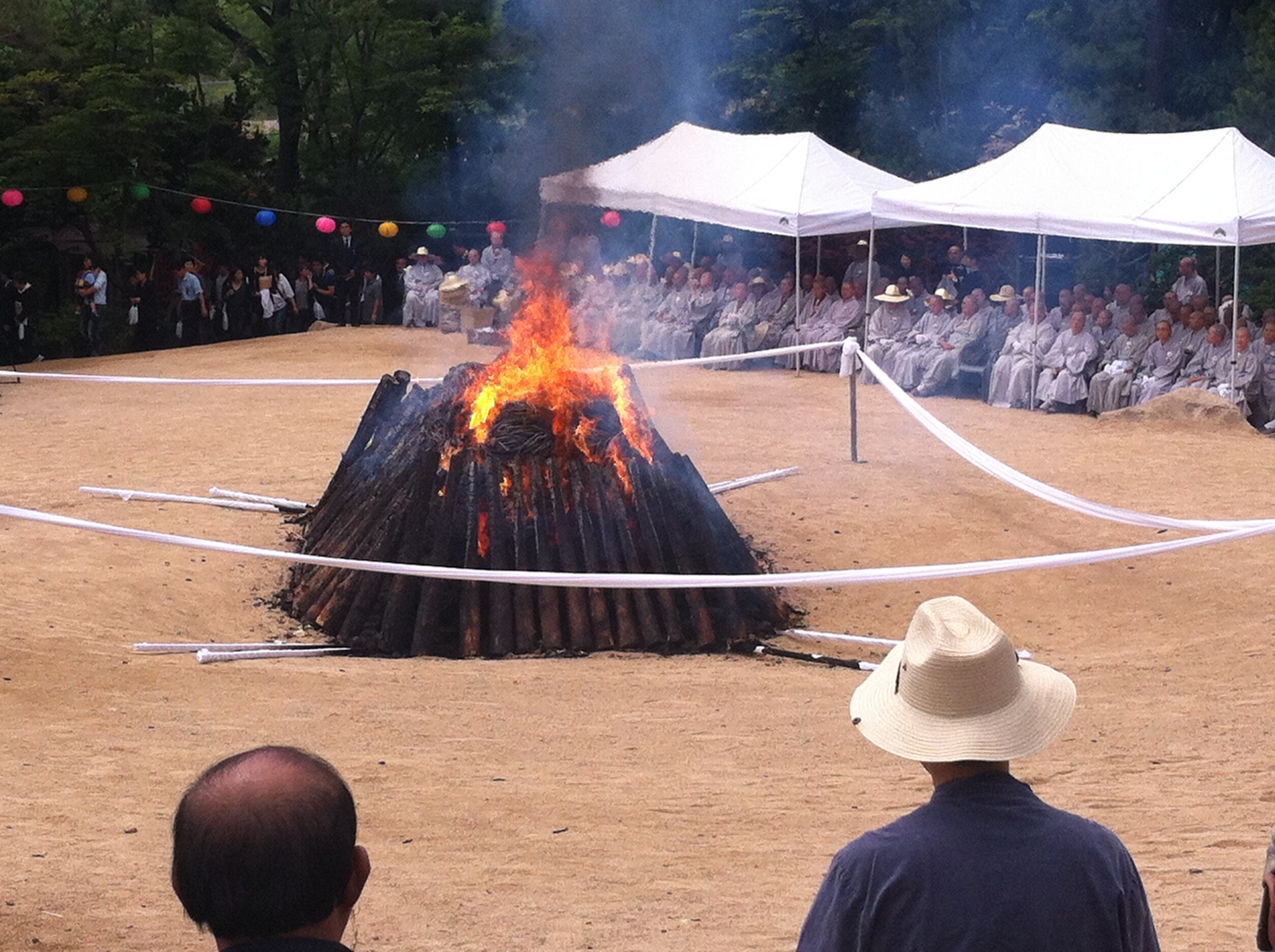
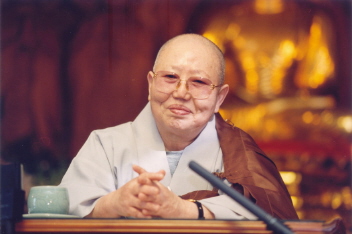
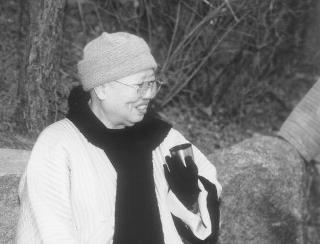
Yesterday we had the funeral ceremony for Daehaeng Kun Sunim. It was followed about an hour later by a traditional cremation ceremony. Although it was a difficult day in many ways, and I found myself crying again and again, it was also a very good day.
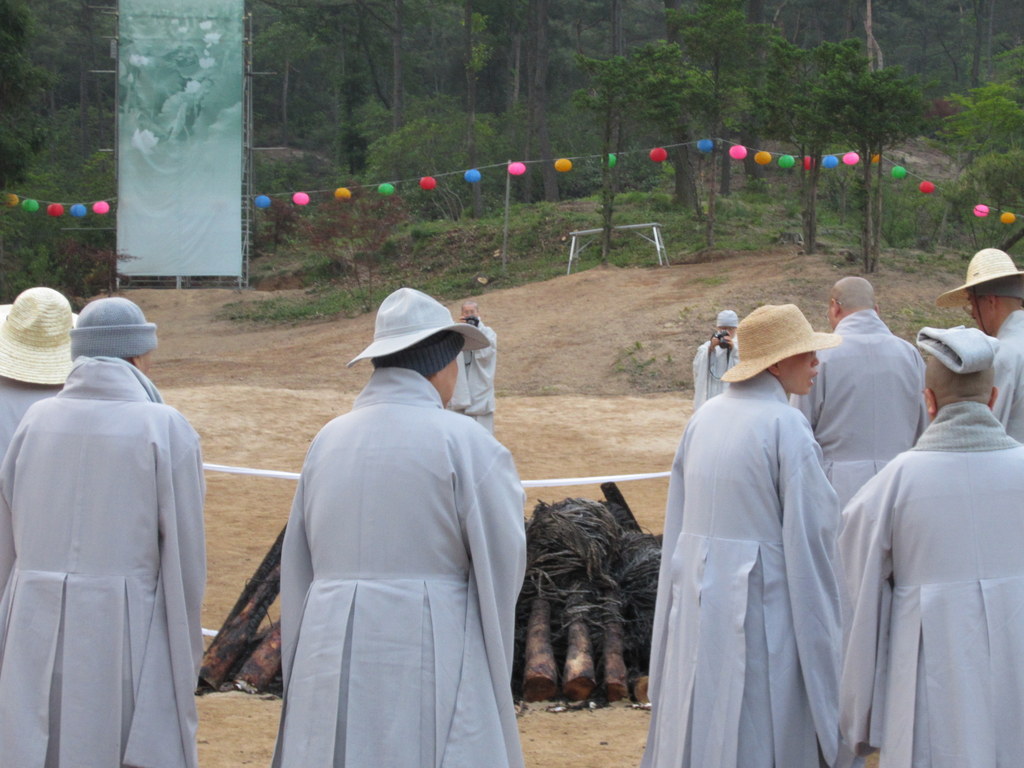
We lit the pyre at around 12 noon, and people stayed late into the evening. It was a beautiful day under the pine trees, amoung the grass and flowers, and all that was missing were picnic baskets. (I’m sure Kun Sunim wouldn’t have minded) Before the laypeople were sent home at 7pm, all of us who were left (75 sunims and ~300 laypeople) walked three times around the entire building and land, chanting all together.  After the third time, we formed a circle around the still burning pyre and sang Dharma songs, and the Buddhist version of the Korean “Teacher’s Song” and “Mother’s Song.”

With that the sunims began their watch. We stayed there, just meditating and being present (and only occasionally dozing off!) until 5am when the ashes had completely cooled.

Then we began the process of separating the remaining fragments of bone from the ashes. After this was finished, we moved back to the main center.


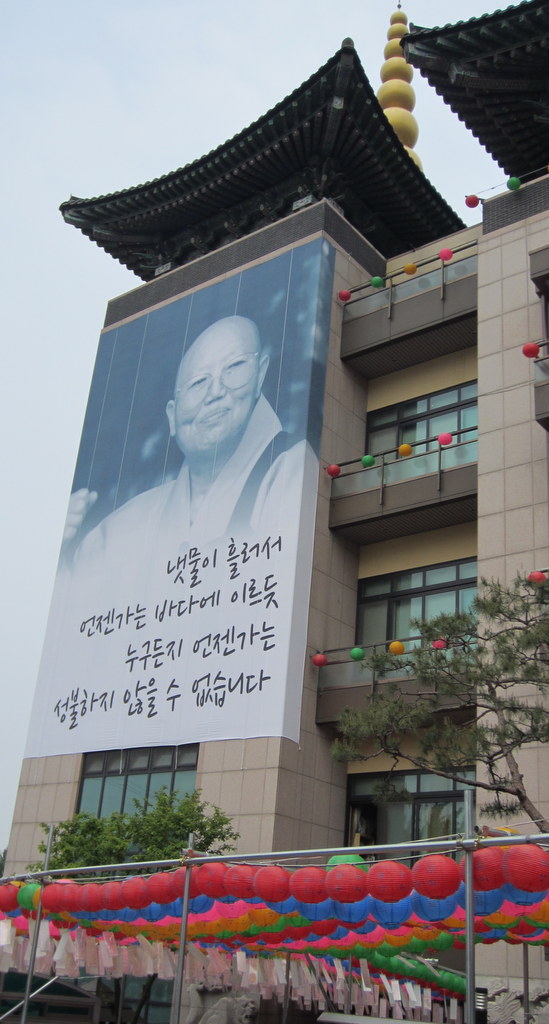
All water eventually flows to the sea,
like this every being will eventually achieve Buddhahood.

The Passing of Daehaeng Kun Sunim

(Seoul, Korea) Hanmaum Seon Center regrets to announce the passing of our beloved teacher, the venerable Daehaeng, on Tuesday, May 22, 2012. She was 85 years old, and was ordained as a Buddhist nun 63 years ago. The funeral will be held on Saturday, May 26th, with more details to follow as they become available.

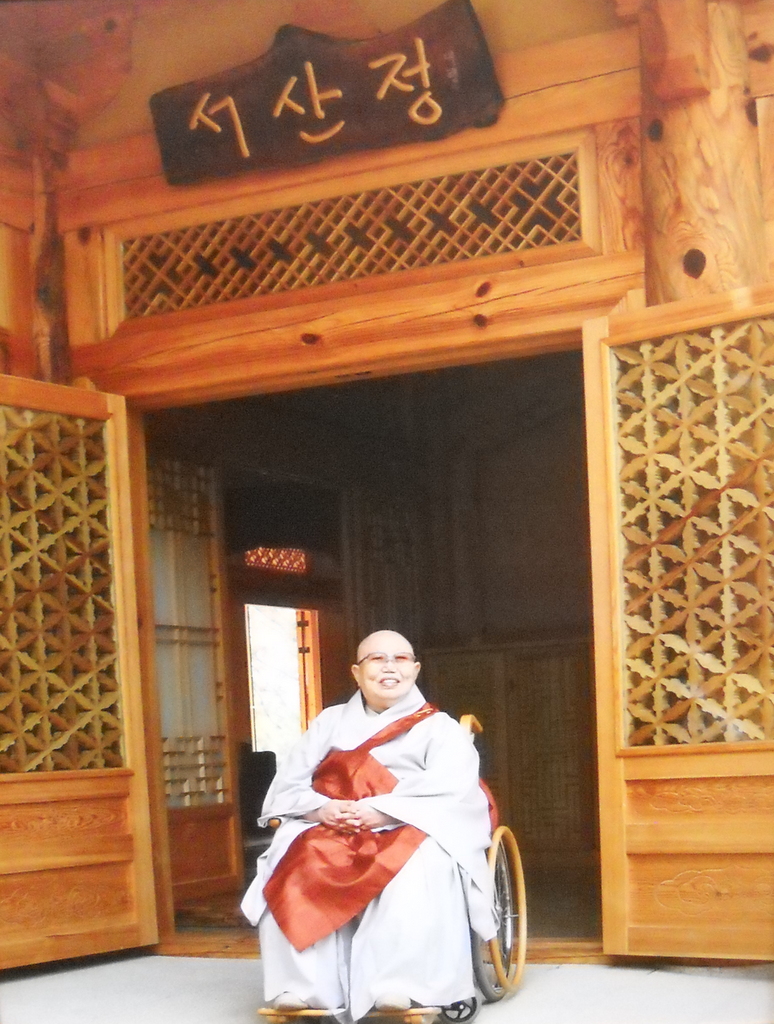
Daehaeng Kun Sunim* was a rare teacher in Korea: a female seon(zen) master, a nun who also taught monks, and a teacher who helped revitalize Korean Buddhism by dramatically increasing the participation of young people and men.
She made laypeople a particular focus of her efforts, and broke out of traditional models of spiritual practice to teach in such a way that anyone could practice and awaken. At the same time, she was a major force for the advancement of Bhikkunis (nuns), heavily supporting traditional nuns’ colleges, as well as the modern Bhikkuni council of Korea.

Born in Seoul, Korea, in 1927, she awakened when she was around 7 years old, and spent the years afterwards learning to put her understanding into practice. She would wander the mountains of Korea, wearing a ragged set of clothes and eating only what was at hand. Years later, she said that she wasn’t pursuing some type of asceticism; rather she was just completely absorbed in returning everything to her fundamental Buddha essence, and seeing how that affected what she entrusted.

This greatly affected her teaching style later, for she could clearly see the great potential, energy, and wisdom inherent within each of us, but saw that people suffered because they don’t know about this, and instead were looking outside of themselves. Clearly seeing the great light we each have, she taught people to rely upon this inherent foundation, and refused to teach anything that distracted people from that.

Her deep compassion made her a legend in Korea long before she formally started teaching people. She was known for having the spiritual power to help people in all circumstances with every kind of problem. She compared compassion to freeing a fish from a drying puddle, putting a homeless family into a home, or providing the school fees that would allow a student to finish high school. And when she did things like this, and much more, few knew that she was behind it.
She supported many social welfare projects, founded centers in seven countries around the world (15 centers in Korea, and 10 in other countries), and her teachings have been translated from Korean into English, German, Spanish, Russian, Italian, Chinese, Japanese, French, and Vietnamese.

*Kun Sunim is the Korean Buddhist title of respect for a senior nun or monk.

The Buddha’s Birthday: Lantern Parade and Street Fair

The Buddha’s Birthday is almost here, (Monday, May 28th this year). This means that the Lantern Parade in Seoul will be this Saturday, and with the street fair on Sunday.

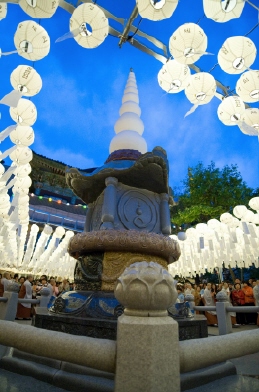
The lantern parade will begin around dusk, and will start at Dongguk University’s stadium, and head north to Dongdae-mun gate, and from there along Jong-no to Jogye temple. The lanterns are amazing, so don’t miss it if this is your first time. (I’m terrible at night-time photography, so all I have in the way of photos are colorful blurs!)

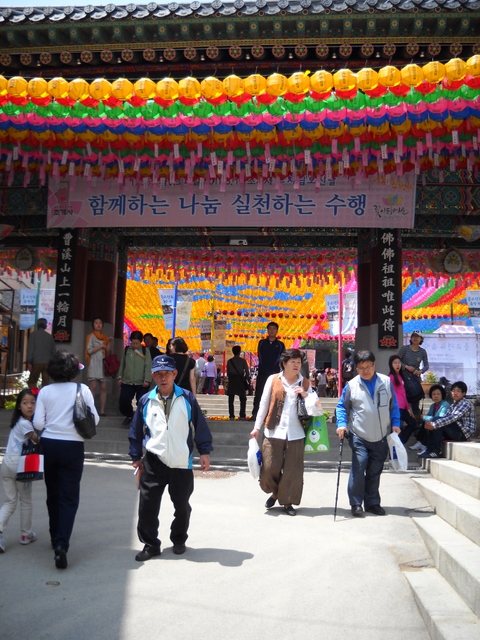
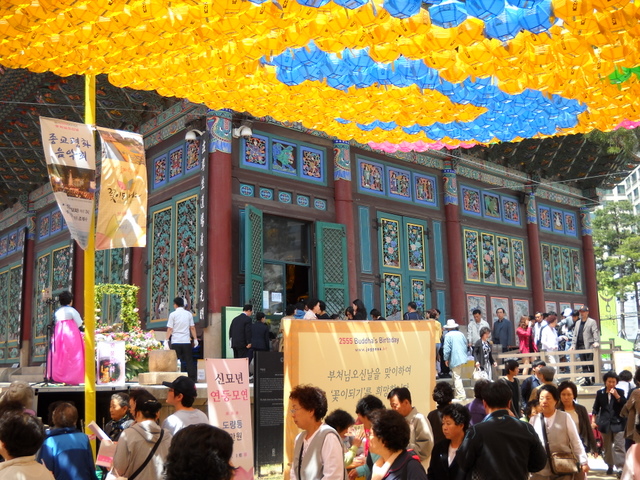
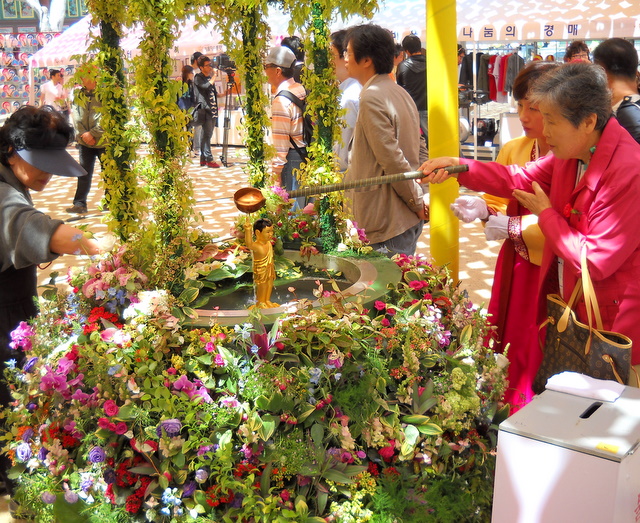
The street fair will take up the entire street in front of Jogye temple, and will start at 10-ish on Sunday morning. For an entire block, the road will be filled with activities and booths set up by Buddhist organizations and NGO’s from around the world. I can’t imagine any other place in the world where one could see so many different types of Buddhism and Buddhist organizations. Here are some photos from last year.  (You can see larger images of most photos by clicking on the image.)   For a great collection of night-time photos of Jogye Temple check out Robert’s photo blog.

Booths of the street fair stretching for a city block
you could hear these drums a block away
Farmer’s band: one of the great things about the day are incredible traditional music groups
a booth for making miniature lotus lanterns (like the ones in the top of the photo)


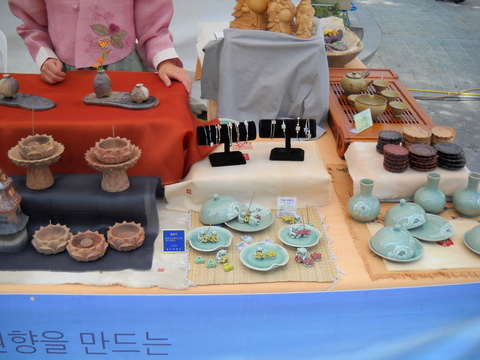
There was all kinds of interesting stuff for sale as well, here some incense holders
Incense being sold by Korea’s premier incense company, Neung In. They also provided the raw ingredients and showed people how to make their own incense.

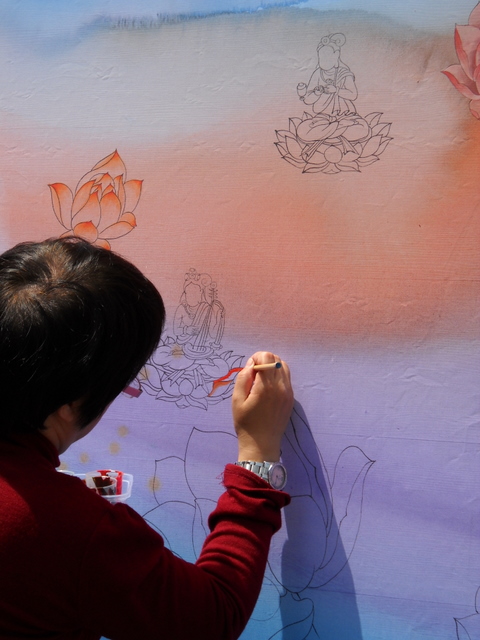
One of the cool things about the street fair are the activities, here passersby participate in making a Buddhist painting
At Jogye Temple


Under the lanterns in Jogye Temple
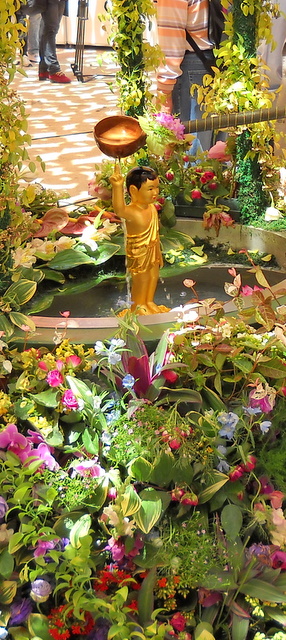
Bathing the infant Buddha
“Between Heaven and Earth, there is nothing that is not this precious Self”


Daegu Hanmaum, through the taxi window


When I first lived in Daegu, seven years ago, I used to occasionally pass by this building across the stream from the expressway that cuts through the city. It always caught my eye because of the unique tower of spheres on top.

When I learned about Hanmaum Seon Center, and found out there was a center, I wondered if it might be that building I used to peer at through the window of a taxi every couple of months or so during my first year in Korea. Last Saturday, after bringing Fina to the park for her birthday, we took a taxi downtown, and I waiting to pass the same place I hadn’t been by in nearly six years, and I could tell right away that it definitely was a Hanmaum center. It was interesting to me that for all these years that building poked out of my memory.

I’m hoping I’ll find a day really soon to drop by for once and visit the Dharma Hall. For now, I thought I would share the view from the expressway, an interesting sight/site in a sea of otherwise square, grey buildings

Daehaeng Kun Sunim:
Each of us has to believe in our potential to became a Buddha.
Deeply believe in your fundamental mind, the one that is doing everything, and make that your refuge.
For decades I’ve been repeating only this,
and going forward, I’ll keep saying it.
Even though I’ve said this for so long,
I’m not bored or tired of it,
and I’ll keep saying it
because I have deeply experienced for myself,
that this is the one true thing I’ve found.

“Know that you are Buddha,
return to and rely upon your Buddha essence,
and realize the full potential of a Buddha.”

I could emphasize this ten million times!

Translation and Spiritual Practice

Here’s part of a reply I sent to a friend, who asked how we were to come up with what he considered very good translations, and what he could do to improve his own work.
       Translation is an interesting topic to me, because while one form is from Korean to English, another equally difficult form is from general concept to our daily life. How do you turn one idea into ten applications? 

I’m a native English speaker, so that helps some, but not a lot, really. The main thing is practice. One has to be putting the teachings into practice, and then understanding begins to arise. Without this, they won’t make any sense.
The first step we do, is make sure everyone in the translation group (those who are actually working every day on the translation) all agree what the Korean means (English, in your case). This turns out to be a surprisingly long and hard step.

We basically discuss, argue, persuade, etc, until we arrive at an understanding of each sentence and paragraph that is at least 70-80% acceptable to everyone.  The situation is that people bring all their other life experiences into their understanding, so often they’re looking through different lens. And Dharma talks like Daehaeng Kun Sunim’s happen on many different levels at the same time.

People may also have a feeling that they understand what the text says, but then when they have to express it, and especially put it into another language, they can’t do it so well. Which also implies that their understanding wasn’t as clear as they felt it was. So people have to explain why they think a certain way of putting things is correct, and also to set aside their understanding and try to see it from the other persons point of view, to see if that way might be better.
o
o
Because it often means looking at things from the perspective of experiences I don’t have, it can be quite exhausting. If I still disagree, I try to think of a way that might explain why another expression or understanding is more appropriate. There’s a lot of chances for bruised egos in this process, but it works for us because everyone is trying to apply Daehaeng Sunim’s teachings, and working on letting go of “I”. Once we have a version of the original, with notes that express the general undrestanding, then we can begin to translate it into English. Again, this is a bit of a hard process, because people will often not like the english sentence or description, but they don’t have to skills to suggest the right (for them) alternative. So we keep working at it!

p
The other huge thing about the process is that when discussing what the text means, we have to set aside normal ideas of high and low. So even though I’m ordained, and the others are laypeople, everyone’s view has to be treated equally. And I have to accept that I may be wrong in my understanding. This way of working is very important here in Korea, because normally, once the senior person speaks, all the junior people stop taking. It’s normally hard for a junior person to argue about the meaning with a senior person. But this has to be possible to produce the best possible translation, because seniority or ordained status does not guarentee a complete understanding of the Dharma.

o
These are some thoughts about our work process that have come to mind. I’m sure I’m leaving something out, so feel free to ask if you have questions.  The key part of this is when I’m searching for what the text means, or how to express it in English, or how to understand what someone else is trying to explain, or how to explain my perspective in a way that they understand, I let all of those sink deep down inside me, and keep looking there until some idea arise. What arises then often tends to be very good, and brings everyone (suddenly!) together in agreement.

Always Flowing and Changing

 Here’s another poem by Daehaeng Kun Sunim that’s been turned into a Dharm song.  The ideas she expresses in just a few lines have such nuances and depths to them…. “Start where you are, really, you have everything you need. *Really* you don’t need to go looking somewhere else. I’m not kidding! It’s not something you can grasp, but it’s there. Just learn to rely upon it. Discover the implications of this as you go, and learn to be a force for good in the world. Really! It’s all with you already!”


Always Flowing and Changing

This world is where the Buddha-dharma exists,
and where enlightenment is found.
Searching for great wisdom,
while ignoring what arises in this world,
is like looking for a rabbit with horns.

Take the idea
that transcending this world is the way,
or that involvement with the world is a deluded path,
and stomp both these ideas to pieces.
Then the great wisdom of your inherent nature
can freely flow forth.

                     -Daehaeng Kun Sunim

Jijang – Jizo, the Earth-womb Bodhisattva

One of the popular Bodhisattvas in Korea and Japan is Jijang, or Jizo (Ksitigarbha, in Sanskrit.) Often he is portrayed as the Bodhisattva who saves beings in hell, or who helps extend short lives. In Japan, he’s often thought of as the Bodhisattva who looks after children or fetuses who’ve passed away.

But there’s an interesting thing about his name that I’ve only recently noticed:  The first character, “ji”(地), means earth, and the second, “jang”(藏) means to conceal. While this is often translated as “Earth-womb,” “Earth-store,” or “Earth-treasury,” this can also be read as “concealed by earth”.  Sound familiar?  (“Only covered by dirt” is a common reference to the inherent, enlightened essence that we are each endowed with.)

That which is only “concealed by earth” can save us from hell, can bring the lives that make up our body into harmony, and can help even those who have passed away.

Jijang Bosal
Jijang Bosal
Jijang Bosal

what’s keeping me busy

What Marcus said in his post yesterday was true, life with a young, growing family is busy!

Chong Go Sunim once asked me if having children has been good for my practice. My immediate response was, “No!” in the sense that Fina used to run circles around me, like I was a pagoda, yelling, “Woo woo woo woo!” every time I tried to sit, but I knew what he was getting at. There’s a lot less room for “me” in “my” life, and that’s as valuable as anything I’d learn sitting.

The side effect, though, is that I’m hesitant to write about practice when I’m not practicing very well myself.

Until I regain a balance, I thought I’d share a few photos of what’s been keeping me busy these days. What’s been lost in meditation minutes (and sleep!) is being made up for with Love, and there’s nothing wrong with that.

I hope they make you smile! ^_^

waking up to gratitude

Kannon

I can hardly believe that no one has posted to this blog for two months. But life is busy. Chong Go Sunim handles so much at the Seonwon. Joe and Joseph have families to look after. I’ve no idea what Jabu is doing, Carl works hard. As do I.  Things change. Isn’t that pretty fundamental?

Plus, I wonder, what is left to say? I’ve just looked over the archives and liked what I saw! But how many times can one say it? How many ways can one say it in?

A colleague at work shared something of just that with me today. He told me about the Red Pine he was reading and asked me “aren’t you surprised at me, a Taoist, reading these Buddhist books?” “Ah, but it’s all the same” I said. “Exactly” he replied. “And the more I practice, the more I see it. The difficulty is putting it into words”.

Wake up, wake up!
You have slept millions and millions of years.
Why not wake up this morning?

That’s from Kabir, using his words. Quoted by Brother David Steindl-Rast in the introdution to “Gratefulness: the Heart of Prayer”, in which he writes “… everything is gratuitous, everything is a gift. The degree to which we are awake to this truth is the measure of our gratefulness. And gratefulness is the measure of our aliveness.”

There are so many ways to say this. Stephen Mitchell, in his version of Psalm 17, writes “let me, when I awaken,/see nothing but the light of your face.” Awakening is to see the world as it truly is, as the face of God (if you stumble on this word, pick another, call it the face of Love or Juingong or Interconnectedness).  But already I’m lost, trying to write about that which is impossible to describe.

All I know is that the flowers on my little balcony are bursting with life and energy. I know that regardless of all the pain in this poor suffering world, I feel such gratitude for their purity and beauty. Barry at Ox Herding knows me well and, like all good teachers, he teaches for the student’s needs:  “I suggest getting down on our hands and knees in the dirt, bowing to whatever benevolent deity provides such extraordinary beauty!”

And talking of waking up to aliveness, here’s Kosho Uchiyama putting it into his words: “Aslong as we wake up and live life as universal self, we work in the direction where all things are alive.  And since everything we encounter is our life, with the attitude or spirit that our whole self is taking care of its own life we aim at giving life to all things, all situations, all people, all worlds.”

So many ways to say it. So many ways to express our gratitude for this glorious world and this glorious life. “Inherently life is one. Inherently, life is Buddha.” (Seon Master Daehaeng Sunim).