Wonhyo’s Awakening

Lately I’ve been (slowly) revising a collection of stories told by Daehaeng Kun Sunim  during her Dharma talks. Here’s the story of the awakening of one of the most famous figures in Korean Buddhism, Wonhyo Daesa (617–686 CE).

Wonhyo Sunim and Uisang Sunim were Buddhist monks who had become close friends, and were on their way to China to find a great master under whom they could study.  They had left Gyeongju, the capital of the Silla Kingdom, and were headed to the southwest coast of Korea to find a boat that could take them across the sea to China.

After weeks of walking, they were deep in the rival kingdom of Baekje.  The sky had turned dark and the showers were fast becoming torrents.  Before long the rain was blowing sideways and the two friends could barely see in front of them.  They looked around for some kind of shelter and eventually stumbled across an abandoned hut.  It was too wet to start a fire and they were both so exhausted that they fell fast asleep as soon as they lay down.  In the middle of the night Wonhyo Sunim woke up with a burning thirst.  Half asleep, he found a broken bowl half full of rain water. He drank it down with a sigh, and fell back to sleep.

In the morning when Wonhyo Sunim awoke, he was shocked by what he saw: decayed bodies were scattered all around where the two sunims had been sleeping.  This was no ordinary hut – it was a place for getting rid of the bodies of people who had died of the plague.  And the bowl full of rain water?  It was half a skull, with flesh still inside and crawling with maggots.  Running outside, Wonhyo Sunim began to vomit as if his insides were going to come outside.

Kneeling there with his stomach tied in knots, he suddenly realized, “The water was the same – it’s my thoughts that were different. Last night it was pure and refreshing, and now it’s so disgusting that.… The only thing that’s changed are my thoughts.”

As he quietly sat there, Uisang Sunim said to him, “Why don’t we get going; you’ll feel better once we get away from this place.”

Wonhyo Sunim didn’t respond. After a moment he asked Uisang Sunim, “Why do you want to go to China?”

“To learn the path, of course.”

“The path isn’t someplace far away.  It’s within us, wherever we are.  Why go to China to look for what’s already with us?

With this, Wonhyo Sunim headed back to the lands of Silla.

Wonhyo Sunim had taken the first step:  he had realized that it was his thoughts that made heaven and it was his thoughts that made hell.  If he wanted to attain the enlightenment of the Buddhas and Patriarchs, he would have to start with himself.  And there was no point in going somewhere else to do it.  So he took activity of his own mind as his fundamental hwadu (koan) and returned home to Silla. 

 If you want to discover what’s true and what’s real, you’ll have to start with your own mind. All of the principles and truths of the universe are already contained within you. Our fundamental mind gives rise to thousand different manifestations, and our fundamental mind can combine ten thousand different manifestations into one. This mind that ceaselessly gives rise to things and causes them to subside, also gives rise to every kind of different person, and can combine all those people into one.

So take the functioning of your own mind as your hwadu. If you practice like this, you’ll come to know what binds your mind, and what frees your mind. You’ll discover where you are rich and where you are impoverished, and you’ll discover that it’s mind that makes things big, and mind that makes the same things small. You’ll know for yourself the unimaginable wonders that this fundamental mind can call forth. By ceaselessly taking everything that arises through mind as your hwadu, you’ll realize that among all the things in the world, the path to true freedom begins with your own mind. For this is the very place of Buddha.

The fragrance of Grace


Those who have not yet been saved

will be saved

those who have not yet been set free
will be set free

those who have had no rest
will have rest

those who have not yet attained nirvana
will attain nirvana.

The Lotus Sutra, ch. 5


Lanterns for Buddha’s Birthday

The Buddha’s Birthday (May 10, this year) is far and away the most important celebration on the Korean Buddhist calender. The preparations start nearly a year ahead of time at our center, and by January preparations are in full gear.  By the time things are finished in April, the lanterns and floats will be gorgeous!  (Click on the images for a bit higher resolution image.)
        For everyone in the Seoul area, there’s been one important change this year:  the main lantern parade will begin at dusk Saturday, May 7th, and will go from Dongguk University to Jogye Temple.   Sunday, May 8th, will be the street fair in front of Jogye Temple, with a celebration/party in the evening.  The actual day is May 10, Tuesday, and so temples big and small across the country will be having their own celebrations.

wiring the lantern holders


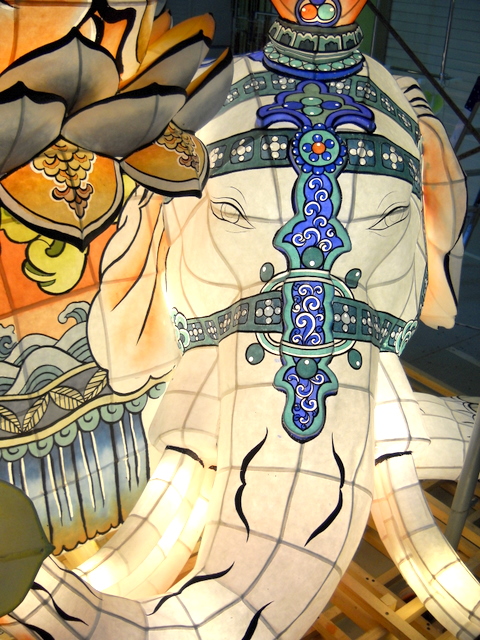
elephant at the base of the Avalokitesvara lantern


"say 'Kimchi'"


D -20, worklist


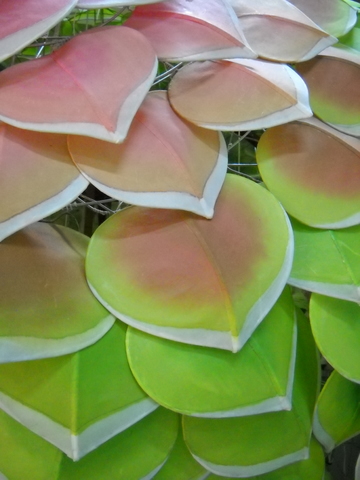
The Tree of Life. Actually, I'm not sure what this symbolizes(!), but I think it is that all creation shares the same root and are as leaves on the same tree.


each of the leaves are hand made of paper on a wire frame, and then painted


inside the tree

Bringing compassion into action – some Buddhists’ response to Japan

Here’s a guest post from Ojichan about his experience (and lack of) with people’s reactions to the disasters in Japan. I’m posting it here not to embarrass anyone or beat anyone up, but just to encourage us all to be a bit more aware of what’s going on in our surroundings.  I’ll post a link below to the original comment and my response, but for now I’d like to let people think about this for themselves.
     And congratulations to Nat, who raised nearly 8,000 bhat for Japan through her yoga classes!

Thank You and Metta to you all for your discussion here about our Buddhist response to the Japan disaster. So glad as well that your immediate friends and family were OK.

I am troubled about my practice and am hoping some of you might offer me some helpful advice or guidance.

I have Japanese family in Tokyo, Kyoto and Aomori and friends in Sendai. They have all now been found alive and OK. However, the first several hours we were very concerned that our family in Aomori were gone. They live near the harbor at sea level. When we called early, they answered “Hello…” and then the phone lines went dead. It was about 48 hrs. before we knew everyone of our close family and friends had survived. No tsunami in Aomori. Our friend in Sendai was evacuated.

I have practiced Vipassana, mostly off and on, for 42 years. But in the past 4 years I have been very committed. Daily practice, active leader in my sangha, several retreats and recently accepted as a student by a well-respected teacher in another city.

Here’s my dilemma: All my teachers, all the dharma talks, all the Sangha members are always talking about the importance of compassion for others and practicing metta.
All the people in my sangha are always so appreciative about the many gifts of sushi my wife has made for their gatherings. But when this happened, for a full week after, only one person called or even asked when I walked past them on the street. I tried not to notice, to surrender, to accept. But the silence was deafening and painful. My wife understands and responds with the stoicism of the Japanese. I can only attempt to imitate it.

In an effort not to go into victim hood I wrote a letter, describing the events and deep emotions for our family in those first few days of unknown. I added a very helpful letter I received from a Buddhist friend who was amongst the survivors at Sendai, describing all the enlightenment she and others were experiencing as they supported each other to recover and survive. I sent it t the one person who called. She sent it on to the entire Sangha. I then got about four very brief condolence emails. That felt a little better. But since then, nothing more… I myself lead a Tonglen meditation for the People of Japan the next week. There was good turnout. But since then, silence again.

I sent a copy of our experiences with our family, the letter from Sendai and the materials I organized on “A Buddhist Response for the People of Japan” to my personal teacher. I suggested she might find it useful for any of her presentations or retreats. No response. Then last week she emails me that she wanted to reschedule our next 1:1 talk because she was too busy…again, no comment about our family or any of the events in or the Buddhist people of Japan. I checked her website, her sangha’s website, hoping to see that she had responded in some way with an offering of metta for Japan. No comment at all. I’m scheduled to attend another retreat this weekend with another prominent teacher. I checked his website. Nothing there either.

I googled the internet looking for anything from Buddhists in response to one of the greatest disasters ever. Very little there either.

I was so pleased to see your comments here, but I’m very troubled and honestly don’t know what the truth is about why our fellow Buddhists, our world-wide sangha is so silent at a time like this. Perhaps, what I’m hearing from myself, is that the lesson in this is to build my trust and faith only in my own daily practice. To not put other’s words or opinions, even teachers above my own mindful observations while following my breath, and through my own metta, even in the midst of such apparent mindlessness all around me. But so many teachers, even the Buddha, also urge us to take sanctuary in the Sangha.
I honestly don’t know what to do with that now! I ‘m also unsure about how I should respond to my teacher when I do speak next with her. I know I need to surrender somehow and not add to the suffering. But it also seems unskillful and nonloving to simply repress this and never ask my sangha or my teacher to look more mindfully at what appears to be a pretty huge gap between their dharma talk and their actions in a time of real need amongst their fellow Buddhists in Japan. I have no idea what right speech or action, might be in the midst of this apparent silence.

I’d very much appreciate, anything you’d care to offer here in the way of wisdom, understanding or guidance.

In the meantime, my wife and I are going to Japan in a few weeks. We will roll up our shirt sleeves and pitch in what ever humble opportunity we can find there in our neighborhood and I’m planning to go find the local monk, and ask him if he has something I or my sangha can help. “Gambarimasu!”

Namaste,
Ojichan”

Link:  the original comment and responses

Yoga benefit for Japan – Metta

Next week, Nat from A Summer Day in the City of Angels will be offering a series of yoga classes as part of a fundraiser for quake victims in Japan. This will start Tuesday the 22nd and runs through the 30th; all the proceeds will be used to help victims in Japan. See the link above for details

Although this will be held in Bangkok, I’m writing about it because
A) it’s a good cause,
B) Nat is an incredible yoga teacher,
and C) hopefully, her generosity will inspire others to similar acts.

 
I’d also like to ask everyone to please keep the people of Japan in your thoughts, and raise as much metta for them as you can. Please remember the workers at the nuclear plant, and deeply input the thought that the situation there should settle down and be resolved without any further problems.

with palms together,
Chong Go Sunim

 
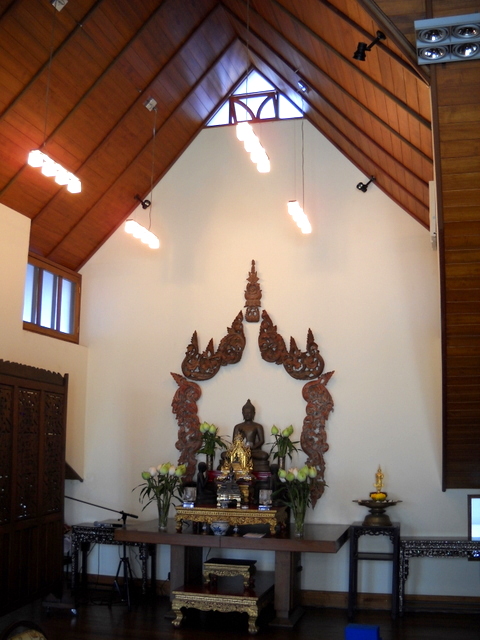
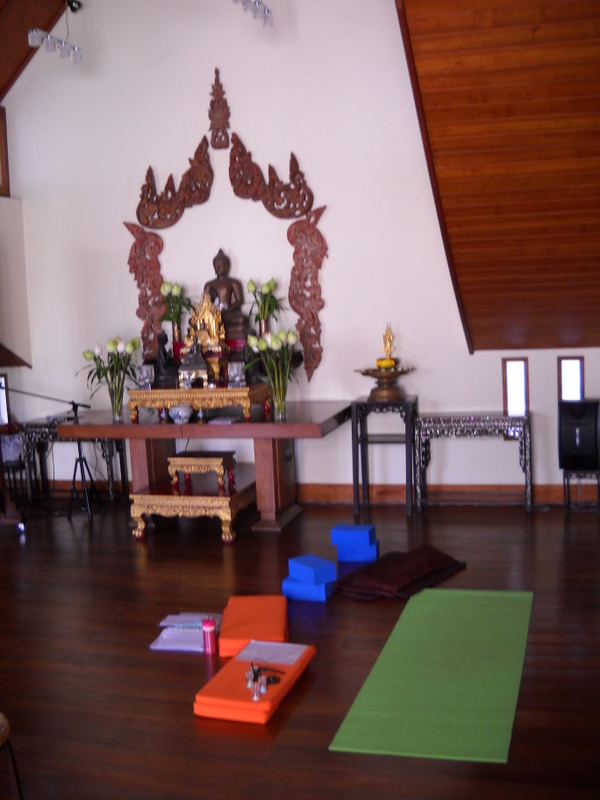
(Here are some slightly fuzzy shots of Nat’s studio at the Aryasom Villa.
If you’re going to be in Thailand sometime, be sure to check out her classes. She’s great, and the fee is very reasonable.)

n

n

n


Marcus and Nat after class


People doing good – Japan

Here’s a link to lot of tweets about what’s going on in Japan. The cool thing is that most of these are about the great things people are doing to help each other. Really nice to read about how decent people can be when the chips are down. Here’s one of the first tweets:

* At Tokyo Disneyland
They distributed sweets that are part of their merchandise.  High school girls with heavy makeup took away more candies than they would possibly eat and that raised my eyebrows.  Later, I saw those girls giving the candies to kids at evacuation areas.  Families with kids had limited mobility and couldn’t get to where the candies were distributed.  Go girls!

(Thanks to Monster Island for this link.)

https://docs.google.com/document/pub?id=1oR7mRBNCog-FeVrtl0dD4Suoi2hL0XE4YOoAPdCyZ3w&pli=1

Japan Earthquake, Marcus’ account

Marcus, who posts here when time permits, was just caught in the earthquake in Japan. We lost contact with him for a day or so, but it turns out he’s fine, some modest hardships aside. He and Ikumi were together during the quake so they didn’t have to worry about not being able to contact each other, and Ikumi’s parents also came through things without suffering any damage. Here’s Marcus’ account of the earthquake.

(Joseph has already posted this at http://somewhereindhamma.wordpress.com/ but I’ll go ahead and repost it just in case someone’s missed it there.)

Calm though the whole earth trembles
 
I moved to Japan last week. I came here, after many years of living and working abroad, in Thailand and Korea mostly, to join my wife, Ikumi, to find a job, and to finally start putting something in the bank. I love Japan, the quiet, the cleanliness, the tiny temples tucked into odd corners between brand-new metal and glass skyscrapers. But the economy isn’t doing so well these days and my job hunt is turning out to be harder work than I imagined. Still, I have a few interviews lined up and on Friday morning left early to see a man about a job down in Kamiyacho.
 
The position turned out be not quite as I’d imagined, with a start date still months away, but promising all the same. My next stop was the Tokyo governments’s help and advice office for unemployed foriegners. They call it ‘Hello Work’, I call it The Job Centre, and Ikumi, taking a day off work to help me find it, came along too. It’s on a street near Shinjuku right next too Tokyo’s Korean town and just past some of Tokyo’s seedier streets. We walked warily around a group of half drunk gangsters going into a girlie bar, and looked into the Korean shops and thought about a second lunch.
 
The woman at Hello Work explained that the economy is not doing so well these days and that my job hunt might be tougher than I’d imagined it would be and I nodded politely as she took my details. We looked through the listings and after I’d rejected all the jobs that involve teaching two-year-olds (I kid you not) was left with McDonalds (must have fluent Japanese) or toilet cleaner (must be female and have fluent Japanese). But my Hello Work advisor did have a great list of places that offer free language lessons and I put a copy in my bag.
 
We all stood up and my advisor bowed to Ikumi. Ikumi bowed back. She began to bow to me. I began to bow back. The next thing I know is that me and Ikumi were crouched down under my Hello Work advisor’s desk, wondering how on earth I came to be on an ocean-liner on a particularly choppy stretch of open water. The room, and my stomach, gradually stopped moving and we thought about getting back on our feet. But not for long. During the next few lurches we scuttled over to a more roomier desk, Hello Work advisors really need more work space, and told each other that everything was going to be okay.
 
Watching the signs hanging from the ceiling was the only way now of knowing if the building was still moving around us as the internal balance mechanism in our inner ears or whereever it happens to be had simply given up on what it considered an unfair workload. We sat on the floor and waited and slowly, slowly, moved back out into the open office space of Hello Work. “If our life was a film or a book”, Ikumi managed to joke, “this would be a really crap ending”.
 
We walked out into the street and I noticed a temple on the other side of the road. I can’t pass a temple, in any country, without taking a quick look, and, thinking it was all over, we went across. It was a Soto Zen temple with a lovely statue of Kanzeon in the courtyard and we bowed in respect and wondered what to do next. The street was full now, with people in a state of real shock and we walked towards Shinjuku thinking we’d just get a train home. At least that was out plan until the street started moving under us.
 
The trees were shaking, signboards swaying, I noticed a crane on top of one the buildings swinging wildly from side to side. People were stood in total silence, many were sitting on the curb, the entire phone network was down and so not a single person was talking into their mobile. The oddest thing about the whole event was, for me, the silence. Yet at the same time no one was screaming or running or panicking in any way. The cars had stopped driving, and apart from the sound of distant sirens and the sight of trees flying about on a windless day, everything was somehow very still.
 
We decided to get as far away from buildings as we could and headed to the Shinjuku Gyoen National Gardens. A picture of the crowds around the station made the front page of many newspapers the next day, but we skirted the edge and made for the safety of the trees. A few minutes later we were in a landscape of ornamental lakes and bridges, with not a person or office tower in sight. A group of elderly ladies in formal kimonos came out of a teahouse and asked what was going on. So absorbed had they been in their tea ceremony, they’d missed the entire thing. On the lawn outside a stone lantern had tumbled over, and had gouged a deep hole in the earth.
 
We left the park and hour or so later. It was getting dark, and bitterly cold, and we knew we had to find shelter somewhere. The entire transport network, buses and trains, was down and we didn’t want to sleep in a station. On my last visit to Japan I’d been deeply impressed by the interior of Tokyo’s St Mary’s Roman Catholic Cathedral and I wondered if it might remain open for some of the many thousands of people like us with no way of getting out of the city. It took us about two hours to walk there and they did indeed open their doors to the city’s temporary refugees. All four of us.
 
We saw on the TV on my mobile phone (thankfully still working) that at nearby Ikebukero, one and a half thousand people were taking refuge in the underground passages of the train station. One hundred and fifty people were spending the night at the Jodoshinshu Tsukiji Hongwanji Temple. But at St Mary’s there were just the four of us. Me, Ikumi, and two students from a nearby university. The young priest and his team provided snacks and hot water and tatami mats to sleep on and turned the heating up and left it on all night for us.
 
In the end the floor was too cold to sleep on, but we managed a couple of hours and then passed a good night eating and reading. I read a couple of chapters of Ikumi’s novel out loud to her, she’s currently reading Joanna Trollope’s ‘Friday Nights’, and we went over some of the more tricky English. And I spent some time with Stephen Mitchell’s wonderful translations and adaptations of the psalms, a book I’m rarely without these days. And we watched more TV and waited for the morning to come.
 
We took a couple of trains to get to the outskirts of Tokyo, they weren’t running any further, that were so crowded the breath was literally squeezed out of us. When we got to our interchange though, as we shouted out “sumimasen, sumimasen”, somehow a passageway was found and other passangers pushed and pulled me and Ikumi through the dense crush of bodies to where we needed to go. I felt immense gratitude for the Japanese people here. At no stage had I seen anyone panic, or complain, or shout. The trains were heaving with tired bodies just like ours, but everyone was nothing but polite.
 
At the end of the line, we started walking. Around us were hundreds, thousands in fact, of people all doing the same, quietly and purposefully walking home. If a helicopter had flown overhead it would have seen all the main streets out of Tokyo, in the blinding early morning sunlight, full of tired commuters making their way on foot from station to station. At one point we found a train that was running and, from its window, looked out at a far off bridge made dark with its line of office workers on their way home.
 
We finally got back at about noon and had lunch, a hot shower and watched the awful devestation that the earthquake had brought. As we watched TV we felt small aftershocks run through the house. On the way home I’d joked about that being the last time I ever go to the job centre, but now it didn’t seem quite so funny. I checked my email and found my inbox full of messages of concern from friends and family, concern for me and Ikumi, for Ikumi’s family, and for all the people of Japan. Those good, calm, resilient people of Japan.
 
————
 
Footnote:
 
I’ve taken the title of this account from Psalm 46 of Stephen Mitchell’s adaptations.
The first verse of which runs:
 
God is our refuge and strength,
our safety in times of trouble.
We are calm though the whole earth trembles
and cliffs fall into the sea.
Our trust is in the Unnamable,
the God who makes all things right.
Admonitions to Beginners: Ven Ya-un’s conclusion

Here’s the conclusion to Admonitions to Beginners. It’s quite nice on its own, but since this text has been posted over several months, I’ve gone ahead and added a summary of the Venerable Ya-un’s major points. While these were originally intended for monastics, I think there’s a lot here that would benefit all practitioners. What really strikes me about these admonitions is there emphasis on seizing the day, Don’t miss this chance!   

 
The moon rises and sets,
urging old age to come. 
The sun comes and goes,
hurrying time along. 
Fame and possessions
are like the morning dew,
hardship and prosperity
like wisps of smoke in the evening.
I most sincerely hope that you will practice self-cultivation,
become a Buddha without delay, 
and save all beings. 
In this life if you ignore these words,
without a doubt, regrets will fill your next life.

 
My own true self!

Being born as a human being is rare as a blind tortoise rising from the depths of the ocean and putting it’s head through the hole in a wooden yoke that’s floating on the waves. Will you spend your entire life indulging in laziness?! Will you ignore spiritual cultivation?! It’s difficult to be born as a human being and so much harder to meet the Buddha-dharma.

If you lose this opportunity, then even though a thousand kalpas pass, it will be difficult to have a human body and meet the Buddha-dharma. Therefore, you should take these ten admonitions seriously and practice diligently, without stepping back. Realize true enlightenment without delay and save all beings.

My hope is that you will overcome the sea of birth and death so that you will be able to save all beings, not for the sake of your own benefit. From the beginningless past up until your present life, while being reborn and dying as one of the four types of lives, you have always depended upon your parents. Over that immense time, the number of beings that were your parents is beyond imagining. If you reflect upon this, you will realize that among the beings of the six realms, there is not one who was not once your mother or father, your brother or sister, your son or daughter.

These beings have fallen into evil states, and day and night experience unimaginable suffering. If you don’t save them, how much longer will they have to suffer? Thinking about this, I’m filled with sorrow. It’s as if my heart is being ripped out.

My most ardent hope is that you soon develop all-penetrating wisdom and attain great, unlimited spiritual power and every kind of skillful means. I pray that with this you will become a pillar of wisdom that saves all beings lost on the rough seas, that you save all of the confused beings who are lost in the mountains of greed.

Don’t you know that all of the Buddhas and Patriarchs of the past were once ordinary people like us? They were worthy people and so are you. You just don’t practice, it’s not that you don’t have the ability.

There is a saying, The Way doesn’t turn its back on people, people themselves turn their back on the Way. Also, If one determines to achieve the Way, then the Way naturally comes to meet them. This is so true, so true.

As long as you maintain firm belief, how could you not awaken to your inherent nature and become a Buddha? I swear now before the Three Treasures that I have cautioned you on every single point. If you deliberately violate these, while knowing that your actions are wrong, you will fall into hell while still alive. How can you not be careful about these points?!


|


Summary of Ya-un’s Ten Cautions

1. Refrain from extravagant clothes and food.
2. Don’t be stingy with your possessions, and don’t covet what belongs to others.
3. Refrain from unnecessary speech and travel.
4. Associate with virtuous friends and avoid evil people.
5. Don’t sleep outside the fixed hours for sleeping.
6. Don’t feel that you are superior to other, and don’t look down upon others. (Also, don’t feel that you are equal to others or less than others.)

7. Always maintain a proper attitude towards sex and wealth.
8. Do not associate with worldly people, and so become an object of scorn.
9. Do not criticize others.
10. Always maintain an undiscriminating mind, even among others.

Going where we’ve never been

Today over at Somewhere in Dhamma, Joseph talked about the fact that he often knows what something isn’t, but doesn’t necessary know what it is.

I suppose that’s the difficulty with most things: we know what we don’t want, but it’s hard moving towards something that we aren’t used to experiencing.

Daehaeng Sunim often told people to learn what causes flowers to bloom, and then create those conditions for your own tree. In the same way, I guess we have to do a lot of research and meditation to figure out what we do want, and then apply it.

If we behave like rich people, eventually we’ll be rich. If we follow the habits of a poor person, before long we’ll be poor. If I want to be skinny, then even though I’m not now, if I follow those habits, my weight will go down.  If you want to be a better parent/friend/spouse then read like crazy and figure out what behaviors and ways of thinking you need to bring into your life.

 Likewise, if I follow the behaviours of an enlightened person, then eventually I’ll get there, too.  In fact, a lot of the talk about precepts in the sutras isn’t “Don’t do…,” so much as “A Bodhisattva or wise person doesn’t do….”

In Bodhidharma’s Two Entrances and Four Practices, he says exactly this. If you can’t just to go straight in and perceive the fundamental, then make your behaviors and thought habits in line with the fundamental. He goes on to give the four practices:

1. Forgiving injury – know that nothing arises without cause, and that the cause of this too lies with ones own behavior.

2. Following conditions – (I think) this means not getting caught up in the things that arise and disappear in our lives, because these are all conditioned, and thus have only temporary existences.

3. Not seeking – letting go of things as they go, not fearing things that come, and in general making an effort to not get caught up in desires and attachments. The opposite is a life lived in pursuit of desire, of always chasing the next thing, of constantly being focused on accumulation.

4. the practice of according with the Dharma.  I think this is referring to living in accord with the fundamental non-duality of all. Thus, this one is described as the perfection of giving, where one is free of stinginess.  Daehaeng Sunim often reminds us that it isn’t our money, or even our children, rather we are just taking care of them for the benefit of the whole.

A common thread I see in these is the idea to always view things positively.  This may seem a bit simple, but it’s incredibly powerful. Sometimes it’s a struggle to view things in a positive light, but this has an almost infinite power to free my own heart.

On the one hand moving forward towards this unknown really is like taking a step off a hundred foot bamboo pole, or swallowing the Yellow River in a gulp. And yet… We still have to read and study to help with the worldly things that we don’t know.  But from time to time we have to entrust what we’re doing to this fundamental thing that’s greater than “I”.


“the whole of the holy life”

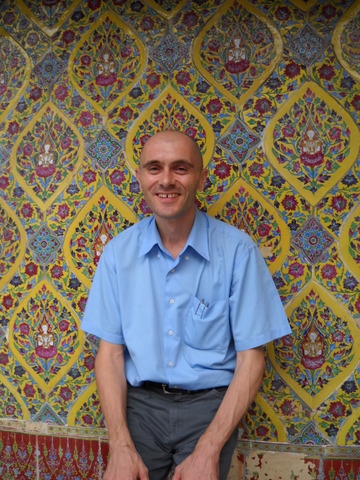
In 2009, as part of the Seonwon’s tenth anniversary celebrations, Chong Go Sunim visited Bangkok for the first time and gave a joint talk with Phra Cittasamvaro Bhikku on the subject of Buddha-nature. During his visit I accompanied him to various places in the city, including Wat Chanasonkram, the lovely temple opposite the western end of Khao San. Chong Go Sunim was struck by the good feeling in the main hall, and on the way out he took a few photos of the murals on the interior walls.

One picture came out particulaly well and was used over a whole page a month or so later in the Hanmaum Journal. And last month, at the start of his second visit to Thailand, Chong Go Sunim very kindly presented me with a large print of the photo which shows the colours and details of the mural with great clarity. The scene is a simple one of the Buddha, before his enlightenment, escaping his father’s palace on his horse Kanthaka with his attendant Channa holding on tight at the back.

The horse is not on the ground but, with legs stretched out front and back, is flying through the air. This is no ordinary leap, they are high above a river bend with mountainous shores, under a night sky full of red and orange tinged clouds behind which you can just make out a luminous full moon. Despite the action depicted in the scene it’s remarkably still.  Prince Siddhartha’s royal crown is perched upright on his head, and holding onto the flying horse looks like it involves no struggle or fear at all.

But the most remarkable thing about the picture is not the young prince or his devoted attendant or the magical horse, but five figures, picked out in white outline only, aiding him in his flight. One, with the multiple faces that denote Brahma, stands to the left, holding a gently flowing parasol above the future Buddha’s head. The other four almost ghostly figures, kneeling in traditional Thai sideways style despite being airborne, each hold aloft one of the horse’s hoofs.

I don’t believe, despite the daily chant in temples all over Thailand affirming otherwise, that the Buddha was self-enlightened. Not if by that we mean that his achievement was accomplished single-handedly, and this picture explains what I mean. The entire universe acted in his support. Heavenly figures held his horse aloft through the night sky. Then teachers came to guide him through his first comprehensive meditations. On the point of starvation, a young woman came to feed him and teach him the nature of kindness. Mara even helped him along. After his insight into how we all share the same nature, disciples came. A community was built.

Sangha is essentail to spiritual growth. My friend Roy, in a lovely photo essay entitled ‘Church’ beautifully describes how anything, everything, can be a church or sangha. And he’s right. “The only offering accepted here is presence – your very life” he writes. And “There is nothing that is not our teacher” Daehaeng Sunim teaches. “The resolute and unflinching mountains silently tell us, “Live like a mountain.” The ceaselessly flowing waters whisper, “Live like water.” The flowers that bloom in the midst of any kind of adversity quietly sing, “Live like a flower.” A weed living in harsh soil says, “Live courageously.””

But community in the more usual sense is also essential for most, for me at least, in providing support on the spiritual path, and during the course of my life I have moved through a number of wonderful communities. In various places and periods of time I have been a regular attender at a Quaker Meeting House, in an Anglican Church, in a small informal Therevadan sitting group, at Chong Go Sunim’s Saturday Sangha in Seoul, in the diverse group known as Littlebang here in Bangkok, and for the past two and a half years my main Sangha has been, as well as Littlebang, the wondeful Bangkok Seon Club and Seonwon.

One of the things I want to do in this post is to thank all my past communities for their amazing warmth and support. Especially, on the eve of my leaving Bangkok, to thank Seon Club. I’ve found in Hyedan Sunim, Mrs Nam, Young, all the regular members of Seon Club and Seonwon, and all those that have come along and contributed in so many ways, a truly inspiring and caring group, one that has aided and challenged me on my path. Thank you. And though sad to leave such a vibrant and friendly Sangha behind me, I know their influence will last many years to come.

Later this week I’ll be on a plane, leaving Bangkok, this city that I know better than any other in the world, heading to a new country a new life and to unknown future communities; and I can’t help but think again of that picture of the Buddha-to-be (and we are all Buddhas-to-be) flying away from home. He doesn’t strain forward, lean back, or flee the dangers surrounding him. He isn’t trying to control the horse that’s carrying him. He has set his direction, without which no travel would be possible, and now all he does is let go, and trust the invisible hands that are always ready to carry him to where he needs to go.

What are you looking for?
Whatever it is, you have to start by letting go;
Learn to trust the fundamental source within you.
Whether we call this Buddha-nature, God, or true self
Makes no difference. It has guided you and supported you
For a billion eons. Through it all things are connected,
And unseen energy flows back and forth
Between all lives and things.
Seon Master Daehaeng Sunim

Links:
WUaL!: Chong Go Sunim in Bangkok – 1
WUaL!: Chong Go Sunim in Bangkok – 2
WUaL!: Start by Letting Go
Return to the Center: Church