Running Errands for the Dharma-realm

If you’re doing what the Universe needs done,
the Universe will support you.

Years ago I read this by the thinker and inventor R. Buckminster Fuller, and was really impressed.  He went on to say that if no support is forthcoming, you’re probably not working on what the Universe needs, and you need to change direction asap. 

My own teacher says something similar:

A practitioner is someone who is merely running errands for the Dharma-realm.

the all-reaching hands and feet of Buddha

I’ve found practicing like this has so many amazing aspects. One of the first is the feeling, the change in focus when I quietly ask, “What does the Dharma-realm need done?” 

Life also has a different feeling of worth when things are no longer about what “I” want, or just entertaining my desires. And I’ve found that when I’m making an effort to live like this, what I need seems to naturally appear.  [Need, not want :-)! ]

One of the effects of this is sometimes I’m called to do things or go places that don’t fit into “my” plans, or that “I” can’t stick an explanation onto. Sometimes I can later see why that was needed, but other times I still have no idea what was truly going on. Just that I met people I would never have met otherwise, or shared a kind word with someone I wouldn’t have encountered had things happened according “my” plans.

Of course, I have to be careful that I’m not just listening to my karma, (the precepts are real handy here!) but the analogy that comes to mind is water. You can’t make a hole in water for more than an instant, because the water all around it responds and fills in the hole. Likewise, you can’t pile up water, because where there is extra, it spreads out and automatically goes to places that need more.  I suspect that we also become like this as we learn to work on behalf of the whole, and dissolve the barriers of “I” and “mine” that imprison and cut us off.  With this wall gone (or at least weakened!), if we lack something it flows to us, and when we have extra, we naturally send it where there is lack.

working on behalf of the whole

doing what the Universe needs done

running errands for the Dharma-realm
 
These seem like such wonderful guides – please share your experiences!
Herding the Ox (part 1)

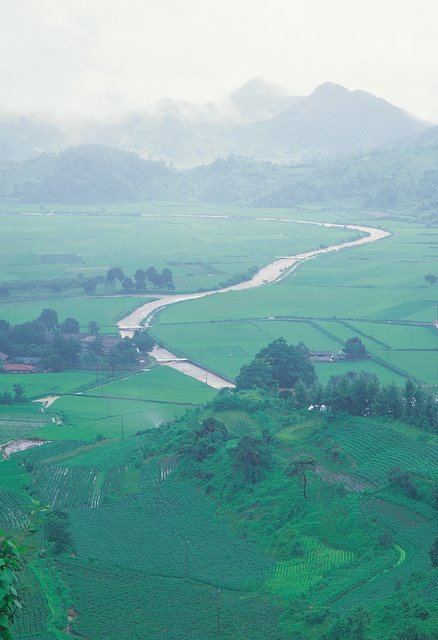
The Ten Ox Herding verses describe the process of uncovering our inherent, enlightened Buddha-nature, represented here by the ox. Variations of these are popular throughout East Asia as a way of describing the spiritual path. This translation is from Daehaeng Kun Sunim’s Korean version.  For Barry, at Ox Herding 🙂

 
1. Searching for the Ox
 
On plains that stretch forward without end,
pushing through the tall grass and brush,
looking for the ox.
Going here and there,
following a nameless river
and unknown paths deep into the mountains.
Utterly exhausted,
yet still no trace of the ox,
In the gathering dusk,
only the sounds of the crickets.


                                          2. Finding Tracks of the Ox

Suddenly,
on a river bank,
under a tree,
hoof prints of the ox!
And there,
under the sweetly flowing water,
an ox print clearly seen.
Stretching out before me
as plain as day,
hoof prints!
  
                                                                                         3. Glimpsing the Ox 

Somewhere a bird is singing.
Under the warm sun,
a peaceful breeze.
On the banks of the river,
the willow trees are brilliant green,
how could an ox hide here!
But look at that massive head,
and those wide horns.
What kind of strength will it take
to drag it back to the path?

4. Catching the Ox

It was a difficult fight,
but at last I’ve caught the ox.
So stubborn and willful,
its strength seemed endless,
like it could tear through mountains.
But at last the ox has come to a standstill.
Long accustomed to roaming here and there,
at last it has come to a stop.


5. Taming the ox

To tame this ox
requires a whip and some rope.
I tied the rope through its nose ring,
but still have to use the whip.
Otherwise the ox will rush about,
rolling in the mud,
or getting stuck in the marsh.
But when he’s tamed,
his gentle, true nature will show,
and he’ll follow me,
even without a nose ring.


(to be continued…)

Illuminating the Buddha Within

This is a short Dharma talk Daehaeng Kun Sunim gave for the Buddha’s Birthday.

We celebrate the Buddha’s Birthday every year,
but this year I feel strongly that we need to use this opportunity
to exert ourselves.

As you light lanterns this year,
and brighten and develop your mind,
think of the Buddha’s teachings, which showed us this path.
 

This life we cling to
lasts only for a season,
yet within an instant of our daily life
are all of the truths and principles
of the universe.

These are what we must awaken to;
this is what is truly urgent.
So don’t light lotus lanterns
trying to create
some small bit of good luck.

Lighting a lotus lantern reminds us that
our mind exists everywhere
throughout the universe,
and because you exist, others exist,
because others exist, everything exists.
 
This instant of our daily life,
where everything works together peacefully
to the extent we are harmonious,
shows us that, just as it is, light fills the world and
the Buddha is brightly present within each of us.

Each of you has the exact same Buddha-nature as Sakyamuni,
each of you was born in a Buddha realm and are being guided by the Buddha.
So just as the Buddha teaches us,
if you throw away “I,” if you throw away your egotism,
you can live brightly, free of suffering,
able to draw upon the unlimited ability within,
and send forth radiant energy.

Under the lotus lanterns

If you are continuously letting go of “I,”
if you’re truly living in the present moment,
the effects of a single thought
can reverberate
throughout the entire Dharma realm.
Living like this,
the true worth of life
becomes abundantly clear,
and as a disciple of the Buddha,
with gratitude towards the Buddha,
you can live freely, as a true human being,
able to take care of everything in creation. 

            –Daehaeng Kun Sunim

No Master Criminals Here

Tongdo Temple, one of the three treasures of Korean Buddhism

The Jogye Order had arranged for a professional nurse to be present during our 23-day ordination training session. A Buddhist nun herself, she had already probably saved the life of a male postulant. He had such a terrible cough I half wondered if he wasn’t there for some spiritual benefit that might come from dying as an ordained monk. Hearing him cough as she passed by, the nurse read the riot act to the overseers and had the trainee brought to her office, where she immediately started injections of antibiotics. By the time the training was over, his cough had almost completely disappeared.

           As time went on, she became concerned that some postulants weren’t getting enough calories. With over 1,000 full bows a day, and only two moderate meals, we were certainly going through the calories. On top of this, many of the men were already quite skinny when they arrived; I would have guessed that some had less than five percent body fat. Seeing this, the nurse began to surreptitiously give out food, usually pastries, chocolate, or bars of sweet, red bean-paste.  A trip to the nurse’s office became more and more popular!  Disappointingly, whenever I went, I was always escorted by one of the overseers. The result: no food for me. For which I was soon to be grateful.

             Sunims, I’ve noticed, are not particularly good at deception!

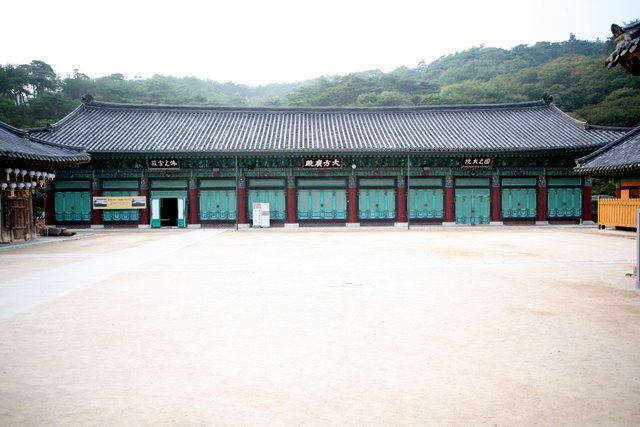
The hall where we had lectures, and did most of our bowing (photo by Jung Yeon)

Part of me, the one that spent my last year in high school trying to buy beer, shook my head in disapproval at seeing chocolate and bean-paste wrappers just sitting on top of the toilet wastebasket. “You have to hide the evidence better than that,” I wanted to tutor the unknown snacker.   The inevitable soon happened: A postulant was walking by the front doors, in front of everyone, eating a bean-paste snack. He walked right past an overseer, who twisted around so fast that he must have sprained something.             

        Within the hour, all 150 men were lined up with their grey backpacks in front of them. The overseers started with first person, thoroughly searching all of his belongings. We didn’t know what would happen to those caught with food, but we all knew it would be serious. Expulsion was a real possibility. But for all of the postulants’ incompetence at deception, the overseers had no better understanding of the sport. As four of them focused on the first few people, nobody was looking down the lines at the other postulants. At least a dozen of them were slipping pastries and other food out of their bag and down their pants legs where the material bugled out over their leggings. Further, while the overseers diligently checked the contents of pockets, it never occurred to them to actually frisk anyone.

             Disgraceful, I thought, as I stood there, with a rumbling stomach. I couldn’t help smiling though:  I suppose it speaks well of those choosing a spiritual path that they were so unpracticed in the ways of deception.

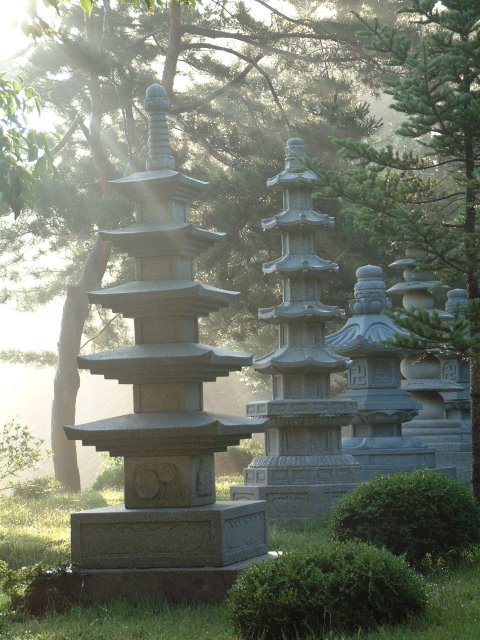
Dawn at Tongdo Temple. The pudo with the relics of Shakyamuni Buddha (photo by Jung Yeon)

Buddha’s Birthday parade

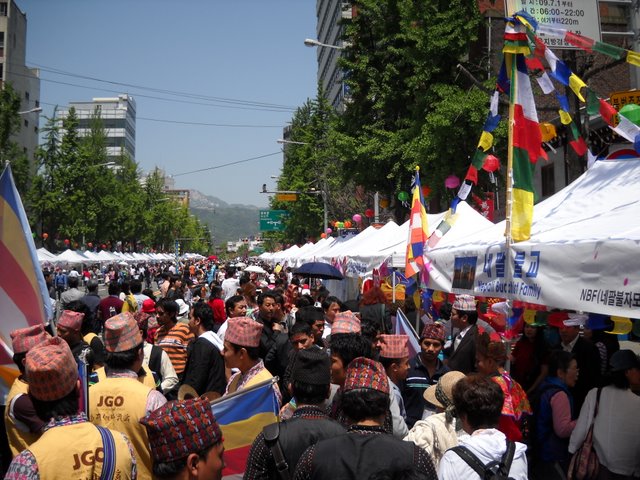
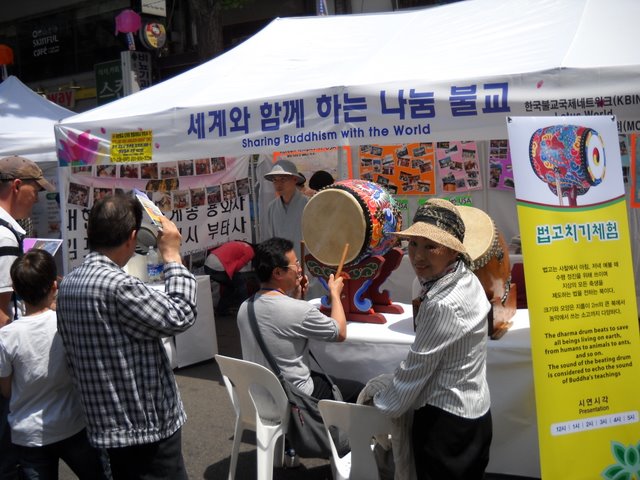
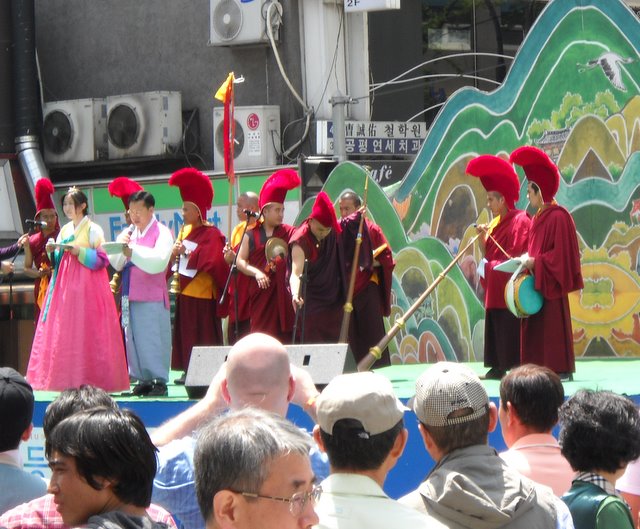
Here are some photos of the Buddha’s Birthday celebrations in Seoul on Sunday. It’s always amazing to see, and Korea feels like a crossroads of Buddhism. In addition to all of the Korean-flavored events, there were booths or floats from every Buddhist country, offering culture and information, food and art. These are a few pictures from the day, with some nice ones contributed by Joseph, of Somewhere in Dhamma.  Go ahead and click on the photos to see a larger image.

the street in front of Jogye Temple
Must be a convention somewhere!
playing a scaled-down version of a temple drum
Buddhists from Mongolia
Friendly folks! (by Joseph)
I really loved the horn section! (A great offering by the Tibetan monks of Korea)
Enthusiastic Nepalis! (by Joseph)
Make your own mini Lotus Lantern
or your own wrist mala
with beads for all ages!
or you could make your own incense (It was really good!)
sign me up!


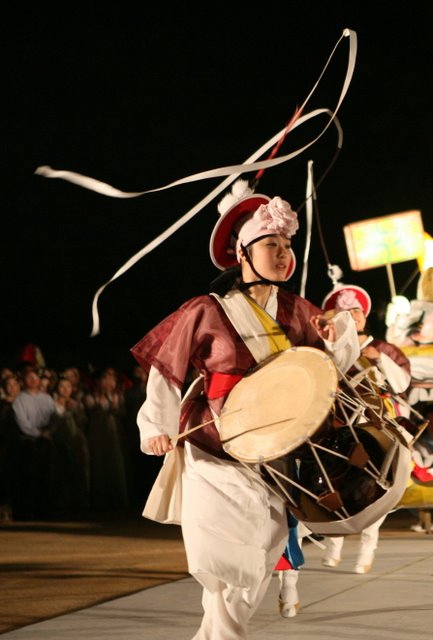
Traditional Korean dance and music


A river of lanterns (by Joseph)
Watch out for the Dragon! (by Joseph)
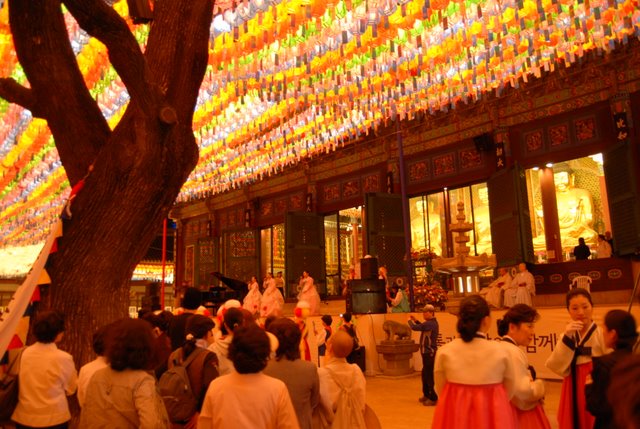
Under the lanterns at Jogye Temple (by Joseph)

Teachers’ Day

This Saturday is Teachers’ Day in Korea, when people go to pay their respects to those teachers who’ve had an impact in their lives.  Seeing a group middle-aged men, made up of sun-burnt farmers in cheap suits and manicured business men all laughing and joking together, everyone passing by knows they were once fellow students, now come  together to greet their old teacher.


Korea’s Song for a Teacher

My teacher’s heart is like the sky above,
the more I see of it, the more noble and wonderful it seems.
Teaching us what’s true and upright
like a loving parent,
how can I express my gratitude?
Ah, how can I repay such kindness and love?

(Well, in Korean, and with the melody, it’s much more touching!)  It actually has a lot of the same feeling as To Sir, With Love.

 
Thank you to all who have been my teachers
to all the Buddhas and Bodhisattvas,
as well as the heretics and demons.
From a mountain in Korea,
I bow to you all.

The Blame Game

As soon as you concern yourself with the “good” and “bad” of your fellows,
you create an opening in your heart for maliciousness to enter.
Testing, competing with, and criticizing others weakens and defeats you.

Morihei Ueshiba, The Art of Peace, page 55 


This is such a wonderful verse. Like other truly profound teachings, it causes everything within me to settle deep down. It’s a lot like the deep-centered feeling of sitting in the full lotus posture (assuming one isn’t being tormented by rending knee pain!) 

I think the reason for this is that it acknowledges and reinforces the fundamental truth of our lives: that we are not separate.  We’re living together as one, and anything I direct towards someone else is felt equally (or more!) by myself.  It’s as if we’re living in the same room, breathing the same air, and eating from the same plate.  If I said I was going to poison the plate of food we’re eating from in order to “get” one person, everyone would think I’m nuts.

 
“But you’re eating the same food!?!  It’ll kill you as well!”  To poison the air we all breathe, thinking “Hah! I really showed you!,” would be the act of a lunatic.  Yet the actions and thoughts we give rise to continue to act through this unseen connection we all share.  This isn’t to say don’t ever have harsh thoughts; everyone has them, and they tend to arise out of habit before we realize it.  Rather, when you realize you’re caught up in them, stop feeding them energy.  Entrust that situation, as best you can, to your inherent Buddha, the source of all energy, and that which is truly taking care of things.

Another thing about blame and criticism, is that it’s often dumping the entire cause for something onto the other person(s). When in reality, if there’s something going back and forth between us, then I also share partial responsibility for it.  At the very minimum, I’m at this place now as the karmic result of the choices I’ve made, so there’s no use in blaming others. And in fact, acknowledging that I have a share of the blame often feels very liberating.  Look at how you feel when you get caught up trying to defend yourself and justify your actions. Now look at how you feel when you say “I’m sorry,” even if only silently, to yourself.

 
Daehaeng Kun Sunim often teaches that everything gathers together because of its similar level of growth and its similar karma. She gives the example parents and children, saying that they’ve gathered together because they created similar karma, although it’s not always apparent. Parents chose their children, and children chose their parents, because that was the level that looked most appealing to them. 

Thus, for all these reasons, Daehaeng Kun Sunim has always emphasized that blaming and criticizing others is one of the most spiritually harmful things we can do. She tells people to be generous in how they view others, and to interpret the things in their lives positively. For everything in this world manifests according to the thoughts we give rise to. Whether this world is a hell realm or a heavenly realm depends upon the thoughts we choose.

 
Over these many kalpas of our evolution, there’s no one who hasn’t been our father or our mother, our son, our daughter, our husband or our wife. Let’s remember the love we once felt for them, and raise the desire to see them grow and succeed, and know peace and liberation.


Lotus Lantern Festival

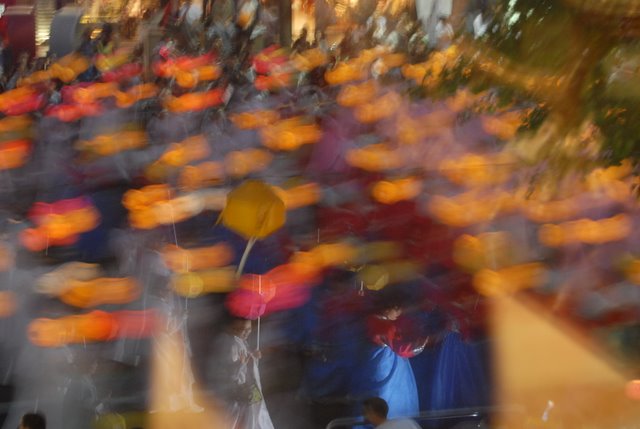
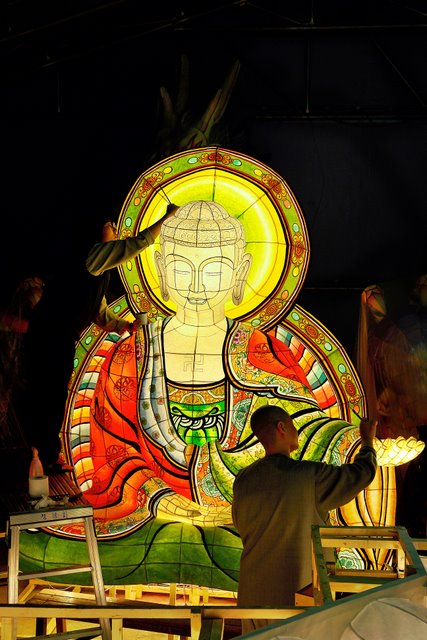
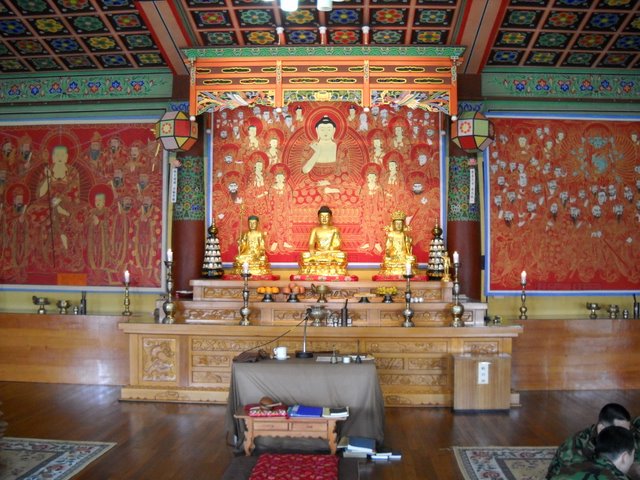
Just for fun, here’s a few photos from past years’ Lotus Lantern parade, which will be held in Seoul this Sunday (May 16). Following it, are some photos from Dharma Halls on Korean army bases.


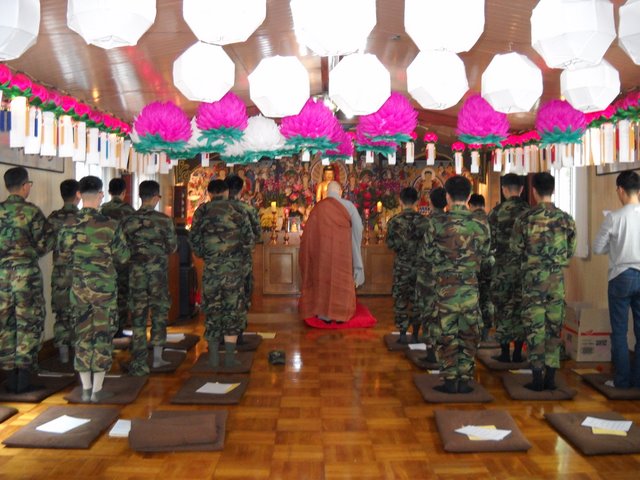
Getting ready for Buddha's Birthday on an army base.


Barbwire and lotus lanterns
A Dharma Hall on a small base
The Dharma Hall on a much larger base


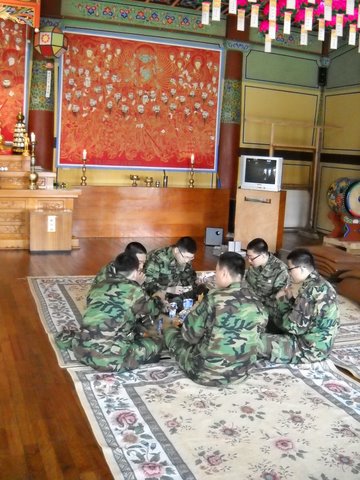
Lunch with Buddha


The beautiful photos at the top were taken by Park Youngwoo, and the rest by me! 

Ps. please let me know if your computer has trouble loading this page, I may have overdone it with the photos!  With palms together, Chong Go.
The pillar of all work on behalf of Buddhism…

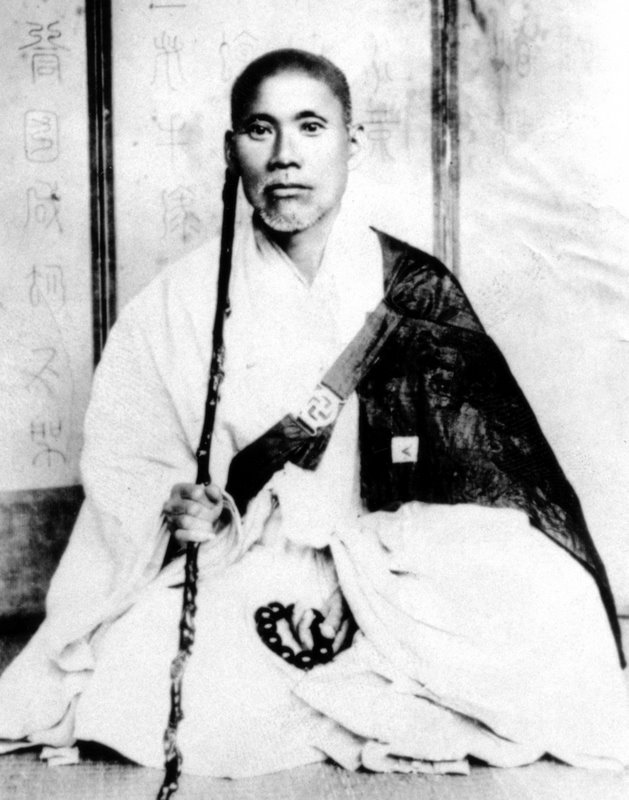
In a short letter, the Korean Seon master Hanam (han-am) Sunim, said something that’s stuck with me ever since:

The pillar of all work on behalf of Buddhism is harmony.

That’s all.  Nothing fancy.  But it packs such a wallop.  Everything about interconnectedness and nonduality is right there, together with tremendous power to guide.

Am I feeling harmonious as I approach this issue?
Am I viewing the others involved in a harmonious way?
Will my intentions and behavior result in a harmonious outcome?

Although obvious in hindsight, this is such a critical issue, for we are all inherently connected, as Daehaeng Kun Sunim says, sharing the same life, the same mind, the same body, and working together as one while freely giving and receiving whatever is needed. 

There’s only helping, not “helping her.”  There’s only loving, not “loving them.”  There’s only hating, not “hating them.”  There’s only defeat and humiliation, not “defeating them.” 

May all beings know happiness and harmony, joy and wisdom, virtue and merit.

with palms together,

Seon Master Hanam Sunim

Chong Go

Protein supplements in my dinner: or, The unhappy fate of rice bugs

Technically, those gray specks in my rice weren’t supposed to be there. Perhaps if they’d been millet, added to give the rice a nice multi-grain taste. Or maybe a little wild sesame. Alas, they were neither.


Tongdo Temple, where we were undertaking our ordination training, is beautiful.  Ancient and sprawling, it is one of the few large temples to survive the destruction of the Korean War. 


    Situated in a green valley with a soaring mountain range behind, Tongdo Temple is truly a treasure of Korean Buddhism.  It also has the worst food of any large temple in Korea!

    Normally, Korean housewives will soak and wash rice before boiling it.  This ensures the rice is clean and also rinses away any rice weevils that may have been enjoying a meal before they were interrupted. With an extra 300 mouths to feed for our training session, it appeared the kitchen monk had skipped this step.

    Picking the steamed weevils out of the rice wasn’t even an option: every last morsel had to be consumed, down to a single flake of red pepper or sesame seed. We would wash our bowls afterwards, and if even the tiniest bit of food was found in the bucket that collected the water, the twenty postulants in my row would have to drink the entire bucket of wash water.

    “Well,” I thought, as I looked at the gray specks in my rice, “eating these won’t kill me. And actually, it won’t even kill them.”

    With that I began to eat, letting go, as best I could, of my fixed ideas of right and wrong, which are more often than not manifestations of ego.

    Daehaeng Kun Sunim had once gently confronted my vegetarian moral superiority, saying about the beings whose cooked flesh was sometimes served to me, “Don’t hate them because they are poor and unfortunate. Become one with them and let them experience the human level of consciousness.”


Bugs in my rice! (at the Dharma Folk blog)