May every kind of virtue and blessing grow within us, and wherever we go,
may good fortune ever flow forth.

Learning to see the world as it truly is
May every kind of virtue and blessing grow within us, and wherever we go,
may good fortune ever flow forth.
There was a great question in the comments about ISIL, and their stated goal of wiping out everyone they disagreed with. I started answering the question, but my answer got longer and longer, and went on about cause and effect, and interconnectedness, so finally I decided to just give it its own post!
According to German journalist Jürgen Todenhöfer, who spent ten days embedded with ISIL in Mosul, the view he kept hearing was that ISIL wants to “conquer the world”, and that all who do not believe in the group’s interpretation of the Quran will be killed. Todenhöfer was struck by the ISIL fighters’ belief that “all religions who agree with democracy have to die”, and by their “incredible enthusiasm” – including enthusiasm for killing “hundreds of millions” of people”
Can you comment on this, please?
Play stupid games, win stupid prizes? Sigh. Karma, or cause and effect, exists. It’s like living in a small box – what we put out into the air around us is what we’re going to breathe in. If someone wants to swim in death and murder, they’re going to meet up with lots of death and murder. If they like hanging out with con artists and murderers, they stand a good chance of being swindled, robbed, or murdered. If they want to run out and fight people who like to fight and play with guns, that’s who they’re going to meet. And, as I’ll mention in a bit, it’s as if they are accumulating more and more heavy karma, such that after a while they can barely even take a step. And sometimes, it’s like the universe itself says, “Enough!” And their games come to an end.
Of course, it’s not always that simple, but there is definitely something about the people of an area and what sort of behavior they’ll put up with. If you look at all of the vicious dictatorships throughout history, most of them lasted a long time when they stayed in their home lands, but once they tried to invade other areas, they began to falter. So there is also definitely is an element of “like gathers with like.” Another good reason to hang out with kind and wise people!
Ultimately, this idea that other people are different from me, that they’re disconnected from me, that their suffering has no connection with me is a manifestation of fundamental ignorance. They really don’t understand that everything is one connected whole, and so their actions reflect that, and it’s as if the results of their actions are more painful in proportion to the level of their ignorance. This is why, in Daehaeng Kun Sunim’s translation of the Heart Sutra, the opening paragraph has the phrase, “inherently all life shares the same body, the same mind, the same live, works together as one, and freely gives and receives whatever is needed. They ceaselessly manifest and change, but because they don’t know this, they walk the path of suffering.”
The answer to what we have to do is in there: Let go of this separate I, keep letting go of that, value other’s lives and efforts, share what we can, accept help when we need it, give others and ourselves room to change and become better, and know that even someone behaving badly is not always going to be like that. They too are in the process of change and growing. (Though along the way, we might need to protect ourselves from their ignorance. Running away when someone wants to stab you is also wisdom.)
This verse seems… a little short! But, it’s still nonetheless true that we need to actually raise this intention and entrust it. There’s such a huge difference between actually entrusting this idea, and just vaguely wishing things were different. The difference between wishing I had a glass of water, and actually asking someone to bring me one.
If I’m giving a talk and my mouth begins to dry up, I can stand there, hoping someone notices and thinks I might need a glass of water, or, I can stand up for myself, and quietly ask someone nearby if they could bring me one. If you ask politely, just about everyone is willing to help out! But you have to ask, you can’t expect them to be a mind reader. I find it’s the same with raising intentions and entrusting them: We have to actually raise the intention, and then entrust it. Now, it may still not immediately disappear or turn out the way we’d like, but there’s something about this process that at least lets us begin to move forward.
May our hardships come to an end.
When I was looking for key phrase for the title of this post, I found myself a bit stumped. Both ideas are pretty important! In truth, I suppose that having clear perceptions is the most important. And being able to clearly see the world, with our experience untainted by desire or attachments sounds wonderful, and would probably make it possible for us to grow in ways we can’t begin to imagine.
And yet…. We also learn so much when we’re hanging out with people who are virtuous and wise. If they’re not *too* far beyond our own level, there is so much inspiration in seeing how they react to things, how they deal with difficult situations and people. May we all deeply experience both these states!
May our senses and perceptions be free of desire and attachments,
and may we always enjoy the company the virtuous and wise.
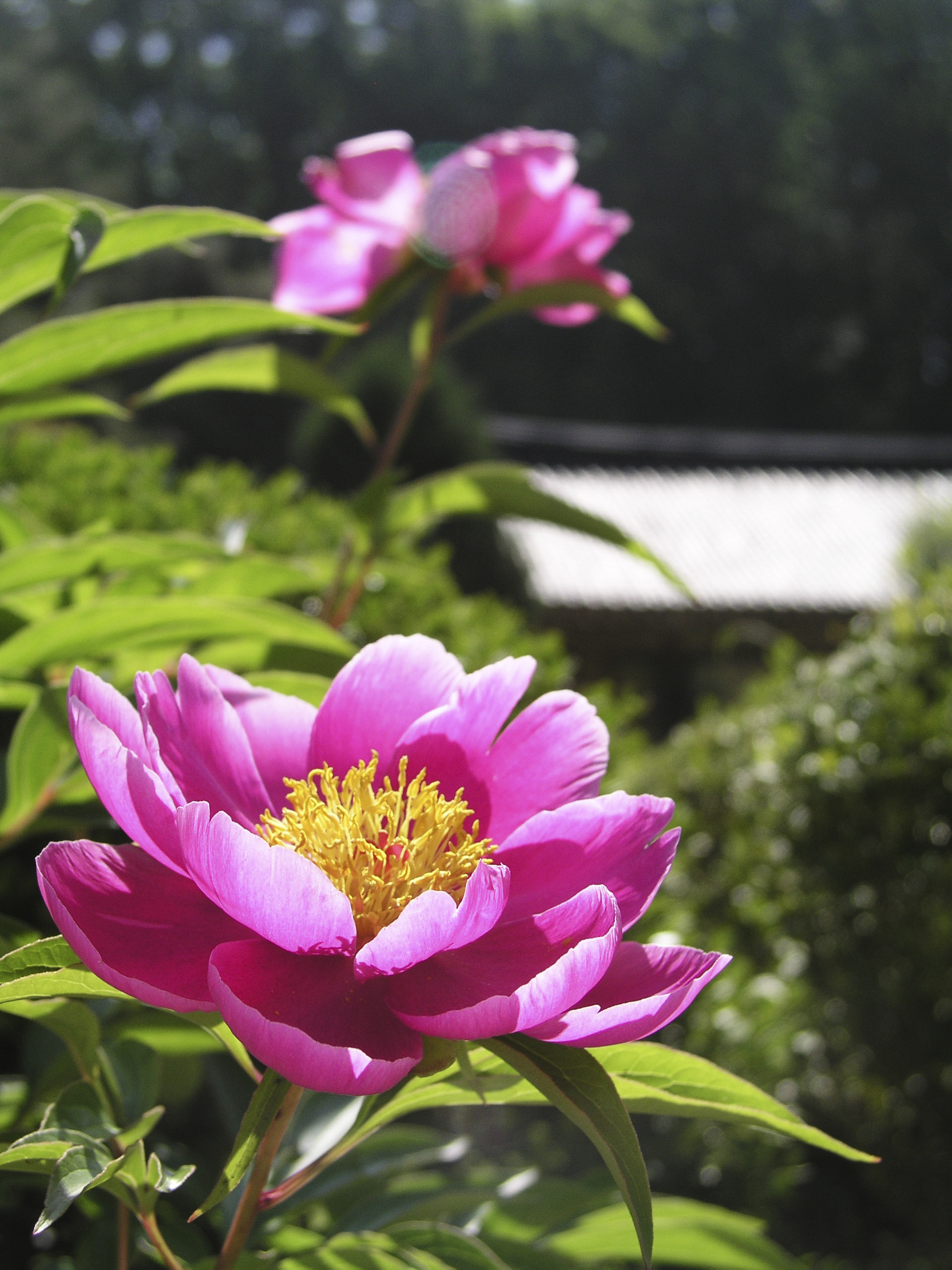
Can a Buddhist say “Amen!” 🙂
May we all be free of serious disease,
healthy, and live our full term of years.

This is a good one to repeat out loud and let sink down within you!
Through the great compassionate, protecting power of one mind,
manifested by all Buddhas and Bodhisattvas,
may each one of us attain that which all beings long for.
Here at this temple where the reflection of our true mind
can be seen like the moon in pure water,
with the utmost sincerity, with these pure offerings,
we raise the intention that all Bhikkhus and Bhikkhunis, Shramanera,
Shramaneri, and postulates here at this temple are all healthy and safe.
May each and every layman, laywoman,
and child attending this ceremony be healthy and safe.
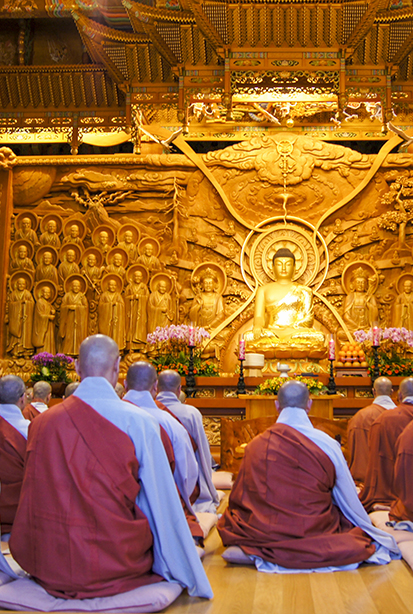
This is such a key phrase, in my opinion. It’s saying, “let things move in this direction.” If we do this and then deeply entrust that, things really do begin to move. Perhaps not as far and as fast as we’d like, (those issues are not disconnected from the rest of the world), but they do move. This is such a different state from complaining about the way things are, or just repeating over and over to ourselves, “I wish (this) was like (that).” Just saying words over and over, even with lots of emotion, doesn’t connect with the whole. We have to actually let go of that intention, and entrust it.
Here at __________________
on this middle world called the Earth,
we raise the great intention that
within this country, everyone is at peace and safe,
that South and North Korea shall be peacefully reunified,
that all the world may be tranquil
that the Earth should be free of all great disasters.
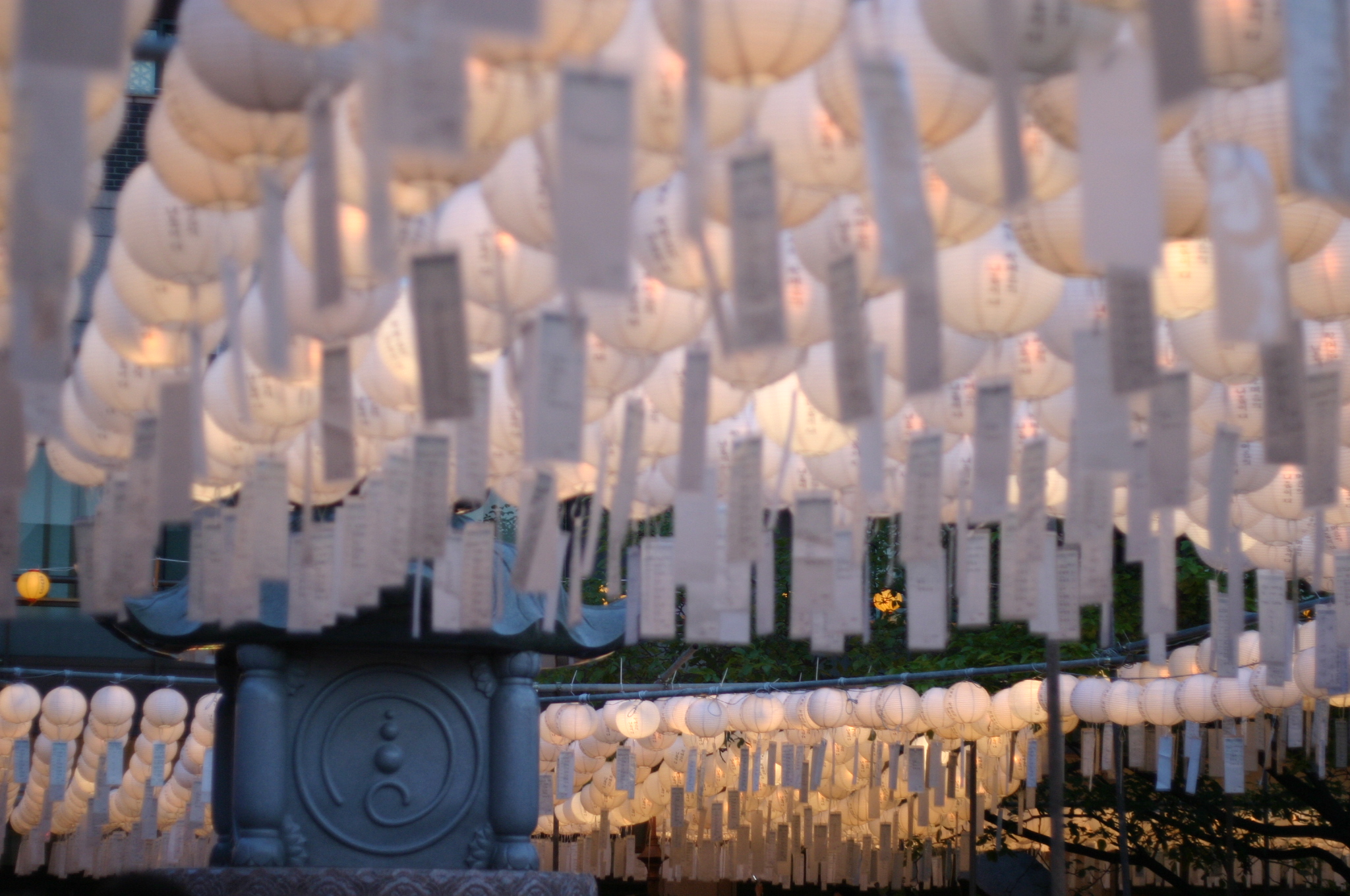
Today is day 2, Korea time, of the evening Ulambana candlelight ceremony, or 백중, when we remember our ancestors and focus on helping them. The question becomes, how do we help them? It’s not like we can just whip up a meal for them or hand over some spending money, though in a way that does sort of happen.
The key thing is that they are not separate from us. That’s true for everything, but there seems to be a stronger effect with those whom we have the closest karmic connection. When we are entrusting what’s going on with us, they’re along for the ride, so to speak. They also learn and experience this oneness. They also experience the sincerity we’re feeling (this is how heartfelt offerings have an effect).
Sometimes this combined oneness is enough to help them let go of whatever mental state may be blocking them. If confusion, regret, or anger are holding them, they may be free of those for a moment or perhaps forever. If that’s not a problem, then they may experience a charge of energy and inspiration that helps them move even further forward. And this happens even if they’ve been reborn. They, living in their current body, may suddenly experience a day when everything seems clearer. Where they suddenly feel free of some attachments or foibles, or even perhaps, where they may glimpse the interconnection of all existence.
So when you think of them, when you think of what they may have gone through, and when you think of their old appearance, let go and entrust all of that. Combine all of that with your foundation. They’ve moved beyond those things now, so let’s introduce them to this foundation of everything, and let them take steps forward relying upon that. Daehaeng Kun Sunim once called this path “Walking on emptiness”, because you go forward relying upon this connection with all to guide us, even though we may not see the path for ourselves. Even though there is nothing fixed for us to grab with our thoughts.
Mind and Body
If you’re truly practicing, you won’t have to worry too much about your body.
Of course, if your body is sick, that shakes your mind and makes it harder to think clearly, but when you really have faith,
when you are really trying to practice,
then you know that pain and illness too came from your foundation,
so you just entrust it back there, understanding,
“You formed me. You’re what drags this body around,
so whether it’s a healthy body that travels around or not
is up to you. I’m not going to worry about it.”
You just entrust the whole thing there,
and get on with what you have to do.
This is how to practice without getting trapped and distracted by events.
One of the more interesting developments in Korean Buddhism was the presence, and respect for the monk Jajang. He was called Jajang Ulsa, or Jajang “the precept bringer.” When I first heard of him, I was a bit dubious, to be honest. I didn’t understand what the big deal was about someone who brought you a list of do’s and don’ts.
But as time when on and my own practice deepened (I hope!), I realized that the precepts weren’t simply things you should or shouldn’t do. They were reflections of the underlying nonduality of all phenomena, and simple, basic guidelines for moving in harmony with the whole, with the reality of how everything around us functions. When we can do that, everything in our life goes smoother. So learning to function more in tune with the whole, people found their lives improving. Everything went a bit smoother, and they experienced fewer disasters, and often those weren’t as bad as they could have been. That’s why they were so grateful to Master Jajang, because he showed them the basics for moving away from self-sabotaging behaviors.
Just the (seemingly) simple guidelines of don’t kill, don’t steal, don’t lie, don’t engage in sexually inappropriate behavior, and avoid addicting intoxicants, made such a difference in the lives of people who didn’t know better, that they remembered him for centuries. How much more of a blessing will the further teachings about our foundation and inherent nonduality be?
(For what it’s worth, the simple reading of the precepts is the easiest for someone who’s caught up in those behaviors to remember. Even if you don’t think carefully about them, by making an effort to follow them, you will consciously or unconsciously become more aware of their deeper nuance, “revere live, treat others as yourself, treat their body and yours with respect, strive to maintain clear states of consciousness.”)
May these great teachings spread without cease,
may this land be at peace and harmony for generation after generation,
may the great light of the Buddha-dharma fill all realms.
 Wake Up and Laugh!