Continuing Education for Monks and Nuns

I recently returned from a new(ish) continuing education program that’s been instituted within the Jogye Order. They’re now offering nearly fifty 3 day classes throughout the year, covering topics from managing temples to social welfare projects to counseling skills. Everyone’s now required to take one class a year, but I’ve taken two so far, and that seems to be the norm. This is quite a nice step up for the Jogye Order, where these kinds of skills tended to be learned or passed along in a fairly haphazard fashion.

This was the room where apparently they teach tea ceremonies. I think I might know a few people who’d love to play with some of those tea sets!

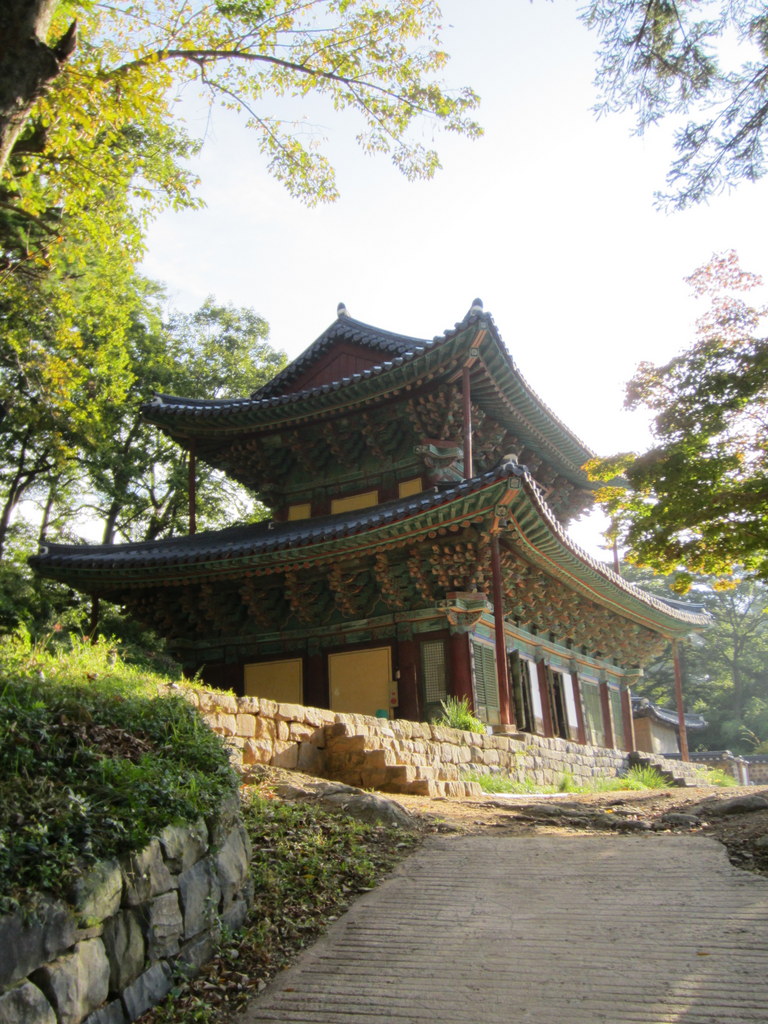
This was all done at a new training center set up near Ma-gok Temple, in South Chung Chong Province. And by “near,” I mean a five minute walk!

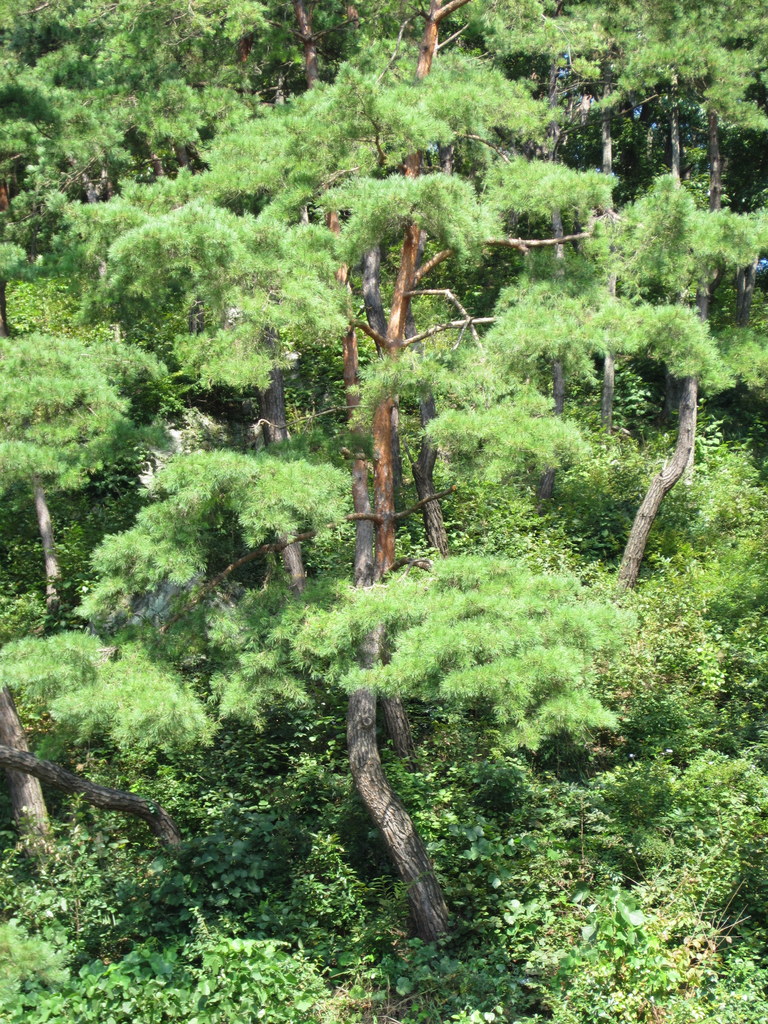
This pine tree really was this vivid. I haven’t adjusted the color at all.

A prayer for Bangladesh

This weekend in southeastern Bangladesh Buddhist homes and temples were robbed and destroyed on a huge scale. Newspaper reports vary, some say four Buddist temples were burnt down, others put the figure at eleven. Some reports say 15 homes were torched, others say forty.  The fact is, they came under a sustained attack from a huge mob (the most common report is of 25,000 people) and were targetted specifically because of their religion.

When I first read this yesterday my initial reaction was one of grief and anger. Grief at the idea of Buddhists being forced from their homes, watching as they were robbed, and then being left homeless as their homes, and places of worship, were destroyed. The attackers even beheaded Buddha statues to complete the insult and harm. Anger followed close behind. My first anger was directed at those who carried out the attacks. My second wave of anger was directed against the western Buddhist blogoshere which completely and utterly ignored the attacks.

(A year or two ago a Christian pastor in the US suggested that Tiger Woods should convert to Christianity, the Buddhist blogs spent months condemning him. But Buddhist temples  are burnt to the ground in Bangladesh and Buddha statues beheaded and the blogosphere is silent).

I was angry, sad, unsettled, and felt isolated and powerless. What could I do to help? What is the proper response. Thankfully, I knew enough to get off the Internet and onto my meditation block. Practice was difficult. My breathing was fast and every time I thought about it my heart rate would increase again. Eventually some peace came as I prayed. “Let there be comfort” I prayed, “let those who did this wake up”, “let those that suffer find strength”. Eventually it was one prayer only, again and again, “let there be peace”.

I’m still unsettled, I’m still angry. My prayer for peace brought some to me, but what does it do for those in Bangladesh? How does it help them? Is our Buddhism so self-centred that all we can do is sooth our own hearts while, effectively, ignoring the suffering in the world?

Well, Thich Nhat Hanh writes that “When you have enough of the energy of compassion and love in you, your heart grows big and you can embrace everything and everyone – even those you call your enemy. When you can look deeply into your ‘enemy’ and see that he is a victim of ideas, notions, and misinformation, of conditions in his own life and his culture and society, then you can remain calm, your heart remains open, and you will have a better chance to help him get in touch with his humanity, his innate Buddha nature, and transform the seeds of hatred and violence within.” (“Peaceful Action, Open Heart”, p. 192).

So, while not ignoring or suppressing my anger, but just siting with it, here is my prayer for Bangladesh. For all those that lost their homes and their temples, and all those who caused the destruction too. It is taken from “A Thouasand Hands of Compassion”.

May the bright eye of wisdom fill the universe with light
shining brightly, illuminating all.
May all beings
become one, become one
one with all Buddhas
one mind, one mind
one body, one body.

May all beings
escape together
escape from suffering
and become free.

————————–

Let there be peace. Let there be peace. Let there be peace.

————————-

Some links:
http://rt.com/news/buddhist-temples-torched-bangladesh-342/
http://www.huffingtonpost.com/2012/09/30/bangladesh-muslims-attack-buddhists-quran_n_1926544.html
http://news.yahoo.com/photos/bangladesh-muslims-attack-buddhist-temples-slideshow/

Seoul: city of Dharma

Last week I re-visited Seoul and was struck, once again, by what a great place it is for anyone interested in Buddhism. In fact, in my opinion, it is the best, and certainly the most welcoming, place to go for anyone from the west who is interested in the Dharma but is limited to English-language only study.

I went to see my friend and teacher Chong Go Sunim, but having got to the city a little early, I visited the new Temple-stay building opposite Jogyesa Temple. Not only is the whole idea of Templestay wonderful, the new building is great. You can arrange temple stays there (as you’d expect!) and there is also a bookshop, and superb buffet style temple-food restraunt on the 2nd floor – vegan, cheap, and delicious. I wished this had been here years ago back when I lived in Seoul – I’d have been a regular!

There is nothing like this building in Thailand or Japan (the other Buddhist countries I am most familiar with)  – a central place for arranging Temple-stays and great vegetarian food for visitors. (Can you stay in a Japanese temple? Possibly, but I’ve never seen it promoted. Can you eat vegetarian food in a Thai temple – I was never able to find any in all the years I spent living and attending Dharma events there). Really, compared to other places I’ve lived in, the Korean Sangha has provided a lot of great opportunities for the world to study Buddhism.

And nearby is the Buddhist English Library of Seoul – which is where I first met Chong Go Sunim and my Dharma brothers. I didn’t have time to go in and say hello this time, but have often done so in the past. You always get a warm welcome. You can go there to read or chat, and they have a busy schedule of English-language Dharma events. Chong Go Sunim runs a Saturday afternoon class there, and there are others too. I remember a few years ago studying with a Tibetan monk in English in the library on Saturday mornings. And a Burmese monk on Thursdays.

Of course the main thing is the temple nearby – and all over the city and country. I have never, in many years of living in and visiting the country, found a Korean temple locked or unwelcoming. From the main temple Jogyesa, where I popped in the other day to join in (no one batted an eyelid at the foriegner picking up his mat for the service), to the quietest, most remote, mountain temple, the doors are open and non-Koreans are welcome to sit, chant, bow, or whatever they like – both alone, and along with everyone else.

It was only a few hours in Seoul, but it really was a lovely time – and a reminder to me of just how wonderful this place is for anyone wishing to study Buddhism. I took a few photos too – but am having problems with WordPress and can’t get them onto the post. I also met my good friend and Dharma brother Joseph, and we joined in morning ceremony at the Hanmaum Seonwon in Anyang and then had a good long chat with Chong Go Sunim. A wonderful trip. Thank you both!

Two of a Kind

This photo always touches something deep inside me. I think there are many things that apply to both people here. In allowing her picture to be taken like this, I also suspect that Kun Sunim thought there was something very deep and special about Abraham Lincoln. It was taken around 1995 when our center near Washington DC opened. (Generally she very grudging about having her picture taken, and we usually had to ambush her!)

The Spark

I’m currently working on the introduction for a collection of Dharma songs, but some of the songs are so beautiful and profound that it’s hard for me to know where to begin. Anything I write about them seems shallow by comparison. Sometimes all I can do is exhale and say “thank you.”  

At the center of our vast
and completely empty mind,
there is an eternal spark.

With this spark
I quietly light the sublime lantern
that so faithfully guides me.
I’ll take this lantern
and spread it’s light
all over the world,
sharing its boundless compassion
with all I meet.

This one mind,
deep and deep,
so deep,
so profound and mysterious,
within this is the truth of “embracing everything,”
within this one mind
flows the sweet water
that can truly save all beings,
the water that has the power of all the sincere tears ever cried.
I’ll drink deeply of this spring water,

and no longer be caught by life and death,
and together with all beings,
I’ll take the path of this truth
that transcends all fixed forms and ideas.

–Daehaeng Kun Sunim

Unconditionally Letting Go

Some of you may be wondering what’s happened to me (or not!) but this is the time of year when we get ready for the Frankfurt book fair.  Book contents have to be finished so that layouts and artwork can be finished in August in order for everything to get to the printer’s in September.

One of the new books we’re finishing up is a collection of Daehaeng Kun Sunim’s poems that have been set to music and used as Dharma songs. They all have deep meaning, and this one talks about an idea that Daehaeng Kun Sunim sometimes mentions: Unconditional letting go expressed as dying. For when we deeply let go of the things we want and the things we fear, it does feel a bit like dying, like a kid denied Christmas. And yet when we entrust all of this to our inherently bright essence, the places that we are stuck seem to lose their hold on us and we can move forward with a fresh heart.

That which I’m fighting with, that which I’m clinging to, is a part of myself.

Die Three Times and Truly See Yourself
(세 번 죽어야 나를 보리라)

Vast beyond imaging
filled with an infinite variety of life,
yet everything in this universe
is but a shadow of one mind.
From an inherently empty place
appear empty things
being empty,
they all vanish.
If I truly realize that everything I interact with is empty,
this is dying one time.

From great Buddhas who rule the heavenly realms,
to tiny weeds alongside the road,
without excluding a single one,
die together with them all
die together with this empty “me,”
and realize that everything, just as it is,
is the truth.
This is dying a second time.

Among all the people, plants, and animals,
among the stones and the clouds,
there is nothing that is not me.
You and I, all of us together,
are sharing the same place
and the same body.
Everything is the manifestation of this inherent Buddha,
so when can you freely take care of everything with life,
and without life,
this is called dying a third time.

My one mind, which brings in and sends out everything
is my true foundation, that which is truly doing things.
We have to die in order to truly live,
die three times and see yourself.

– Daehaeng Kun Sunim

Building a New Dharma Hall

For the last several years, my Dharma brothers have been working on building a new Dharma Hall. I’m quite proud of them both because they’ve been doing such an incredible job, and because they’ve been waiting untill they have all of the money necessary before starting each phase. (No borrowing money!) It’s taken seven or eight years now, (I can’t remember), but the work is nearing completion. They’re just finishing the painting and artwork, and the next step will be installing the flooring and then the Buddha statue. Here are some photos I took yesterday; click on the images to see a larger version.

Here’s the Dharma Hall
Here you can see part of the carved wooden panel that will stand behind the Buddha statue

The interior scaffoding goes up the ceiling, and provides a rare opportunity to examine the artwork on the ceiling and the supporting beams
Every single aspect of the artwork has great meaning. Here the colored bands represent waves of energy radiating outward into the world, from our fundamental Buddha essence. (perhaps you noticed the golden bat? Traditionally bats are regarded as Dharma protectors in Korean Buddhism. Hmm, so when I was reading all the comic books, I was actually studying the Dharma!)
Did I mention that this was a bit high off the ground?!
Details of the ceiling artwork

The ceiling panels

Founder’s Altar

Temples in Korea will often have a “founder’s altar” on the left side of the Dharma Hall. Sometimes this to honor the founder of the temple, and sometimes it’s to honor a great teacher of the temple. In our case, it’s both. This is the altar that was installed a couple of days ago in our Dharma Hall.  I was a bit surprised by the modern style of the design, but I like its clean lines. (Unfortunately, the low light makes this photo look a bit washed out. This is just to the left of the main altar. Tomorrow I’ll  try to add a picture of both.)


EDIT: Here’s a photo of the Founder’s altar in relation to the front of the Dharma Hall.

49th Day Memorial Service

This past Monday (July 9) was the 49th day memorial service for Daehaeng Kun Sunim. Traditionally, these services are to help the spirit of the dead move on, to help free them from what they may be caught up in. But for an awakened being, it is more truly a memorial service for those of us who miss her.  It was a rather public ceremony, with many sunims and laypeople visiting to pay their respects. (Click on the images to see a larger version.)

Looking into the Dharma hall
Greeting visitors
“Any seat will do.” On the stairs that lead to the main Dharma hall

Offering flowers (everyone who came had a chance to pay their respects.)

Dong Hee Sunim is a chanting specialist. She isn’t from our temple, but years ago went with Daehaeng Kun Sunim to Alaska, and what she learned and experienced has been something treasured to this day. So she really wanted to make an offering of her talents.
Hye Hwan Sunim is the last disciple of Daehaeng Kun Sunim to be ordained. (There are a handful of other postulants who are her disciples, but they won’t be able to be ordained with Daehaeng Kuns Sunim as their legal teacher.)
After a final series of bows, we concluded the ceremony by singing “Become a Great Being (대장부)”
The site where Daehaeng Kun Sun was cremated. (The flowers mark the center.) In just 49 days the grass has come in so green.


“The endless path”

“I” is just a composite, and doesn’t actually exist

One of the very first Buddhist texts I read explained how the idea of “I” or “Me” is just a composite, just a shadow that arises from the interaction of the material world and our senses.  It’s always changing, coming and going, and yet we can build up such desire, hope, and anger based upon this. And yet, if we just let go of this “I” and “Me”, all of those things just pass by, unable to find a place to glom onto. Perhaps this is why letting go like this, or bowing, leaves my heart feeling like it’s been washed clean.

I love this image of “self” as the ghost of a thousand sharp-edged pieces of garbage!

from Wired magazine.