Here’s the Dharma talk for the second week’s talk, from the story “Letting Go”. (You can find the full text and a nice audio version of the story if you scroll down the posts.)
I’m trying a new way of putting up the audio files, so let’s see if this this works better! (You can still download the file by left clicking on the column of dots next to the speaker symbol.)
Hi everyone! Here’s the English Dharma from our meeting on Thursday. (It’s actually a re-recording, and a bit different from what I said then. I had to do it this way, because at the talk itself I used a mix of English and Korean.)
Here is a bonus story! We won’t have a public talk about this, but I’ll still put up a recording next week. Just because I really like this story!
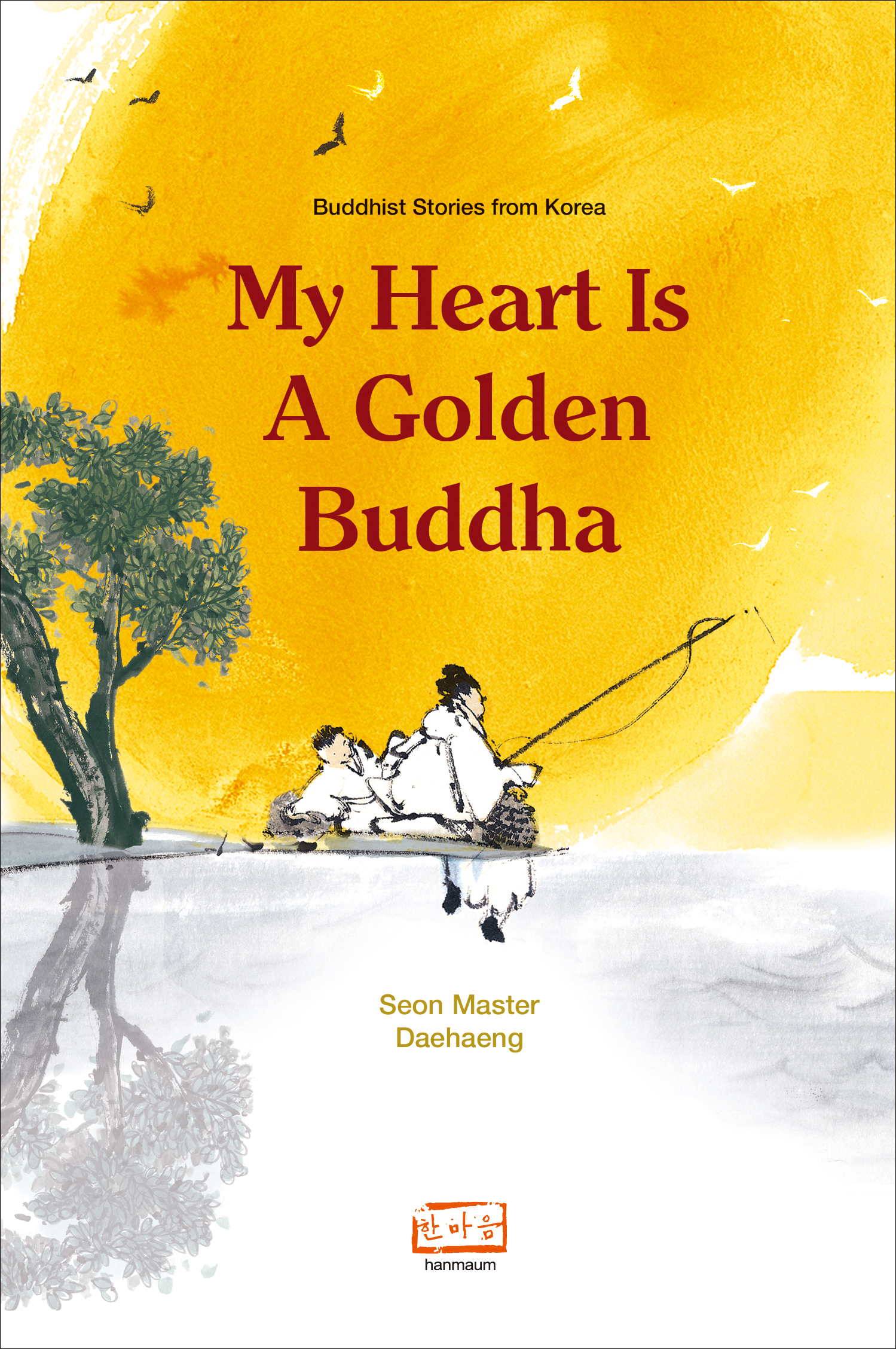
audio file – from the audiobook version of “My Heart is a Golden Buddha”
The Pure-hearted Sculptor
If
you go to Bulguk Temple near Gyeongju, you can still see in the
courtyard two magnificent stone pagodas. There is an air about them
of something profound and peaceful, and perhaps you will understand
why when you hear how they came to be.
Over
a thousand years ago, after Kim Daesung became prime minister of the
Silla Kingdom, he began to rebuild Bulguk Temple.
He
wanted to add two pagodas that would express the richness and depth
of the Buddha’s teachings, but in order to do this he knew he
needed to find an artisan whose great skill was matched by an equally
deep sincerity and faith. Unfortunately, no matter how hard he
looked, he couldn’t find such a person.
Yet
Kim Daesung knew that if he was sincere enough, he would surely find
a craftsman of equal sincerity.
So,
for one hundred days, he fasted and prayed. Although he was
rebuilding Bulguk Temple in honor of his parents, it wasn’t for
them alone that he was praying. He was praying for all beings, that
they would truly awaken to their inherent Buddha-nature, and that the
entire world would live together peacefully and harmoniously.
He
poured his entire heart into his prayers and meditation, and on the
night of the one hundredth day the Buddha appeared in a dream, saying
to him, “In the lands of the old Baekje kingdom is a sculptor of
great depth and sincerity, called Asadal.”
Kim
Daesung left immediately for the southwest of Korea, to the lands
that had been the old Baekje kingdom. He spent months there,
traveling through villages and cities, always asking if anyone had
ever heard of a stone carver by the name of Asadal.
One
day, as he traveled through a remote mountain valley, he heard a
woman call, “Asadal, dinner’s ready.” At last, he had found the
man he’d been looking for!
He
humbly asked Asadal to design and carve two pagodas for Bulguk
Temple, and explained his hope that they would express the Buddha’s
teachings and guide all who gazed upon them.
Asadal
was filled with joy at the prospect of being able to contribute to
the reconstruction of a great temple like Bulguk, but he couldn’t
immediately accept Kim Daesung’s offer.
For
Asadal had a wife, Asanyo, who he loved very much. They lived
together with her father, and it was he who had taught Asadal all of
the stone carver’s arts. But he was elderly, and would never
survive the journey to Bulguk Temple.
Yet
if Asadal went by himself, Asanyo would be left trying to care for
her father by herself. No matter how Asadal looked at the situation,
there seemed to be no good answer.
That
night Asadal told his wife about Kim Daesung’s proposal. Asanyo was
filled with joy, for she loved him deeply and knew that he was
capable of producing something wonderful. But she noticed that Asadal
was uneasy, and also realized that even traveling to Bulguk Temple
would take many, many weeks.
“I
know the circumstances will be difficult, but the pagodas you’ll
make will convey the Buddha’s teachings throughout the centuries.
Don’t worry about father; I’ll take good care of him. And even
though we’ll be apart, think of all the benefits those pagodas will
have for so many generations of people.
“You’ve
dreamed about being able to do something like this, and when the work
is finished, we can be together again.”
With
this, Asadal made up his mind to go to Bulguk Temple and carve the
pagodas. He and Asanyo held each other and cried for a long time,
promising that one day they would hold each other again.
After
he arrived at Bulguk temple, Asadal set about designing and carving
the pagodas. Although he missed Asanyo terribly, everything he did
was imbued with the love he felt for her.
Thinking
of her hope that these pagodas would benefit generation after
generation, his great love for her expressed itself as compassion for
all beings and the hope that they would dissolve all traces of
self-centeredness and awaken to the eternal, fundamental Buddha
within.
He
focused on the pagodas with this utter sincerity, and the hope that
they would be beacons that would guide all beings to this bright
path.
When
Asadal began to work on the first pagoda, called the Dabo Pagoda, an
image of the four all-embracing virtues arose within him, for with
these, anyone would be able to live a true life and would open
themselves to innumerable blessings.
The
first virtue is freely giving to those in difficulty. The second is
encouraging others to live together harmoniously through gentle
speech and a kind face. The third virtue is helping others through
words, actions, and even mind. And the fourth virtue is sharing
unconditionally, by becoming one with other people and their
circumstances.
Asadal
decided to represent these virtues as pillars, so after finishing the
foundation of the pagoda, he erected four rectangular pillars, plain
looking but sturdy.
On
top of these he built an elaborate and refined structure,
representing the functioning of the earth and heavenly realms. Thus,
the Dabo Pagoda teaches us that it is these four virtues that support
the functioning of all things in the world and universe.
As
Asadal designed and carved the second pagoda, known as the Sokga
Pagoda, it was with the hope that beings would put into practice the
four all-embracing virtues represented by the Dabo Pagoda, and in so
doing, they would awaken to their inherent nature and go on to become
Buddhas themselves.
This
he represented with clean, straight lines and smooth squares, one on
top of another; thus developed the Sokga Pagoda’s noble form. Even
today, these pagodas are still there, speaking silent words to all
who come.
∴
Both
Kim Daesung and Asadal were deeply sincere people, who worked hard at
letting go of self-centeredness and the tendency to see themselves as
existing apart from others.
Kim
Daesung wanted to build the pagodas in order to help all beings,
while Asadal entrusted every single thing to his inherent nature, and
every stroke of his chisel contained his pure heart. And so, the Dabo
Pagoda and the Sokga Pagoda are made of much more than just stone.
If
people realized just how precious it is to be born as a human being,
they wouldn’t waste their life just wandering around.
Even
worse than this are those who think only of themselves, and so turn
their backs upon the tremendous opportunities to create virtue and
merit which come from being born as a human being. The thoughts we
are giving rise to now can even determine whether we are reborn as a
more evolved human being, or whether we wear the mask of an animal.
So,
have a great heart like Kim Daesung, and raise an intention to
benefit each and every being. Diligently rely upon your foundation
with the sincerity and focus of Asadal.
Practice
like this, and your life will shine forth like the Dabo and Sokga
Pagodas, whose light remains undiminished after even a thousand
years.
Here’s the text for the Week 5 talk based on the book, “My Heart is a Golden Buddha.” I have to say that this is one of my favorite stories. Though, to be honest, as I’ve been going through the book, I’ve been going, “Ooh, that’s a good one! And that one. Oh, and so’s that one!” Lol.
audio file – from the audiobook version of “My Heart is a Golden Buddha”
True Giving
One
day, when the sunims were out collecting donations of food for their
temple, one sunim entered the yard of a house that looked so poor he
felt guilty about asking them for anything.
He
turned around and was leaving when the owner called out to him. His
family had very little, but they wanted to make an offering.
Not
having any food, this family had gone around asking people for the
water they washed their rice in, which was normally just thrown away.
They added a bit of rice to this water and boiled it down until it
thickened a bit. Then they would drink it like a soup.
Using
their best bowl and a serving table, the family offered a bowl of
this rice water to the sunim, who humbly accepted it.
As
the sunim drank it, he was moved to tears by their sincerity and
wanted to do something to help them. He had nothing of his own to
give, but he could find them some firewood. So, later in the day, he
took up an empty pack and headed into the mountains. He collected all
the wood he could carry and was on his way to their house when he met
his teacher.
His
teacher asked him what he was doing, and the sunim explained the
whole story to him. As soon as the sunim finished, his teacher swung
his staff around and started beating the sunim’s legs mercilessly,
roaring:
“What
do you think you’re doing? You’re a sunim! For years now you’ve
been studying this vast and profound fundamental mind! You should be
helping them through formless giving! Once they’ve burnt up that
wood, your help is gone! And you would call that giving?!”
The
sunim rolled around on the ground, still wearing his pack load of
firewood, clutching his calves, with tears streaming down his face.
Finally he sat up and was wiping away his tears and blood when
suddenly he understood formless giving.
“That’s
it! That’s it!” Blood was still trickling down his leg, but now
he understood the principle of entrusting a thought to his
fundamental mind.
All
of his pain and shock were forgotten, and he felt so light and free
that he thought he might start flying. He took all of his gratitude
and best wishes for the family and silently entrusted them to his
foundation.
Before
too long, the family that had given him the rice water began to
flourish until eventually they became one of the most prosperous
families in the village.
∴
The
benefit of raising a good thought for someone and entrusting that to
your fundamental mind can’t be compared to the temporary help that
material goods provide.
When
you selflessly entrust a wish to help someone to your foundation,
when you do this while letting go of any hint of “I’m doing” or
“I did,” then that help continues without ceasing. It never ends,
and it helps them on a very fundamental level. Not only that, the
virtue and merit of that act eventually returns to you.
Pay
careful attention to the thoughts you’re giving rise to. “I don’t
know anything,” “I’m sick,” “I don’t have anything”—don’t
let statements like these guide your thinking, speech, or actions.
Don’t let them become excuses for thinking of only yourself.
If
you do, the results will not be good. This is because all of your
thoughts, words, and actions return to you. They are input into your
foundation and then come back out with different appearances. If you
use your mind narrowly and shallowly, the poverty of that opens up
before you. If you use your mind deeply and inclusively, peace and
warmth lie as far as the eye can see.
Truly,
a single thought can create heaven, and a single thought can create
hell.
Here’s another great story from Daehaeng Kun Sunim! This will be the text for this week’s Dharma talk.
audio file (It’s really good!) – from the audiobook version of “My Heart is a Golden Buddha”
Three Grains of Millet
Once
there was a sunim passing through a village busy with the millet
harvest.
He’d
been traveling all day and his stomach looked forward to dinner.
Walking by the ripe stalks of millet, he reached out, and touching
them, three small yellow grains fell into his hand. He popped them in
his mouth without thinking, and kept walking.
Although
he immediately forgot all about it, this unconscious act caused the
sunim a lot of suffering in his next life. Dying some years later,
this karmic debt led him to be reborn as a cow belonging to the
farmer whose millet he’d eaten.
For
three years he had to work as a cow, and although the farmer was a
kind man, life as a cow was still difficult. Not only was the sunim
not used to hard physical labor, but he had also retained his human
consciousness. He was trapped in a cow’s body with all of his human
thoughts and feelings, but couldn’t communicate with anyone.
Finally,
those three long years were nearly finished. Just as the sunim’s
karmic debt was fulfilled, in the minutes before the cow died, he
regained his ability to speak.
He
spoke to the kind farmer and explained all of the causes behind his
rebirth as a cow. Further, he warned the farmer about a disaster that
was approaching the village:
“The
day after tomorrow, a gang of five hundred outlaws will attack this
village. However, if you prepare meals for all five hundred men,
they’ll spare the village.”
The
farmer, amazed by what the cow said, took it to heart and went to
tell the village elders. After much discussion, they gathered the
entire village together and began preparing food and places for five
hundred men. And then, everyone waited.
As
the cow had foretold, two days later five hundred outlaws, bandits of
the worst sort, came riding hard into the village.
They’d
come expecting the usual thrill of terrified villagers running every
which way, but instead, the villagers met them calmly. They announced
that they had prepared dinner for all five hundred men, and that if
the gentlemen would be seated, they would begin serving them.
“What’s
going on here? Is this some kind of a trick?” demanded the leader,
waving his sword around.
The
villagers told him about the cow’s prophecy, including why the
sunim was reborn as a cow. This was just too strange to accept. But
everyone told him the same story, and, as they had provided meals and
food for his group, he decided to leave the village intact.
As
the days went by, the bandit couldn’t help reflecting upon what he
had heard about the sunim. Again and again, he found himself
comparing the monk’s behavior to all the bad things that he had done.
In
fact, all the outlaws found themselves thinking along the same lines.
“If taking three tiny grains of millet can cause a sunim, a
disciple of the Buddha, to be reborn as a cow, what will happen to
someone like me?”
Each
man knew that he had done far more terrible things. Trying to
estimate how much they would have to suffer, they were forced to
think about how much pain and suffering their actions had caused
others.
As
a result, the leader and his men began to sincerely repent of the
things they had done, and dedicated themselves to learning and
applying the teachings of Buddha.
Eventually,
all five hundred bandits became Arhats, great beings who extinguished
the seeds of desire and anger, and transcended birth and death.
∴
When
people hear this story about a sunim becoming a cow because of three
grains of millet, they often think this is just a story, something I
made up in order to teach them. Of course I tell this story to teach
people, but you should know that everything actually happened, and
that things like this are still happening today.
Nothing
in this world happens by accident. A sunim can be reborn as a cow for
stealing three grains of millet, and, because of that cow, five
hundred bandits can reform and even become Arhats.
Although
everything in the world has its own path and its own function, at the
same time, it is all interconnected and functioning together as one.
Holding the universe in one hand, and making it my hat, hanging the sun and moon from my staff, with a single step journeying throughout the soaring mountains. Everything in these living mountains, every leaf and pine needle, are all one body.
Here’s the text for the third Dharma talk. I don’t want to go into this one too much right here, but there are a couple of such good points in this one!
audio – From the audiobook version of “My Heart is a Golden Buddha”
The Good for Nothing Son
Once
upon a time, there was an old man who lived with his only son.
Unfortunately, his son was the source of every kind of heartache and
frustration.
He
was always getting drunk and gambling away their money; he often
stole from people, and was constantly starting fights. Sometimes he’d
scream and rant in the streets, and at other times he’d pass out in
a stranger’s yard.
His
behavior became so outrageous that the old man didn’t dare show his
face in town.
Not
only did the son not take care of his elderly father, one day he even
stole the deed to their house. He sold it and spent all the money in
a single night on women and alcohol.
Finally
the old man exploded: “Get out! Go crawl off and die! Never come
back! May the typhus get you for all I care!” Indeed, before long,
his son really did catch typhus, and died soon after.
The
old man had spoken without thinking, out of deep frustration, but he
hadn’t really wanted his son to die; it felt as if his sadness and
regret would tear his heart into little pieces.
One
day a sunim was passing by and saw him sitting in front of his little
hut, so sad that no more tears would come.
Seeing
the old man’s pain, the sunim looked deep inside of the old man. At
last he spoke:
“The
principles that guide this world function very precisely. They
function without even the tiniest error, and nothing happens outside
of them. We receive things exactly as we have done them.
“In
your last life you wasted all of your family’s money on gambling
and having fun, and you even sold your own wife. You caused your
parents every kind of frustration and heartache, and eventually your
father’s anger killed him.
“It
was this connection that caused him to be reborn as your son. So, who
else can you blame for all of this? Your karma from that life was
just about to expire, and your son would have straightened out and
become an upstanding person. Unfortunately, you couldn’t endure
this long enough.
“However,
losing yourself in sadness won’t help either you or your son. If
you truly love your son, if you truly want to move past this
suffering, then you have to return all of your regrets, anger, and
sadness to your foundation. Let go and let go of those.
“Keep
doing this, and eventually they will quiet down. It’s not easy, but
this is the only way forward; this is the only way you can help your
son.
“We
all share a foundation, our true essence, which is inherently pure
and can transform all evil karma and suffering. Through this
foundation, we are connected to every animate and inanimate life and
object throughout the universe.
“Thus,
if you work on returning everything to your foundation, you can also
help lift the darkness that is covering your son’s mind. So don’t
be too sad, and don’t hate yourself. Let go of all of the bad karma
between the two of you, and let go of all the stupid and harmful
things that were done.
“When
you can let go of those, they will melt down and disappear, helping
your son be reborn in a good place.” The sunim then said a prayer
for the old man’s son, and left.
∴
Not
a single thing in this world remains the same. Everything is
ceaselessly flowing and changing.
Even
though you or the ones you love suffer from the karma you have
created through your words or actions, that suffering can change in
an instant, depending upon how well you are able to return thoughts
to your foundation, and depending upon the thoughts you give rise to
now.
Suppose
someone in your family did something truly bad; even in that case,
you should unconditionally entrust everything to your foundation.
Through it, the minds of parents and children, husbands and wives,
and brothers and sisters are all connected as one. So entrust
everything to your foundation, Juingong, knowing, “You’re the one
that can take care of all of this.”
For
example, if your child runs away and later returns home, don’t
start yelling at him or her. Instead, embrace them with a warm and
gentle heart. Ask them if they are hungry, ask if they were safe.
At
first, your child will probably respond in a cold and distant manner,
but gradually, as they begin to feel the warmth and love of home,
they’ll stop wandering around. As you entrust all of your love and
concern to your foundation, through their foundation your child will
sense those things. In this way, your family will come to share love
and happiness together.
This
kind of harmony is the source of all good fortune, grace, and virtue.
I decided to go ahead and put up all six week’s text and audio files of the text we’ll be starting with. After each week’s talk here at Anyang, I’ll be posting a recording of the English talk I gave the night before.
Here’s this weeks text and audiobook file for the Dharma talk. (From My Heart is a Golden Buddha.)
audio file – This is from the audiobook version of “My Heart is a Golden Buddha,” and read by Garan Fitzgerald. (He does a fantastic job!)
Letting Go
Long
ago, in the high mountains of Korea, a traveler was making his way
home along a mountain path.
Clouds
were drifting between the peaks, and the mountains seemed to vanish
into nothingness, only to reappear moments later. At times the clouds
would close in and turn his world into just a few misty paces in
front of him, with the only sound that of the river far below.
It
was all very beautiful in its own way, and his thoughts turned to his
family. No longer paying much attention to the path before him, he
stepped a bit too far off the trail; with a sickening rush, the
ground gave way under his foot.
Toppling
sideways into the abyss, he somehow managed to grab a tree root as he
fell. Clinging to it, he tried to pull himself back up, but there was
nothing above the root to grab on to.
He
was stuck there, hanging on the side of the cliff. The clouds had
closed in again and he couldn’t see very far, but he heard the
river and imagined the long fall to the rocks below.
He
gathered his strength and cried out with a wavering voice. “Help!
Is anyone there? Help me!”
Amazingly,
someone called back, and a moment later an elderly Buddhist nun poked
her head out over the cliff.
“Oh
thank goodness! Pull me up!” the man cried.
“I’m
not strong enough,” the nun replied, “but if you just let go,
you’ll be fine. The ground is right there below you.”
“Are
you nuts? I can hear the river! I’ll be crushed on the rocks—if I
don’t drown first!”
“No,
really!” she told him. “The ground is right below your feet. Just
look down.”
The
man glanced down, but between the heavy fog and his panic, he
couldn’t see anything.
“There’s
nothing there! What are you doing, trying to kill me?”
The
nun’s eyes narrowed. “Listen, you,” she said. “You asked me to
save you, and now I’m trying. Set aside your fear and let go of
that branch. You’re just wearing yourself out, clinging and yelling
like that. The ground is right below you.”
The
nun’s reproach gave the man a bit of courage. He was still afraid
of falling, but felt a bit less scared.
“Let
go? I still can’t see anything, but I can’t hang here much longer
anyway. That nun seems pretty confident that I’ll be okay….”
With that thought, the man closed his eyes and let go.
In
the next instant, he hit soft earth!
The
“cliff” he’d been hanging from so desperately was only a few
meters high. The whole time, his feet had been dangling just above
the ground!
∴
What
the man was clinging to, and what he let go of, wasn’t just the
tree root.
Behind
his clinging was much more than simply the fear of death. Mixed in
with that were all of his attachments to his possessions, his desire
for fame and recognition, his disappointments over the things that
didn’t go well, and of course his concern and love for his family.
So you can imagine how much courage it must have taken for him to let
go of that branch.
It’s
a lot easier to talk about letting go than it is to actually do it,
especially when it’s wrapped up with your family, your children,
your pride, and your self-respect. But this letting go is so
essential—it is the foundation of all spiritual practices.
Ironically,
we’re already letting go of every moment. We naturally let go of
every moment and go forward. Even with an act as simple as walking,
as soon as we take a step, we leave that behind and take another
step. Even when we’re breathing, as soon as we’ve finished
exhaling, we just naturally inhale. The reason we can let go like
this is very simple: because we deeply believe that we can. Not a
single cell in your body doubts for an instant that it is possible.
So
don’t get caught up in “I have to let go.” Just know that your
foundation, your true self, can completely take care of everything.
Thoroughly
trust your foundation. Keep working on this until it becomes as
natural as breathing in and breathing out, and you’ll know what it
means to live a true life!
The Spring series of English Dharma talks is starting up on Thursday, March 14th! [We’ll meet at the 2nd floor Dharma hall at 8pm, at the Anyang Hanmaum Seon Center. It will be every Thursday, for six weeks.]
The text for this series will by the book “My Heart is a Golden Buddha.” I’ll post in advance each week’s story, as a link to the audio book version. In the week after the talk, I’ll try to put up an English-only version of the talk.
Week 1: The Greedy Daughter-in-law This is a fun, slightly weird story! (Audio file)
Here are the links for the entire audiobook:
(direct from us, via Gumroad) also available at Audible.com and iTunes
A Greedy Daughter-in-law
Deep in the mountains of Korea, there lived a young man and his elderly mother. They were very poor, and the son was always working at some job or another in order to take care of his mother.
One day, as the village elders sat around chatting, the conversation turned to the young man. They all admired how hard he worked to take care of his mother, and as they talked, they realized that the young man had no other family to arrange a marriage for him. Then and there, the village elders decided that they would find him a wife.
They searched throughout the district, looking for a woman of good character willing to marry a poor farmer. At last they found a woman who seemed like a good match for the young man. She appeared gentle and caring, and like him was from a poor family. The elders made the arrangements, and the two of them were soon married.
Not long after the wedding, the young man began to realize that his new wife wasn’t quite as kind and selfless as everyone had thought. She was never satisfied with the money he earned, and to make matters worse, when he was out working in the fields, she treated his mother harshly and often wouldn’t prepare proper meals for her. With each passing week, his mother was becoming thinner and weaker.
As the young man thought about his wife’s behavior and struggled with his anger, he tried to think about the situation from his wife’s perspective. “Well, it can’t be easy being the wife of a poor farmer, trying to make do when there’s never enough. At the temple they say that our basic nature is inherently good and compassionate, so if I treat her with compassion and caring, maybe I can draw forth those things from within her. Then, perhaps she’ll behave better towards my mother.”
He tried this approach, but instead of getting better, his wife’s behavior only seemed to worsen. Finally, he realized that he couldn’t wait for his wife to change her behavior; he would have to do something himself. He reflected deeply upon the situation for several days, until at last an idea occurred to him.
The end of the harvest season was approaching, and with it his yearly trip to the district capital to sell their grain. Normally, it took him over two weeks to make the round trip, but this time he hurried home, arriving a week earlier than expected.
He rushed into their courtyard, shouting for his wife. When she came out, he looked around to see if anyone else was listening and lowered his voice: “You won’t believe what I saw in the city! I stumbled into a side alley off the big market, and found a street where people were buying and selling grandmothers. The plump ones were going for a thousand strings of copper coins! Let’s sell my mother there! A thousand strings of coins, as easy as snapping your fingers!”
“Do you think we could get that much for her? She’s kind of scrawny….” “Hmm, you’re right. We’ll have to fatten her up first. But not a word to anyone. If other people start selling their mothers, we won’t get a good price.”
A thousand strings of coins was a huge amount of money, and the wife wanted it all. Late into the night all she could think about were ways to make her mother-in-law plump and healthy-looking. As the days went by, she experimented with different foods and medicines reputed to be good for the elderly. Eventually, she became obsessed with her mother-in-law’s health.
With this kind of care, her mother-in-law began to recover. One day, as she took her grandson for a walk, she met some old friends and spoke with amazement about how well her daughter-in-law was taking care of her. Over the next months, stories about how well the wife looked after her mother-in-law spread throughout the surrounding villages, and even reached the ears of the district governor.
Impressed, he ordered a stone monument to be erected, commemorating her behavior and holding it forth as a model of virtue for others.
The wife had started with the intention of getting rich, but as she spent day after day thinking about someone other than herself, her own greed and selfishness had begun to melt away. Seeing the stone monument was the final straw; she broke down into tears, determined to truly become the person described there.
∴
Our fundamental mind, our Buddha-nature, contains infinite wisdom. However, this isn’t something you can find without making an effort. Like the young man, you have to diligently reflect inwardly and return your questions inwardly, while searching for a solution that will benefit everyone. If you do this, then the wisdom of your Buddha-nature can come forth.
However, no matter how great the wisdom, you won’t see any results from it without ceaseless effort and strong faith. If you want to achieve something in your life, throw away self-centeredness and greed, and then, with faith, entrust everything to your foundation.
While continuing to observe and being patient, use both your body and mind to put your understanding into practice. If you can make this kind of effort, you will certainly find the best way forward for a woman of good character willing to marry a poor farmer. At last they found a woman who seemed like a good match for the young man. She appeared gentle and caring, and like him was from a poor family. The elders made the arrangements, and the two of them were soon married.
Not long after the wedding, the young man began to realize that his new wife wasn’t quite as kind and selfless as everyone had thought. She was never satisfied with the money he earned, and to make matters worse, when he was out working in the fields, she treated his mother harshly and often wouldn’t prepare proper meals for her. With each passing week, his mother was becoming thinner and weaker.
As the young man thought about his wife’s behavior and struggled with his anger, he tried to think about the situation from his wife’s perspective. “Well, it can’t be easy being the wife of a poor farmer, trying to make do when there’s never enough. At the temple they say that our basic nature is inherently good and compassionate, so if I treat her with compassion and caring, maybe I can draw forth those things from within her. Then, perhaps she’ll behave better towards my mother.”
He tried this approach, but instead of getting better, his wife’s behavior only seemed to worsen. Finally, he realized that he couldn’t wait for his wife to change her behavior; he would have to do something himself. He reflected deeply upon the situation for several days, until at last an idea occurred to him.
The end of the harvest season was approaching, and with it his yearly trip to the district capital to sell their grain. Normally, it took him over two weeks to make the round trip, but this time he hurried home, arriving a week earlier than expected.
He rushed into their courtyard, shouting for his wife. When she came out, he looked around to see if anyone else was listening and lowered his voice: “You won’t believe what I saw in the city! I stumbled into a side alley off the big market, and found a street where people were buying and selling grandmothers. The plump ones were going for a thousand strings of copper coins! Let’s sell my mother there! A thousand strings of coins, as easy as snapping your fingers!”
“Do you think we could get that much for her? She’s kind of scrawny….” “Hmm, you’re right. We’ll have to fatten her up first. But not a word to anyone. If other people start selling their mothers, we won’t get a good price.”
A thousand strings of coins was a huge amount of money, and the wife wanted it all. Late into the night all she could think about were ways to make her mother-in-law plump and healthy-looking. As the days went by, she experimented with different foods and medicines reputed to be good for the elderly. Eventually, she became obsessed with her mother-in-law’s health.
With this kind of care, her mother-in-law began to recover. One day, as she took her grandson for a walk, she met some old friends and spoke with amazement about how well her daughter-in-law was taking care of her. Over the next months, stories about how well the wife looked after her mother-in-law spread throughout the surrounding villages, and even reached the ears of the district governor.
Impressed, he ordered a stone monument to be erected, commemorating her behavior and holding it forth as a model of virtue for others. The wife had started with the intention of getting rich, but as she spent day after day thinking about someone other than herself, her own greed and selfishness had begun to melt away. Seeing the stone monument was the final straw; she broke down into tears, determined to truly become the person described there.
∴
Our fundamental mind, our Buddha-nature, contains infinite wisdom. However, this isn’t something you can find without making an effort. Like the young man, you have to diligently reflect inwardly and return your questions inwardly, while searching for a solution that will benefit everyone. If you do this, then the wisdom of your Buddha-nature can come forth.
However, no matter how great the wisdom, you won’t see any results from it without ceaseless effort and strong faith. If you want to achieve something in your life, throw away self-centeredness and greed, and then, with faith, entrust everything to your foundation.
While continuing to observe and being patient, use both your body and mind to put your understanding into practice. If you can make this kind of effort, you will certainly find the best way forward
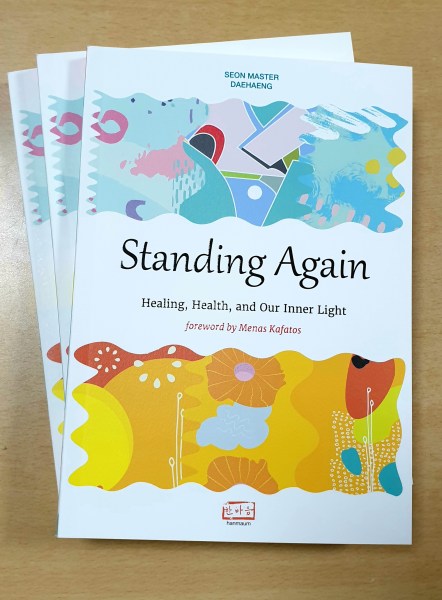
We have a new book out! This is the combined English edition of “The Doctor is In” and “The Healing Power of Our Inner Light.” While the focus of these talks is awakening and realizing our true essence, they repeatedly touch on topics of health, illness, and using these as a way to deepen ourselves.
These were first published in Korean-English editions, and not widely available outside of Korea. Now they’re in one English edition, and available worldwide through Amazon in paper and ebook editions. (The ebook will be up on other retailers soon.)
Start where you are! Learn to rely upon your inherent Buddha-essence. Learn to apply its energy to the world around you. Every single one of us has this incredible, formless Buddha-nature, this one great pillar that encompasses everything. Take this pillar as your center, and strengthen your ability to let go. Develop your ability to entrust it with everything. In this way, take all suffering, all illness, and burn it all up! – Seon Master Daehaeng
At the center of our vast and completely empty mind, there is an eternal spark.
With my whole heart, I’ll take this spark as my guiding light. I’ll go forward sharing its light with all the world, traveling this path of endless compassion.
This one mind, deep, deep, so deep, so profound, so mysterious, there within this is the truth of “embracing everything.” From this one mind flows a great spring that has the power to save all beings.
I’ll drink deeply of this sweet water, and no longer be caught by life and death. Together with all beings, I’ll take this path, this truth, that transcends all fixed forms and ideas.