
All Buddhas throughout all realms exist at this very moment within my one mind, sincerely relying upon my one mind is itself a true mantra.

Learning to see the world as it truly is
All Buddhas throughout all realms exist at this very moment within my one mind, sincerely relying upon my one mind is itself a true mantra.

Hi, anyone want a do-over for March?! Wow, it’s been a rough one so far. Please stay safe, and take care of your fundamentals before anything else. In terms of spiritual practice, that’s trying to entrust everything to our inherent light, and to function from there. In terms of money, it’s Food, heat, and shelter. In that order. Credit card companies can go sit in the corner if you haven’t got the money. They’ll make all kinds of ugly noises, but tough.
Take care of your own heart first. That’s what really sustains you and your family. Do your best not to let worry control or dominate you. And don’t look at the news too often!
with palms together,
Chong Go

Some sad news here, Hye Ji Sunim of our Chicago center left her body today. She’d had cancer for a number of years, and was determined not to let it bother her. You can see in what she said that her focus was on how we can evolve, and helping others to evolve and grow to the best of their ability. Thank you, Sunim.
with palms together,
Chong Go
* This interview was given in Korean, and published in the January/February 2012 issue of Hanmaum Journal.
Where you are now! There! Free yourself!
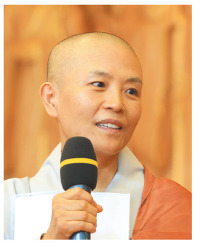
(Hye Ji Sunim, Chicago Hanmaum Seon Center)
Bowing with my whole heart, from my head to my toes.
Melt it down, melt it down, change it into light, into light, into Bodhisattvas, into Bodhisattvas!
Now, here in this moment, this is all that needs doing.
Even if this were the last moment of my life, this is all I am working on.
From the time I was in middle school until I finished college, through all the vacations and the year I had to spend preparing to retake the college entrance tests, I was the one who determined my direction. Not one time did I ever ask anyone else what I should do. On one hand, I didn’t really feel the need, and on the other, I knew how the conversation would likely go, and I was sick to death of it.
Everything would start with, “Well, as a girl, you can (or can’t) ….” Always the same old limitations, the old customs of discrimination against women, the constraints , the oppression, which I’d hated from an early age.
By the end of my twenties, I had no idea at all about what I needed to be doing. Instead of a clear path, it seemed like I’d become even more lost. I felt like there was something I needed to be focusing on, but I was completely in the dark about what that might be. I began to wonder if going on a 100 day prayer retreat would help me find my path, and so began to look around at a number of places and practice centers.
Then one day in late October, 1985, I opened a newspaper, and an ad for a book jumped out at me. It was described as “A Story of Daehaeng Kun Sunim and Finding the Path.” I didn’t even see any of the other articles in the paper, and instead felt as if I was walking on springs. It was as if something had pulled me up out of my chair, and I headed for the bus stop near my house as if my body weighed nothing at all. Looking up, I saw two huge rainbows that seemed to be hugging the mountains on the edge of town.
After finding a copy of the book and returning home, I went straight to my room. And I cried and cried as I read. It felt like at last, someone had shown a light into a dark cave. There, in the book, was my path. I was overflowing with emotions, and cried even as I didn’t understand why I was crying so much. It took me a few days to read the book, because I kept jumping up and pacing my room, and then sitting down and reading the same page over and over. I found I kept standing up, facing towards Anyang city (where Kun Sunim was), and offering her a full bow. I hadn’t ever been a member of a temple, nor had I ever bowed to a sunim before. I guess I was just so grateful to have met my teacher, and so glad to have had a glimpse of how the world really worked. After finishing that book, I would find myself murmuring “Kun Sunim, Juingong,” when I was walking somewhere.
Of course, I went to Anyang as soon as I could, and met Kun Sunim, and cried during her Dharma talk. I had such an unquenchable thirst to listen to every one of her Dharma talks. After meeting Kun Sunim, all my old feelings turned to gratitude. My feelings about having been born during such a grim time in Korea, about having been born as a woman(and discriminated against), and all the unhappiness. I saw that there was a reason for it all. It was all stuff I had to go through in order to be able to meet Kun Sunim.
As I cried and my nose ran, my first impression of Kun Sunim was shockingly clear, “She’s a true Revolutionary!” I wanted to shout it out! The feeling that came from her was beyond just “equality between people,” more than “equality between all life.” It was equality where all beings are share the infinite potential of a Buddha. My understanding of these two points became the basis for fundamental changes in my life. I began to taste true freedom, and unimaginably deep compassion! Experiencing this equality was so far beyond everything I had thought about “equality.”
For the first time in my life, I asked someone else, “What should I do with my life?” Kun Sunim just smiled and laughed, because I already knew that I wanted to become like her. This was the very best possible life! In order to find it, I had to lose what I’d thought of as the life I should be living. To find this path, I had to lose track of my old path. And in order to continue along this path, I had decided to become her student.
I knew that by becoming this sort of a person, I could do more to help my parents than anything else, so I didn’t even feel any guilt as I left home to become a sunim. One day, I said goodbye after breakfast, and then as I left it was like moving out of a vague, unremembered dream to one that was incredibly clear and specific.
A while after I entered the temple and became a “haengja” (a bit like a postulant, most people spend six months to a year or so before being ordained as a Buddhist nun or monk) I had a dream where I saw a rope stretched out above a vast ocean, and I could see there there was someone walking on it as easily as if they were walking on flat ground. I really wanted to follow whoever that was, so I stepped up onto the rope. But I sure couldn’t walk comfortably on it. My body was swaying back and forth, and my arms were flailing in the air. Then, my hand found an unseen, higher rope to hold onto. Stepping carefully, and holding on to the second rope, I was just barely able to get across that ocean.
The person ahead of me had already started up a steep set of stone stairs that seemed to go up and up. So I blindly followed them up the stairs. Finally, at the top, there was a small pavilion. After I rested there for a bit, the person started down the stairs on the other side, so I too started down.
The stairs ended at a shore line that stretched out in the distance. The person I was following continued walking along the shore line. They didn’t say a word, and I followed without saying a word. After a long time, I heard the sounds of a large bell coming from somewhere. “Bong…, bong…, bong….”
Then, the person I was following turned to me and told me to go back the way I’d come, by myself. I was a bit stunned and not sure where to go, because I had only been focused on them. But I turned back, and with one stumbling step after another, started back. By following the shore, I eventually came back to the stairs, went up them, rested for a bit in the pavilion, and then went down the other side.
I finally came back down to the ocean that I’d crossed on the rope. As I came down the last stairs, I inexplicably found myself on a boat with other people. The boat was sailing, and from the upper deck, off to the left side I could see beautiful twin rainbows shining in the sky. Off to the right sight of the boat, I could see a shore with huge, rounded boulders at its edge, and hear the sounds of the waves breaking upon the boulders. As I stood there silently watching the waves and rocks, every time a wave hit a boulder, it left behind an image of a Buddha. The waves were carving the stones into Buddhas! It was such a sight!
LEAP AS FAR YOU CAN!
In my dream, I could only see the back of the person I followed across the ocean and up the mountain, but it was clearly Kun Sunim. Her back pointed out the direction for my life. Thinking of that dream, if I hadn’t seen even that vague glimpse of Kun Sunim, I don’t think I could have seen or been able to find the path I needed. When I faltered, when I stumbled, there was Kun Sunim moving ahead of me. This somehow let me see myself as I was, which in turn made it possible for me to center myself and stand up again. Following after my teacher like this, single-mindedly, has formed the basis for everything I attained in my spiritual practice. Without her vast and deep teachings, would I still be breathing? Without her compassionate hand up, would I have been able to stand on my own now?
What has to change isn’t other people. It’s my own thoughts. It isn’t the world I have to change, it’s my own inner existence that needs to change. This is the awareness that can start a great revolution! I’d always thought of myself as a basically good person, and before I met Kun Sunim, I think it was that pride that had sustained me. However, as I followed behind Kun Sunim, walking in the path she was setting, I began to see aspects of myself that I didn’t want to admit. I started seeing the things about myself that I had denied. I began to realize that beneath my sense of superiority and confidence, there was a sense of inferiority, and beneath that was arrogance and pettiness, stinginess and argumentativeness, seeing others as separate from myself, and getting caught up in very strong opinions of right and wrong. It was like a huge, multi-colored piece of embroidery that covered everything.
As my faith began to deepen, it became clearer that what I saw in my teacher, was also my true essence. Understanding this, I began to face all the awkward, ignorant consciousnesses within me, without embarrassment. In fact, I was born for the sake of meeting them. All the waves and storms arising from within me, as well as the waves that seemed to come from outside, weren’t different. I began to get the message that I was supposed to help transform all of those consciousness, to help them become Bodhisattvas. All of this was an opportunity. Nonetheless, I often alternated from seeing them and maintaining a critical distance, to being deceived and caught up in them, to seeing them clearly again. Time after time this happened. My anger or suffering due to an illness wasn’t the problem. The problem was that I got completely caught up in those and didn’t return them back to my foundation. To consistently see what is truly going on and return it to this essence is no easy thing!
When Kun Sunim first came to the Chicago branch, I asked her if I could leave, and return after my practice had deepened. She replied, “Sure. Pack your things, lock the building, and come back with me.” This startled me, and got me to thinking; “If I leave, then all the people here won’t have a place to practice and gather together,” and so I decided to stay where I was. Of course, now I realize that Kun Sunim wasn’t really so casual about closing the center. She was just trying to get me to think a little deeper.
Anyway, a few years later, on a visit to Korea, I went along on her early morning walk and asked her again, “Sunim, would it be okay if I came back to Korea to live?”
“Chicago too is a good place to practice. Right here, at the place you are now, free yourself! Wherever you happen to be!”
Ah! Right! The whole point of being anywhere is to practice. Not guiding others or being a “teacher.” Now. Here. The whole reason I’m living in this world is to free myself from “I.” I have a teacher within me who transcends time and space; how could I practice if I’m getting caught up in ideas of this place or that place?
I feel so grateful, and apologetic as well, to all the practitioners at the Chicago center. As I grow up, I will repay their many kindnesses. This is how I can begin to repay the unfathomable help I have received from Kun Sunim, as she guided me and helped me up.
I sometimes wonder if our new building and land weren’t arranged by her in order to help us grow. I can almost hear her saying to us, “Here’s a giant springboard; use it to leap as high and as far as you can!”

Here’s a great Dharma talk from Kun Sunim about how the intentions we give rise to give direction everything. They give direction to the lives that make up our body, and they give direction to this whole that we are part of. The only “catch” here, is that we have to completely entrust those, and we have to work at letting go of “me” and “I” as we do this, otherwise those intentions would be no more than a reflection of our dualistic desires and thoughts. Because these are one-sided, even if we were able to entrust them them to this foundation of ours, the results would be fairly limited, because we’d be trying to use this non-dualistic whole to achieve a dualistic result.
I’m posting the text and a recording of me reading it today, and will post a Dharma talk on this in a few days after people have had a chance to go over this first. If you have any questions, post them in the comments and I’ll go over them in the talk.
There’s quite a bit of nuance to this topic, (and I’ll try to go over some of it later,) but to sum up, when the situation is urgent and it feels like something bad is coming, completely entrust that to your foundation, knowing that since it arose from there, your foundation can take care of it and turn it around into something that doesn’t cause harm. More on this later!
Taking Care Problems Before They Arise
Whatever kind of problem arises, whether it’s in your family or something in the larger society, whether it’s crime, or some issue that keeps persisting, then, so that the problem won’t arise, you have to firmly entrust it inside, with the thought, “Hey! You’re the one that can solve this! You’re the one that can cause this to not arise!”
When you do this, you’re setting up a shield. It’s as if you’ve set up a radar or a defense network. All the lives within your body are part the Dharma Realm, and all function together in your body like the Dharma Net. Their consciousnesses continuously leave your body and return, working like a radar net, detecting whatever might be coming your way, and now you’ve told them how to respond to it. They respond as the Dharma Realm, and take negative or harmful things, and turn them into good things.
With a bit of wisdom, you can set things up ahead of time to take care of all this stuff. Then later, even though you aren’t fussing over every little thing, this network responds to it all, and keeps things from becoming problems. Each of you are capable of experiencing how this works and protects you. Though, it doesn’t just happen by accident.
Nothing in our world just happens. Not even little, tiny things. Not even things that flash into existence, and are gone in that moment. None of it is random. None of it happens by chance. Something had to go forth in order for something to come back. So don’t let yourself think that things just happen. It all starts from you, yourself. That said, the fact that something has begun with you also means that you have the capacity to solve it. You’re the one who can make it into something clear and bright.
What do I mean about clear and bright? The whole. I’m talking about the whole. Regardless of whatever you face, of whatever you need, return it to the whole. Entrust it all to your foundation, your one mind.
Pain, loneliness, desire, genetics, ghosts, and so on, cause so many difficulties in people’s lives. They cause problems to arise from the outside, as well as from the inside. They arise within and lead people astray. They distort people’s perspective, and cause them to do things that lead them towards hellish states of existence. They cause people to stumble, and they cause them to be easy marks for con artists.
In order to avoid being hurt by these things, entrust them all to your Juingong, your foundation. Do this and make your mind bright again. Then your eyes will become clear, and you won’t be led down dark paths.
You have to give rise to an intention in order for that to manifest. If you don’t raise a thought like this and entrust it, then there’s nothing for your foundation to respond to. It just remains calm and quiet. To put it another way, when no thoughts arise, it’s the “father, ” when thoughts arise, it becomes the “son.” When no intentions are raised, the son, your present consciousness, joins with and becomes one with the calm, quiet father, the foundation. But when an intention is raised, the foundation joins with your present consciousness. That is to say, your intention is energized by the foundation, which works as one with that intention. As one.
This unseen realm, this unseen foundation, is the source of all life, and because it exists, we can give rise to intentions, and because we can give rise to intentions, we can move our bodies, and so create things, and explore and affect the world around us. This is how we’ve existed, and why nothing’s random, why what we experience is the result of our own actions. Some kind of input went into this unseen essence, where it functioned with the whole, and then produced a result.
Thus if you sense a problem coming, you can take that feeling and entrust it, thinking, “Okay, true self, foundation, work to keep these things from happening” and trust it to work that way. If you input the intention that those problems shouldn’t arise, then this whole will work towards that end. But this has to be accompanied by real, unconditional trust. Trust where you turn this over to your foundation and walk away without looking back, without constantly worrying about whether it will really work or turn out well.
If your faith is indecisive, then even though you entrust something, it’s like you submitted the paperwork for something, but then pulled it back at the last moment. And then pushed it forward, but pulled it back again. If you’re doing this, it’ll never get processed and there will be no result.
Thus, everything depends upon how much you trust your foundation. However, instead of decisively entrusting this, sometimes people only mess around on the edges, and so they don’t see any results. Then they come to me and beg me to solve the problem, saying “Letting go and entrusting never seems to work for me.”
But, how you use your own mind is what everything depends upon. Truly. The kinds of results you eventually experience depend upon your faith in your own foundation. There’s no one else to blame or depend upon. It’s all up to you and the unseen source of all life you’re endowed with.
– Daehaeng Kun Sunim, October 31, 1993
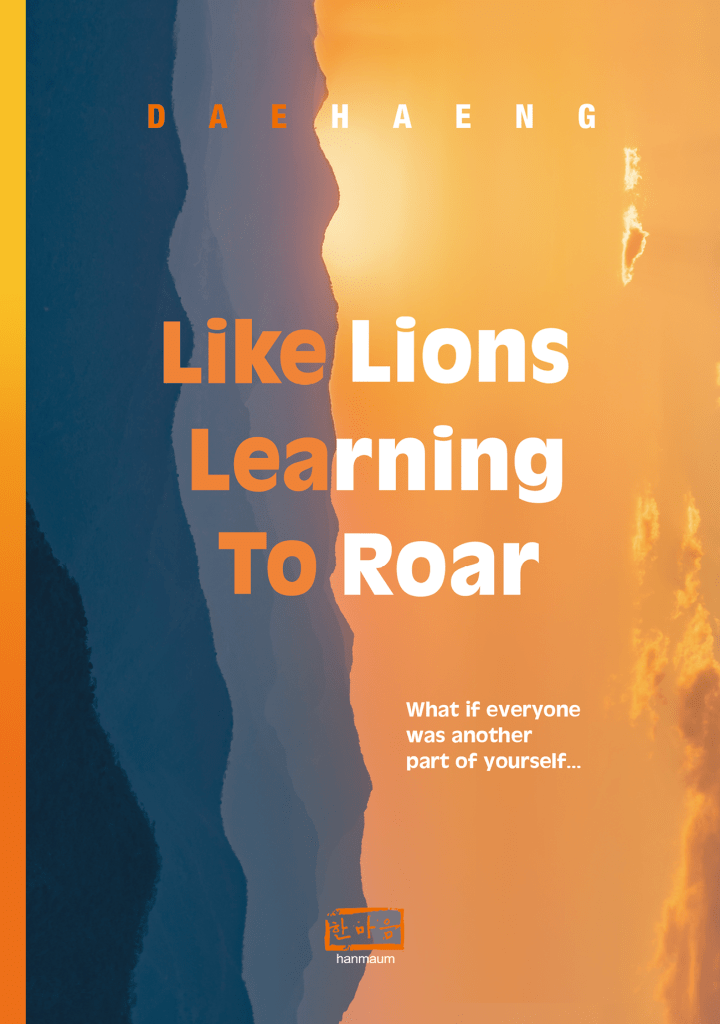
https://www.amazon.com/Like-Lions-Learning-Roar-Daehaeng/dp/8991857590
The paper edition of “Like Lions Learning to Roar” is now available outside of Korea, through your local version of Amazon! (There’s an ebook too.)
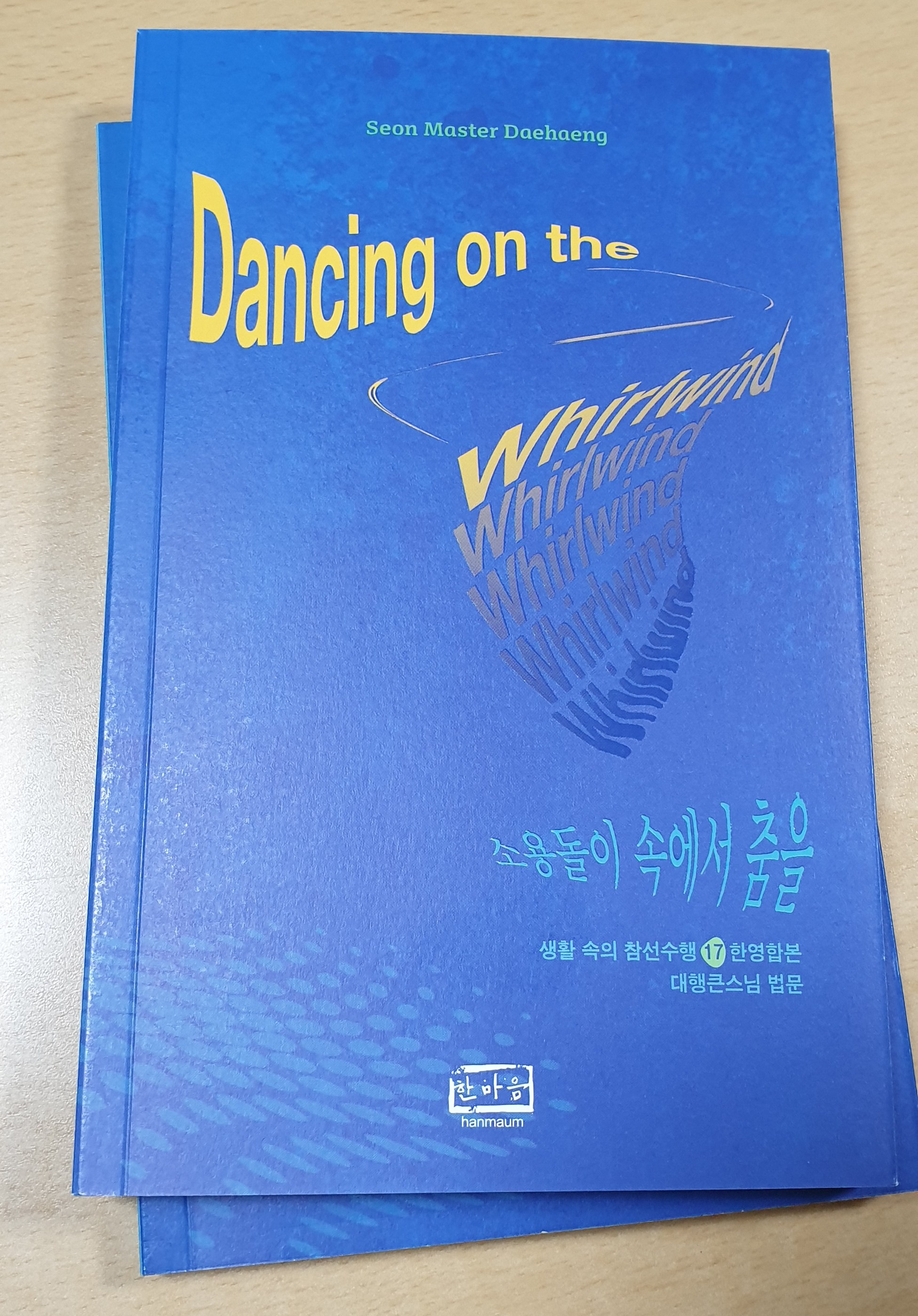
This is two of our previous Korean-English editions, “Dancing on the Whirlwind” and “Turning Dirt into Gold,” combined into one English edition that’s easily available outside of Korea. There will be printed-in-Korea version of “Like Lions Learning to Roar” available here in Korea beginning sometime in the middle of next week (March 11th, plus or minus).

English Dharma talk series
As most of you probably know, I hold a series of English Dharma talks every Fall and Spring here in Anyang, and then post the studied text along with a re-recording of the topic on this blog.
However.
Unless you’ve been in a coma, ala “28 Days Later,” (okay, maybe not the best example, all things considered!), you will have noticed that we have an unpleasant virus going around Korea, and all public gatherings are on hold.
I’m thinking that I’ll proceed more or less as I’d planned, perhaps changing the selections of Daehaeng Kun Sunim’s Dharma talks to better suit the current circumstances. That will probably start this Thursday, situation permitting. If you have any good suggestions, by all means, let me know! Also, let me know if you have any requests about the content.
Please take good care of yourselves these days!
Chong Go
Alright! We’ve reached the first stage of publishing a new collection of Kun Sunim’s Dharma talks outside of Korea!
These were previously published in Korea as bilingual editions, titled “Turning Dirt into Gold” and “Dancing on the Whirlwind.” What I really like about this edition is that it’s easily available outside of Korea. (Well, okay, I think the title is kind of cool too!)
This edition of the English text is titled “Like Lions Learning to Roar,” and is available as an ebook through most online stores. I thought I’d just copied a plain link, but if you click on the image, you can also preview the book. Kind of neat!
We’re working on the paper edition, but it will take another month or two, because we are still waiting on some cataloguing info from the National Library of Korea, and because it will take a while to get sample copies from overseas to ensure the quality of the paper edition. So please be patient if you want a paper copy. It’s coming!

Figuring out how to use our mind in new ways really is like stepping out into the dark. We haven’t been there many times, so the way isn’t clear or especially intuitive. What is clear, easy, intuitive, are the ways we’ve done things in the past. As we evolved from lower states. The thing I love about this poem is that it clearly tells us how to go forward when we can’t see the path, when we’re trying to take a direction we haven’t traveled before. Read this one a few times and think about it carefully. And have a happy Lunar New Year!
with palms together,
Chong Go
Smooth the Rough Edges, Become a Free Person
When you are able to use your mind harmoniously and generously,
you’ll be able to use it freely,
manifesting according to needs of others.
This harmonious mind can become smaller than the smallest dot,
and larger than the vastest universe.
Returning things inwardly
makes your mind harmonious;
having harmonious thoughts
strengthens your ability to return things inwardly.
Returning things inwardly gives rise to compassion,
and if you truly have compassion
everything can be melted down,
anything can be achieved.
If you can return things inwardly
you can communicate with everything.
You can become one with Buddhas,
one with a bug or a blade of grass.
Everything is also yourself!
With equanimity, with an empty mind,
observe your inner foundation
without any thought of trying to see it:
This is what it means to return things inwardly and observe.
Seeing everything as one,
embracing everything
without leaning to one side or the other,
this is equanimity.
When everything has been put down
when there’s nothing left to hold onto,
not even the thought
that you have to put something down,
this is empty mind.
When you have such a complete and harmonious mind,
you can become one with all life,
one with the whole universe.
This mind can make even rough things
harmonious and generous,
and can find a use for them.
Not a single thing is rejected!
This mind becomes one with all life.
Not a single one is thrown away!
This is true compassion!
— Daehaeng Kun Sunim

Happy New Year, everyone!
I hope you are all doing well, and that you all find your path and make great progress in the new year!
with palms together,
Chong Go
Never forget that now,
right here,
where we are sitting at this moment,
this single, shining candle of one mind
has within it the entire universe,
and all realms seen and unseen.
— Daehaeng Kun Sunim

Happy New Year, everyone! I hope you all have a great 2020!
We’ve just finished the subtitles for a new video by Daehaeng Kun Sunim, and as these go, this is a pretty important one, because it’s the very basics of how we can free ourselves from karma and habits, and take a new direction in life. (There’s also another video we found, that, to be honest, I don’t remember what it was used for, lol.)
It’s not particularly complicated, but as most simple things, it takes effort over time for it to really pay off. The parallels with weight lifting and school always leave me shaking my head. It’s always effort x time. Once you start doing that, then big lumps of gunk will sometimes all dissolve in a flash, but we still have to keep working at it. And once you’ve been at it for a while, you’ll wonder what took you so long to get moving!
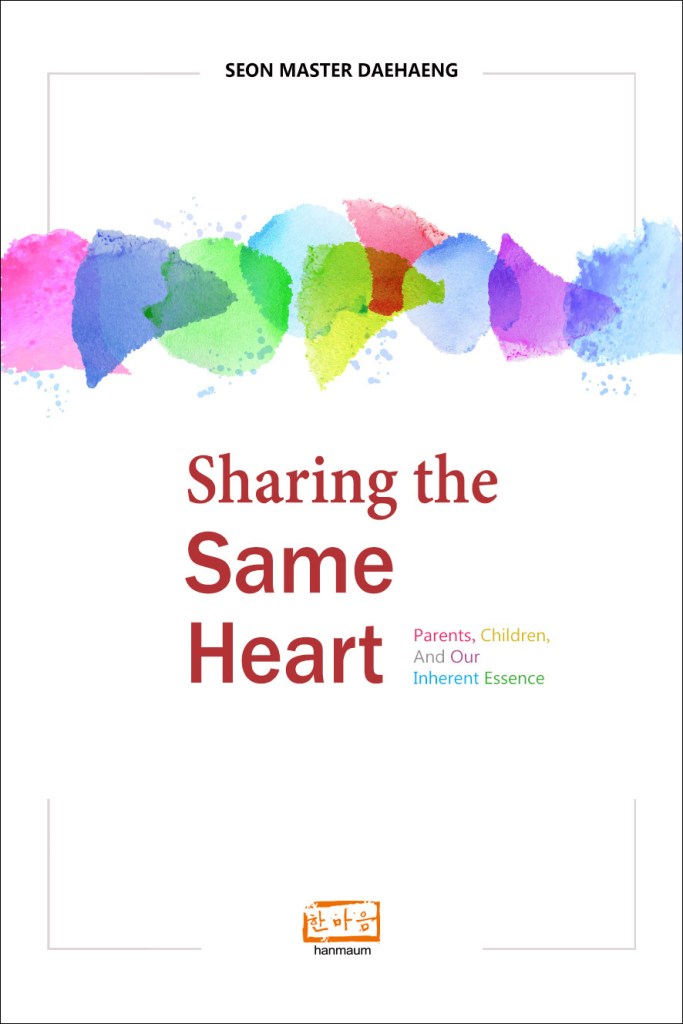
I’m trying to write a foreword for our latest English collection of Dharma talks, and happened to take a look at one of our earlier books. (Okay, I couldn’t think of anything good to say, so I looked at an older book for inspiration! Lol.)
It turns out that the foreword was actually quite nice just on its own, so I decided to post it here. The book it’s from is advertised as Dharma talks about children, but that’s only a portion of the contents. The overall talks are a great teaching for anyone, regardless of age or whether or not you have children.
(from the Foreword)
One day I happened to meet Daehaeng Kun Sunim as she walked out into the main courtyard of the Seon Center. There were two or three young children playing there, chasing each other and yelling with abandon. They probably lived in the neighborhood, and had found a wide-open space for their games. But they were being kind of noisy in the heart of the temple, and one of the sunims with us grumbled about it.
But Kun Sunim spoke up, saying, “I think it’s beautiful.”
Even now, twenty years later, I still remember this.
It showed me an aspect beyond the surface, the noisy kids, beyond the temporary disruption, and nudged me towards a more complete picture. For play is a sign of healthy kids. It’s good for them, and it’s a pretty good world where kids have the time and energy, and safety, to run and shout.
There’s an expression in Korean, that when the headwaters of a stream are clean, the water downstream will be as well. It flows from the top. If the parents are working diligently at entrusting everything to the fundamental, awakened true nature within us, which is also the connection we all share, then as they get a sense of this, their connection with their children opens up and becomes more vibrant. The children in turn respond to this, and as this energy flows back and forth, parents have a better sense of what they need to be doing.
Thus, while Daehaeng Kun Sunim often encourages parents to teach their children about this practice of relying upon our foundation, she spends most of her time talking with the parents, encouraging them to work on their half of things.
To be honest, there’s only so much parents can do. Children come into this world with their own personality, history, and karma. As any parent can testify, beyond a certain point, you can’t really make children do much. Yelling and threatening are always temptations, but even when they yield results, everyone involved is often left feeling a little terrible.
Instead, as we begin to discover the light within us, our own inherent teacher, then we begin to get a better sense of the situation, and how to respond effectively. We begin to see what we can do to help bring forth this light in others. And as our own light begins to shine forth, children too begin to sense this. They learn from how we respond to them, but they also learn from how we treat others and how we respond to the things that come up in our life.
In addition to the need for parents to work on their own spiritual practice, Daehaeng Kun Sunim also answers questions in these Dharma talks about prenatal care and education, and specific issues between parents and children. Because fetuses and young children are changing so rapidly, the positive influences they receive at this time are magnified throughout their life, so to her, this was an excellent opportunity to help deepen a child’s potential for spiritual growth.
When the energy of our own fundamental Buddha nature shines bright, then it can automatically connect with and support the people in our lives. And as children experience the taste of this energy, that becomes a standard, an idea of what’s possible, and so they don’t easily fall into dark paths. And while the topic of this book is children and parents, this is also true for the people around us.
When our hearts and spirits are bright, that light shines on everyone we encounter. And while we’ll likely never know the effects of this, just by being in the world, we can be a source of hope and compassion for others, whether they be our children, parents, or just passing by on the sidewalk.

