Books about Korea

It’s a hot day here in Korea, and for some reason it seemed like it would be fun to share some of my favorite books about Korea, along with a couple that I’d like to check out.
(I’ll add links to these, because they can be hard to find, and expensive, depending on where you’re ordering them from.)
 

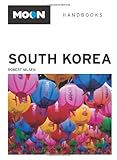
The all-time best travel guide to Korea has to be South Korea by Moon Handbooks. If you just want bus and hotel info, then Lonely Planet will probably be fine, but if you want history and details about the places you’ll visit, then this is the book for you. My Korean Dharma brothers were always amazed that I knew more about the places we were visiting than they did. This book is why!

(The new edition at Amazon has only two ratings, but if you look at the previous edition, you’ll see it was highly rated.)

   
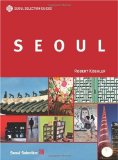
However, if you’re going to be spending most of your time in Seoul, then you can’t go wrong with SEOUL.  For years the only city guides to Seoul have been small, pathetic things, but now that’s changed! 
 
This is a huge book, filled with photos and every kind of information you could imagine about the city and the areas around it. This book was put together by the same team that publishes Seoul magazine, and runs the Seoul Selection website, so they really know their stuff. (If you live in Korea, you can also get it at the Seoul Selection bookstore.) 


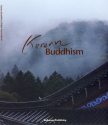
A very nice book about Buddhism here is Korean Buddhism. The photography in this book is incredible.  It’s a nice introduction, but also quite detailed in explaining the different parts of the temple, temple etiquette, and a fair amount of Korean Buddhist history. (I really, really want to meet the photographer and see if I can use his images for this blog. They’re extraordinary.)
 

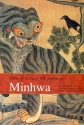
A book I’d like to check out the next time I visit Seoul Selection is Minhwa: Tales of Korean folk paintings. As you can see from the cover, Koreans traditionally really like wild drawings of tigers. A friend and I joked that it was because artists were trying to draw them from old skins, as few people survived getting good look at a live tiger! 


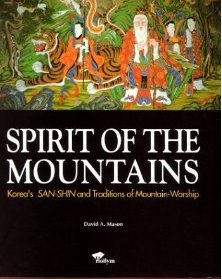
On a similar note, if you’re interested in Korea’s mountain spirits, then the book you have to check out is David Mason’s Spirit Of The Mountains. You can also order this directly from David at his website, San Shin (which is an incredible reference guide in its own right). This book is almost out of print, so if this topic interests you, order now. Filled with photos and in-depth explanations, you won’t see a book of this quality again.


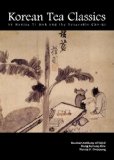
If you’re into tea, then you might like Korean Tea Classics. I happen to know one of the translators, Brother Anthony of Taize, who in addition to being a wonderful person and fluent in Korean, really loves his tea.

This book is a collection of three texts by the greatest figures associated with tea in Korea. If you live in Korea, you can also find this one at Seoul Selection


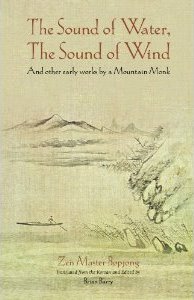
Recently, one of Korea’s most well-known monks, Beop Jeong Sunim, passed away. He was famous for his down-to-earth and humane essays that people of all religions could appreciate. Fortunately for us, Brian Barry had just finished an English translation of some of Beop Jeong Sunims most important essays, The Sound of Water, the Sound of Wind: And Other Early Works by a Mountain Monk.  (Here’s the link to Seoul Selection.)


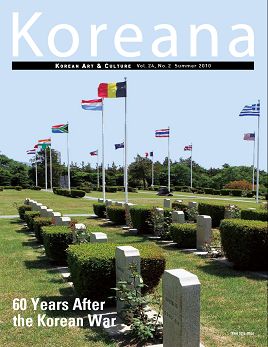
 If you find Korean culture interesting, or want to share it with someone else, you might like the quarterly magazine, Koreana.  This is really one of the very best sources of regular information about the history and culture of Korea, both modern and ancient. 

(You can also order copies from Seoul Selection, or subscribe at the link above. This is also often sold in the major bookstores around Korea.)


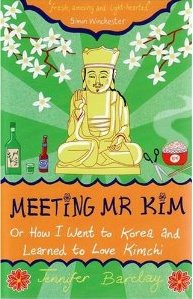
For a bit of fun and culture at the same time, check out Meeting Mr. Kim, by Jennifer Barclay. This is a great book about her time in Korea. She realized that if she really wanted to experience Korea, then she had to get out of Seoul. So she started taking weekend trips out to the countryside and just seeing who she could meet. Her description of life there, and the kindness of the people, really hits the spot. If you want to see what life in Korea is like, check this one out.

 (You can also find this at Amazon UK, or Seoul Selection.) 
 

Finally, feel free to share any favorite books about Korea that you liked or that left an impression. I’d love to hear about what you found!

Seon Master Daehaeng – Discover your courage

No matter how many thousands of things confront you,
no matter how painful or difficult,
even if someone you love is about to die,
entrust all of these to your foundation,
your inherent nature,
your true essence.

It’s always been taking care of me,
it’s guiding me even now,
so what’s there to worry about?

Just entrust everything there
while going forward.

You need this kind of attitude.
All of those things that confront you are your homework,
the path through which you can grow.
If everything in your life is smooth and trouble free,
you won’t be able to rise above the level
of an unenlightened being,
or understand the hardships facing others.

It all depends upon how well you can handle good and evil,
on how non-dually you can let go of both sides,
even including the Buddha.
Frustration, stress, and loneliness,
and situations where success seems unlikely,
all of these things are the raw materials of your spiritual practice.

So, when difficulties and suffering come,
be grateful for them.
For through these
you are able to practice and to grow.

          –Daehaeng Kun Sunim 


copyright 2010, the Hanmaum Seonwon Foundation

Daily Life Seon

I’m doing it again. The details aren’t important, but it goes right to the heart of what it means to be following a spiritual path. Ever since I was a child I’ve argued with people, taken up positions and defended them, attempted to prove myself right on every little thing I’ve ever believed. It’s caused so much harm to others, and handed myself so much unhappiness too.

I am getting better and have made great progress, and yet still I sometimes feel the need to put forward a position, and to then defend it, sometimes in Dharma discussions, and especially on the Internet. But I’m getting better at seeing how ridiculous this can be. I need to ask if helps myself or others. And who cares if I’m right or wrong? Why does it matter to me so much? 

The Buddha defined Right Speech as “abstinence from false speech, malicious speech, harsh speech, and from idle chatter.” So there’s hope for me yet, I’m good at giving things up! I welcome another abstinance.  But after all what does it mean to believe in the active working of the Buddha which is my True Self, if I am still battling to defend opinions rather than letting go of them?

Here’s something to cut out and pin to back of the door or the side of the computer, somewhere I will see it often!  Something I want to learn.

Daily Life Seon

At those times when your speech can disturb others,
when your words can lower your spiritual level,
when you understand that if your level is lowered, the whole is damaged,
at those times return inwardly all the thoughts and feelings you’d like to express.
Let your inner foundation take care of everything,
and use speech when skillful means are necessary.

No matter how much you talk, it won’t help a bit,
if there’s no sincere behaviour backing it up.
Let this inner power plant take care of things,
(instead of chasing after outer things).
This is the premier method, the true shortcut of ‘daily life seon’.

      – Seon Master Daehaeng Kun Sunim, 
Hanmaum Journal, September – October, 2009. Used here with permission.

Kwan Eum Sa

I’ve no reason to re-post this except that it brings back such lovely memories. I had a wonderful picture to go with it that Ikumi took on her mobile phone, but that’s gone too. Anyway, it’s a slow Sunday afternoon, so I hope you don’t mind me posting this here now. Thank you.

After thanking the monk and his friend that had given us a lift there, and bowing goodbye, we were instantly struck by the beauty of the place. For a long time I’d been wanting to show Ikumi a traditional Korean mountain temple, one with a stream close by, with rocky peaks rising up behind, with lush greenery everywhere, with architecture and nature rich and serene, and this was perfect.

The name of the temple was slightly different to that on the map, the wooden gates announcing it not as Gwanumsa, but as Kwan Eum Sa. Perhaps the same. And there was a new but traditional Kwan Seum Bosal statue in the main courtyard. Easily one of the best I’ve seen. The Amida in her crown was detailed and precise, surrounded by the most elaborate headdress, and her expression was a sutra in itself.

While I performed some bows, Ikumi explored the smaller shrines nearby. There was one for the local mountain god, one for Ji Jang Bosal, and others housing Amida Buddha and Sakyamuni Buddha. The 11am service came to an end and we sat near some ajumas in the shade by a pagoda. We drank our coffee and shared our biscuits and I wished I had learnt just a few more Korean words.

The bench was made from a long thick piece of timber, kept rough in places, smoothed and patterned in others, and it seemed typical of the overall care and craftsmanship to be seen all around us. Nearby was a pile of old temple beams, still painted in traditional colours, now stacked up under a tarpaulin to be used for firewood. I looked, not a nail in sight.

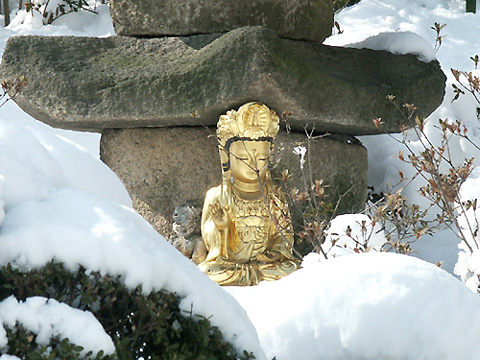
Close to the pagoda were two stone stupas, each containing a small gold Buddha forever looking out through the trees and over the city to a view of the distant Namsan Tower. The only sound was the trickle of the stream and the summer insects, and though we had to get back, we lingered as long as we could, returning to the statue and bowing once again – All beings, one Buddha-nature, Namu Amitabul, Kwan Seum Bosal.


(These photos are from KwanEum Sa’s website)

three months of eating garlic and mugwort

An image and painting from a Moutain Spirit shrine (click on the image to see a larger view)

Tigers play a prominent role in Korean spirituality, and stories about them were often used to convey deep ideas and practices.  One of the most famous involves the legendary figure, Tangun. Considered the founder of Korea, he was a great being who taught spiritual cultivation as well as advanced methods of agriculture, medicine, and animal husbandry.  In so doing, he brought great benefit to all the people of the land. 

     Tangun’s story begins with his mother. 

Around 2,400 B.C.E., a female bear and a tigress shared the same cave. Together they prayed to the heavenly king to become human beings. The king took mercy on them and said that if they could stay secluded out of the sunlight, and eat only garlic and mugwort for one hundred days, they would be transformed into human beings. He gave them garlic and mugwort, and they entered the cave. There they stayed, eating only garlic and mugwort. It wasn’t too long before the tiger began to have more and more difficulty with this. Soon she couldn’t resist the desire to roam and eat meat, and left the cave. The bear continued to eat the mugwort and garlic, and after just 21 days was transformed into a human being. Later, after marrying a heavenly prince, she gave birth to Tangun.
 

  Although on the surface, this might seem to be just a strange folk tale, it’s actually a description of spiritual practice and awakening. Think of the bear and tiger as our animal natures, the habits we’ve carried with us as we’ve evolved. Instead of running around outside, indulging their habits, they were doing what was difficult, what tasted bitter, and returning all those back to the cave within us.  One person couldn’t endure this and gave up. However, the other persevered and so realized her true nature, that essence that is vastly more than the temporary habits and thoughts arising from the body and its senses. In so doing, she was transformed into a true human being. Knowing this Buddha-nature for herself, she recognized it in others, and found a similar person for a husband. And together, they gave birth to a child who became a blessing for all around him.
 
 
 This is a bit unrelated, but the Korean version of “A long, long time ago…” also involves tigers. It goes like this: “In the days when tigers smoked tobacco…” How this saying developed, I have no idea! 

An image from Woljeong Temple in the Odae Mountains

Dreams come to fruition

Here’s a guest post by Gary about the pull he felt towards spiritual practice, and the path it took him on.   

I have always enjoyed reading and have had a particular affinity for books on eastern philosophy.  I remember seeking out books on Buddhism on lunch hour at the local library, as well as, scouring local bookstores whenever I had free time.  Having grown up a Catholic, I was not too sure what I was getting into, but still I explored.  I found books by the Dalai Lama, Dainin Katagiri, Philip Kapleau, and many more.  The books were fascinating, but I must admit my comprehension level was quite low. Soon, my explorations led me to check out the philosophy from India and various Indian swamis and saints over the years.  I spent hours reading Swami Rama, Swami Chetanananda, and Yogananda, to name a few. 

Each day, I would write in my journal, dream, and pray about what I pictured as the “perfect” spiritual retreat – this was quite an undertaking since I was not affiliated with any formal spiritual group.  I dreamt about my ideal place having a Swami from India and beautiful grounds, but knew of no such place anywhere nearby until one fateful day having run out of bookstores known to me I skimmed the Yellow Pages and found a listing for the Vedanta Society of Sacramento Bookstore.  Having no clue what type of bookstore this was, nonetheless, I called and then soon thereafter drove over to what turned out to be a beautiful 8 acre retreat garden and monastery complete with a Swami from India – I could hardly believe my eyes, this place was hidden right in the middle of Sacramento and I had been oblivious of it for over 20 years. 

Sacramento Vedanta Center

As it turns out, I began attending the Vedanta center and learning first-hand from a Swami from India.  What I like about Vedanta is the Advaita philosophy of non-dualism, as well as, the teaching that each person can follow his or her own path toward realization.  The center I attend in Sacramento follows the teachings of Ramakrisha, a 19th century saint from Calcutta, India.  Buddha and his teachings are also revered.  My time with Vedanta has taken me on trips to India two times.  I have been able to see the Vedanta world headquarters in Calcutta, the temple where Ramakrishna lived, the holy city of Varanasi, and where Buddha gave his first public talk. 

That was 10 years ago that I discovered Vedanta, or I should probably say that it was “revealed” to me.  During the past 10 years, I have delved into Vedanta deeper and have sought out all I could find on Buddhism, particularly Zen.  Most recently, I have found doing searches on Amazon to yield quite fruitful results, and one evening while searching “zen buddhism,” I found a listing for No River to Cross.  I read the reviews and the pages of the text available.  There was no doubt in my mind – this was a book to order.  So, a few days later the book arrived and I excitedly began reading it.  Daehaeng Kun Sunim is definitely a breath of fresh air – her deft touch and heartfelt guidance shine through from start to finish.  And, once again, a dream has come to fruition – I have been led to a spiritual master, and have come in contact with some wonderful folks all the way across the world in Korea.  I am indeed quite thankful.

Wonhyo Sunim – Inspiring yourself to practice

Inspiring Yourself to Practice
             By the Korean Zen Master Wonhyo 

This English translation and introduction were done by Won-myong Sunim and Mark Mueller 


Inspiring Yourself to Practice was written by the Silla Monk Wonhyo (617-686). It consists of 706 characters, contained in one roll. In Korea, the text is one of the most important in the curriculum of the temple training. The text stresses the need to dissolve one’s worldly attachments and habits, and to begin immediately to practice. The original Chinese text is kept at Haein Temple, near Daegu, and the annotated version is kept at Songgwang Temple, in Sunchon. 

The twin pagodas at Kamun Temple site
The stone pagoda from Bunhwang Temple, historically associated with Wonhyo. Photo by bifyu, on Wikipedia
The grave of the Queen Seondeok (/sun-duck/). She was the ruler of the Silla Kingdom and known to Wonhyo

All the Buddhas
who reside within the splendid realm of Nirvana
have, throughout countless eons,
discarded their desires and undergone arduous training.
 

Sentient beings,
transmigrating within
the burning house of desire
have, for countless generations,
failed to discard their greed and desire. 

The gates to heaven (the Pure Land)
are not blocked;
yet, few are those who enter them.
This is because most people make their home
among the three poisons. (1) 

 The evil realms (2)
have no real power to seduce us,
yet many enter them.
The deluded mind values
the four elements (3) that make up the body
and the five desires (4)
as if they were jewels.

This being so,
is there anyone who does not long
to retire to the seclusion of the mountains
in order to practice the Way? (5) 

Yet people do not go there;
they remain caught up in desire. 

Although you do not
retire to the mountains
to cultivate your mind,
you should strive with all your energy
to perform good deeds. 

If you can renounce your own pleasure,
you will become as trusted and respected
as the sages. 

If you can undergo
that which is difficult,
you will become as respected
as the Buddha. 

Those who greedily seek after things
join the ranks of demons.
Those who give with compassion
are the disciples of the Dharma King. 

High mountains and lofty peaks
are where the wise reside.
Green pines and deep mountain valleys
are home to those who practice.
When hungry, such people pick fruit from trees
to calm their empty stomach.
When thirsty, they quench their thirst
with water from a stream. 

Although we eat fine foods
in an attempt to carefully preserve this body,
our bodies will definitely face destruction;
even though we cover this body
with soft cloth,
our lives are sure to come to an end. 

Make a small mountain cave where echoes resound
into a hall to chant the Buddha’s name.
Let the sad cry of a wild goose
be the heart-warming call of a friend. 

While bowing, your knees may become
as cold as ice,
but you must not long for a warm fire.
Your stomach may writhe with hunger,
but you must not give in to your thoughts of food. 

One hundred years pass like the blinking of an eye,
so why don’t you practice?
How long is a lifetime?
Can you afford to neglect practice,
wasting your time on leisure? 

It is only he who renounces
all of the desires in his heart
that is rightfully called a practicing monk.
Only he who no longer yearns for the ways of the world
is called “a monk who has renounced the house-holder’s life.” 

A practitioner who is caught
within the net of worldly desires
is like a dog who wears
elephant’s hide.
A man who practices the Way
yet remains attached to worldly desire
is like a hedgehog
who tries to enter a rat hole. 

Some people, in spite of their outstanding ability and wisdom,
choose to live in the busy atmosphere of the city.
All the Buddhas feel pity and concern for such people.
other people, although they have not yet developed
a deep practice,
choose to stay in the contemplative atmosphere of the mountains.
The sages feel a great joy
when they see such people. 

There are those who are skilled and learned,
but do not follow the precepts.
They are like men who are told of a cache of jewels
but do not get up and go to it. 

There are those who practice steadfastly
but lack wisdom.
They are like men who want to go east
but mistakenly walk towards the west. 

The actions of a wise man
are like steaming grains of rice
in order to make a bowl of rice.
The actions of a man who lacks wisdom
are like steaming grains of sand
in order to make a bowl of rice.
Everyone knows how to eat and drink
in order to satiate their hunger;
but no one seems to understand
the method of training —
the way to transform the ignorant mind. 

Practice and wisdom must exist side by side.
For they are like the two wheels of a cart.
Likewise, helping oneself and helping others
are like the two wings of a bird.
If you absent-mindedly chant for your donors
over the morning offering of porridge
without understanding the meaning,
you should feel ashamed
to face those who give alms. 

If you chant
during the lunch-time ceremony
without attaining the essence of the words you utter,
won’t you be ashamed to face
great people and sages? 

Everyone hates squirming insects
and those who can’t distinguish between the dirty and the clean.
Likewise, the sages feel disgust with those monks
who cannot distinguish between the defiled and the pure.
If you wish to be through with this world’s conflict,
good conduct is the ladder
that ascends to heaven. 

Therefore, one who violates the precepts
and yet wishes to help others
is like a bird with broken wings
that puts a turtle on its back and tries to fly. 

If you’re still not free from your own faults,
you will not be able to free others of their faults.
So why do you, who violate the precepts
receive that which is provided by others? 

It does not benefit you in the least
to merely maintain your physical body
if you neglect to practice.
And all your concern for this transient, fleeting life
will not preserve it. 

If you’ve set your sights
on the virtue of the great masters,
you must endure even the longest hardships.
Once you’ve set out for the Tiger Throne, (6)
you must forever leave all your desires behind you. 

When the cultivator’s mind is pure,
all the devas (7) bow in praise of him.
When a follower of the Way loves lasciviousness,
the good spirits leave him. 

At death, when the four elements of the body scatter,
you cannot preserve the body and remain in it any longer.
Today, evening has already arrived;
tomorrow morning will soon be here.
So, practice now before it is too late. 

Worldly pleasures are unsatisfactory;
why do you greedily cling to them?
Enduring joy can be won through a single effort in patience;
why won’t you practice? 

Those who practice feel shame
to see a seeker of the Way who remains attached to greed.
The virtuous man laughs
at the seeker who forsakes the householder’s life
but is still wealthy. 

Words, such as these written here, go on and on,
yet clinging attachment does not come to an end.
“I’ll do it next time” — such words go on and on,
yet you fail to put an end to clinging.
Clinging goes on and on,
yet you fail to renounce worldly matters.
Your mind is filled with endless devious plans,
yet you do not make up your mind to put an end to them.
“Today will be different,” you say,
yet you continue to perform evil actions every day.
“Tomorrow, tomorrow,” you say,
yet few are the days when you really do something good.
“This year will be different,” you say,
yet your defilements are without end.
“Next year I’ll do it,” you say,
yet you don’t grow in wisdom. 

The hours pass,
snd too soon a day and night are over.
The days pass,
and soon it’s the last day of the month.
The months pass,
and suddenly another new year has come.
The years pass,
and in the blinking of an eye,
we find ourselves at death’s door. 

A broken cart
cannot be driven.
When you’re an old man,
you cannot begin to practice.
When you lie down,
you will succumb to laziness.
And when you sit,
your mind will be overwhelmed
with stray thoughts. 

 For many lifetimes, you have failed to practice,
passing your days and nights in vain.
Having lived many lifetimes in vain,
will you again fail to practice during this lifetime? 

This body will inevitably come to an end;
who knows what body you will have next time? 

Isn’t this an urgent matter?
Isn’t this an urgent matter? 

N o t e s
==============
1. Greed, hatred (anger) andignorance.
2. Durgati, the hell realm, the animal realm, etc.; there are 3, 4, or 5 according to text consulted.
3. Earth, water, fire and air are the four elements that everything is made of.
4. There are two meanings: 1) the objects of the 5 senses (eye, ear, nose, mouth, body); these defile the True Nature when the mind is filled with desire;  2) desire for wealth, sex, food, fame, and sleep.
5. The Way refers to the path to enlightenment.
6. This is a name for the Dharma Seat, the special platform that a great monk sits on to give a Dharma lecture. Someone aiming to sit on this seat is aiming for enlightenment and so needs to give up all attachments and desires.
7. The devas are the beings who live in the Heavenly realms.

the oppression of rules, and a bit of silliness

Karmic affinity probably plays a role, but when I was first starting out, I was never attracted to the Theravadan tradition.

In large part this was due to what I perceived as the strong, perhaps extreme, focus on the 250 precepts for monks (and 348 for nuns.) If I had to keep all of those straight in my head, I imagined that each and every day would be occupied with worries about which shoe I put on first, and whether I was holding my bowl in the right hand.

Well, I’ve since learned that it’s a lot more simple than that.
Basically, the precepts are there to help practitioners gather energy and motivation in their practice.

To this end, the situations they address fall into several categories:

1) avoiding things that will create karmic hindrances or damage our energy and faith

2) avoiding things that cause us stress and worry

3) not putting ourselves in the path of temptation

4) not creating the appearance of wrong doing

5) the appropriate situations for teaching the Dharma

6) rules to help a large community live together harmoniously
(there’s one or two more categories that I can’t remember just now!)

The additional rules for nuns basically address their safety in an era when an unescorted female was assumed to be a prostitute, and could be treated as such.

Also for nuns, it’s important to remember who the first nuns were:  they were from the noble classes, and were the family members of the Buddha and his great disciples. So when the Buddha said that an 80 year old nun had to bow to a 3 year old monk, these are the women he was addressing. It’s as if he was saying “your family status and connections with the leaders of the sangha don’t count here.” 
       I smile when I think of what might have happened otherwise: “Ananda! Come here and give your Auntie a shoulder rub!”  🙂 
o

p

Now for a bit of unrelated silliness:

Saturday Sangha

To know when to stop,
to know when you can get no further by your own action,
this is the right beginning!

– Chuang Tzu

This blog, in its current form, has its origins in the friendships forged some years ago in a weekend Dharma study group that met at the Buddhist English Library in Seoul. The group was led by the wonderful Chong Go Sunim and was attended by a good mix of both Korean and non-Korean Buddhists. Through the group, in May 2008, during the period of the Buddha’s birthday celebrations, Joe, Joseph, Carl and myself became what we like to call Dharma Brothers when we took refuge together, in a ceremony with Chong Go Sunim, at the main Hanmaum temple in Anyang.

at the Buddhist English Library of Seoul

Most Saturdays I’d meet Joe at the veggie restaurant an hour before Sangha started, and we’d lend each other books, wonder who’d attend, make vague plans for the Sunday, and then go up to the Library. BELS, the Buddhist English Library in Seoul, is close to Angkuk station, exit six, and consists mostly of one long room lined with books on all aspects of Buddhism, and down the middle of the room are laid a long row of low tables and thick brown Korean temple cushions for people to sit on. It’s a wonderful place.

We’d arrive, bow to those already there, enjoy the snacks that many people had brought and just catch up. Chong Go Sunim in his grey robes would be sat at the end just in front of the Buddha image, and I’d usually place myself opposite the wall of books, with Joe and Carl on the other side of the table. Joseph was often there too, giving up his beloved trips to the mountains to be with us. Rinchen Gyatso Sunim often attended too while he was in Korea, in his bright Tibetan robes.

Chong Go Sunim had certain themes he’d refer back to, the core of his teaching. One was ‘Trusting Our Root’ and I remember one particular week when he made this the specific object of study. He started off with the above quote from Chuang Tzu – perfect for a room full of people who, by their own admission, tended to read and analyse too much and so (speaking for myself) actually slow down progress. We broke into groups and I remember talking to Ami about the Tao and Juingong and Buddha-nature and to Shin Hee about stopping. We discussed relying on our selves, and on other-power.

Everyone has a different practice. Some people, like myself, are more devotional than others and see things in terms of reliance upon the object of devotion, with everything given as a gift. Others see things more in terms of allowing their own Buddha-nature to shine through. I don’t believe that one approach is any more advanced than the other, and neither do I think you have to choose between them, or even see them as different. The key, for me, however,  is that it connects to the deepest part of yourself.

And I remember, in summing up, Chong Go Sunim gave us a quote from Venerable Master Lin Chi; “Friends, I tell you this: there is no Buddha, no spiritual path to follow, no training and no realization. What are you so feverishly running after?” Amazing message, isn’t it? Just stop and relax, it says, let go. After a short meditation a few of us would go out for some food and on to a coffee shop, later in the evening we’d go to a Bongeunsa to do some chanting, some bowing, or just to stop.

Buddha's Birthday at Anyang

At other times we met up at the main temple in Anyang, with Chong Go Sunim providing cups of tea on the large table in the International Section till late at night, and there was a wonderful little tea shop just a little way up the road too. The connections made during that time are still strong, and evident not just through this blog. I’m still learning the simple truths I came across there, about letting go and trusting, and am so grateful that the Sangha, in whatever new forms it takes, is always present, teaching, learning, and sharing.

Links:
Buddhist English Library Seoul
Seoul Dharma Group

day trip to Kwang Myeong Seon Center

On Saturday, Chong Go Sunim picked up my family and me to go for a drive out to the Kwang Myeong Seon Center.

Along the way, we made a detour to visit the Mok-a Wood Museum. It’s owned by the man who carved the amazing work at the main hall in Hanmaum and there are wonderful samples of his work as well as historical pieces he’s collected, including antique statues, malas, some very old monk’s robes, and other items associated with temple life.

The grounds were scattered with Buddhas, Bodhisattvas, and even an image of Maria. It was a nice space, even the heavy, hot air felt a little fresher. On the way out, we passed some Nanking cherry bushes. I didn’t know about these before but my wife said they used to grow everywhere when she was younger. They used to sneak into their neighbor’s garden to pick them on the way to school.

After a few missed exits, a couple wrong turns, and a stop in a potter’s district for lunch, we made our way to Kwang Myeong Seon Center.

Since the head temple of Hanmaum is a nuns’ temple, Kwang Myeong is a place for the monks to stay. It also has a large cemetery where devotees can have their ashes placed. Chong Go Sunim pointed out the large pole with a round light on top that is lit throughout the night and can be seen from any place in the cemetery, its purpose it to give a light for the spirits to center themselves upon.

Behind the Dharma Hall, there is a huge meditation hall under construction. I always enjoy exploring temples that are under construction,  the fresh smell of the massive beams, the intricate joints, not yet covered in paint. I was especial impressed by the large copper lotus on the roof supporting the Hanmaum style  pagoda.

We continued passed the hall, up a stone stairway, the Mountain Grandfather (Spirit) Shrine. These small shrines are usually found at the back of Korea temple complexes, and are evidence of the ancient Shamanic traditions that  Korean Buddhism mixed with along the way.

The grounds around the shrine were particularly lovely, with flowers, well-groomed bushes, and a small spring fed fountain that we drank from. As we sat, Chong Go Sunim pointed to a painting above the door of the shrine. It was of a  tiger, almost the size of the hut that it sat before, with a small pair of shoes under it chest. When Dae Haeng Kun Sunim was staying in the mountains, the tiger would come at night to keep her shoes warm.  Apparently, a monk from the temple above was bringing some food one morning, when he came across the tiger. He took one look and fainted on the spot!

Although I don’t have the karmic affinity required to be a monk at this time/in this life, I’m grateful for the opportunities I’ve had, in Korea, to spend time with and even grow close to a few monks. The three monks I’ve come to know the most are from three very different cultures and backgrounds, and I’ve learned many different things from them. Although driving around the country at the speed of sound with my Korean monk friend, I was usually praying for my own life more than for others, he gave me a good glimpse into the reality of such a life. With Chong Go Sunim, it’s very comfortable coming from a similar culture. There are fewer barriers and talking about things feels very genuine. I think what I realize the most when I spend time with Chong Go Sunim, or most other monks, is that I still have a lot to learn… Sometimes it seems like the longer I practice, the more I realize I don’t know!

That’s about all I have to share for now, I hope you enjoy the photos!

The new Dharma Hall

a traditional Korea bee hive

Giving new meaning to the term "Kun Sunim" (Zen Master or Big Monk?? ^_^)

.

.

>photo gallery link<