Seon Master Daehaeng: Dying and spiritual practice

This is one of my favorite Dharma talks by Daehaeng Kun Sunim, where she talks about spiritual practice and the importance of “dying.” She isn’t talking about the death of the body, but rather letting go of this sense of “me” and what “I” want. There are many aspects to this, but one question often asked is, “If I let go like this, won’t I become a fool or taken advantage of by others?” The short answer is “no.” As you let go of both sides, both good and bad, likes and dislikes, you see things more clearly, and discover the courage to do what needs to be done, whether it’s confrontation, accepting, or running away! 

One of the other incredibly huge things about this practice is that the beginning and the end are both the same. Whether you don’t know anything or are completely enlightened, the letting go and entrusting is done exactly the same.

 
You should entrust everything that comes up in your life – solitude, poverty, loneliness, anxiety, and illness – to your foundation and live freely. Entrusting everything is letting go of everything. This is the way to die. The phrase “First, you must die!” means unconditionally releasing everything, without any excuses or reasons, including both what you understand and what you don’t understand. When things go well, you should release them with gratitude. When things don’t go well, you should also release them with the faith that “My foundation can solve this and lead me in the right direction. Because nothing is fixed, this too can change.” You should keep letting go like this. For it is only by dying unconditionally that you can discover your true self, your eternal root.

Second, you must die again. While studying here, some of you have discovered yourself. Yet you still have not discarded your habits and your thoughts of “I,” “me,” and “mine.” So you’re happy if you see a Buddha in your dreams, but you’re scared if you see a ghost. When you feel or experience something extraordinary, you carelessly talk to others about what you experienced. What you see and hear is just an illusion, but nevertheless you still tend to cling to it. This is why you must die again.

Now do you understand why first you must die and keep what you experience to yourself, and why you must die yet again, keeping what you experience secret? Even though you are able to see or hear certain things after you discover your true self, those powers are not the Way. Even though you have obtained the five subtle powers – the abilities to know others’ thoughts and feelings, to know past lives, to hear anything, to see anything at any place, and to appear anywhere without moving your body – this is still not the Way. You can truly master the five subtle powers only when you are free from them. If you reveal what you hear, see, or know, it will only bring trouble. First, it will cause trouble for the Buddha-dharma, second, for sunims and the Seon center, and third, it will cause trouble for you.

Once you discover yourself, you enter the stage of experimenting. Don’t regard what you learn in your dreams as different from what you learn while awake. And keep everything you learn secret. Although you are able to see, hear, and know things that others are unaware of, do it without clinging to any thought of “I see,” “I hear,” “I know,” and do not reveal to others what you experience. This is a very powerful stage of practice in which you experiment with what you have learned. Your experiments result in experiences, and then you put those experiences into action. This is the meaning of dying a second time and keeping what you experience to yourself.


 Daehaeng Kun Sunim goes on to talk about the need for also dying a third time. There are a couple of very advanced aspects to that, but the main point is the need to continuously keep letting go, and to not dwell on what we experience.  (This talk has been excerpted from the book,
Wake Up and Laugh.)

Venerable Ya-un: settled body, settled speech

In this next section of Admonitions to Myself, the Venerable Ya-un warns us to settle our bodies and be careful with our words. On the surface, this section seems to be written for monastics, yet it also applies quite well to our modern form of laziness: Busyness. 

Refrain from unnecessary speech and movement:

If your body is settled, then confusion will cease and samadhi will be attained. If you speak little, foolishness will be transformed into wisdom. The true foundation is devoid of words and the ultimate principle is unmoving. The mouth is the door of calamity and so must be guarded carefully. The body is the root of disaster, so do not travel around unnecessarily. A bird that often flies back and forth is in danger of being caught in a net; an animal that roams around will have the misfortune of being struck by an arrow.

Thus the Buddha sat without moving for six years and Bodhidharma spent nine years in the Shaolin cave without saying a word. How then can later practitioners not follow these examples?

 
Enter meditation while holding mind and body still,
sit by yourself in a hermitage,
without leaving and returning.
Observing your own mind,
return to and rely on the Buddha
that is within.

Mind and Science

This report of one of our regular Bangkok Seon Club meetings was first published on the now-deleted “Marcus’ Journal” in January of this year. I’m re-posting it now as I think it gives a nice picture of the kind of useful discussions we have at Seon Club, and the lovely people I meet there.

The ability of our fundamental mind is the most profound and mysterious thing in the entire universe.”
– Zen Master Daehaeng Sunim

The Bangkok English-language Seon Club is really finding its feet. Thanks to the direction provided by the seonwon, everyone is comfortable with the structure of the meetings, starting with the refuges and some sitting meditation, and with the format of the discussion. Young, who does the translating, is simply amazing, and I think everyone gets a chance to speak and to ask anything they like of our wonderful teacher Hyaedan Sunim.

This month we returned to our study of No River to Cross and looked at chapter three, “Mind and Science.” I’ll admit that when I first read this two or three years ago I was dismissive. “Mars is crowded with lives” I thought, “what is this nonsense?” Hyaedan Sunim asked me on Saturday night if my reaction would be any different now, and I can honestly say that it is. Not only is Mars crowded with lives, but my body is too, there is nothing that is not crowded with lives.

We talked about how the universe functions as one life, about how material is actually energy, and how there is no difference between the particles within and outside of us. Pedro, a Seon Club regular, explained some of the latest thinking in science, and what little I understood was fascinating. Hyaedan Sunim agreed and then talked about how Buddhist teachings have never contradicted science but, rather, how science has evolved towards Buddhism.

Young talked about the energy between people, using the example of Pedro’s smile, which everyone thought was lovely, and about the limitations of language in expressing scientific discoveries. Sunim offered the example of how there were no Chinese characters for negative numbers, and then she brought us back to the relationship between fundamental truth and our developing understanding of it. “But how” Kirsten asked, “do we put this into practice?”

We came into being, Sunim said, because of this Fundamental Mind. It put us here, and after we are gone it will still be here; everything is a reflection of it, and our practice is to return everything to it. I talked about my limited understanding of this, how the theory often confuses me but how, basically, I believe that I and everything else shares this Mind, or Buddha-nature, and my job is to live from that, which is best done by entrusting everything to it.

Kirsten, her first visit to Seon Club, was keen to know more and asked lots of great questions, and Sunim talked about entrusting to Buddha-nature as a practice that cuts through trying to figure things out and Young gave some wonderful personal examples of how this works in her life. Then Joe, a fine poet and a regular here and at the San Fransisco Zen Center, quoted from the poetry of Huang Po on awakening to One Mind, True Self, or Fundamental Mind.

And, talking about what happens when you live not from what obscures it but from your original Buddha-nature, Joe told the story of King Mongkut, the great-grandfather of today’s highly revered King Bhumibol. King Mongkut became a monk at Wat Bowonniwet and then, to the great concern of all those around him, found himself more interested in staying in robes than in becoming King, so much so that he eventually became abbot of the temple.

“There is no manual” Hyaedan Sunim said, “just keep sending everything back to Buddha-nature, again and again.” And in a lovely phrase that raised a smile and gets to the heart of the matter, she said one should “use less and less your head, and more and more your Mind”. We finished by reciting the Four Bodhisattva Vows, bowing in gratitude to our wonderful Sunim and to each other, and left the Dharma Hall inspired and confident in this beautiful practice.

Korean tigers and true human beings

An Eyebrow Hair
Here’s one of my favorite stories about Korea, which also involves a tiger.

Long ago, a young man was traveling through the mountains, when he ran across an old monk struggling to repair a tiny shrine. At a glance he saw what needed to be done, and after asking the monk to take a rest, he set about fixing the shrine.  For him it would only take a couple of hours, whereas it would have taken days for the monk, who seemed quite clumsy with his hands. While the man was working, the monk was silent, and seemed to be watching him closely. But then, mountain monks always did tend to be a bit strange, so he didn’t think much about it.   

 At last, he finished and, sweating, sat down next to the monk, who continued to stare at him. Finally, the monk spoke, “It must have been tough growing up without parents or family. I too, lost my mother at a young age. Looking at you, I think a wife and family of your own is what you want more than anything else in the world. Am I right?” The young man shivered despite the heat, for it was as if the monk had seen into the very depths of his heart. How had he known those things?   

 The monk spoke again, “Well, if marriage and a family are what you have your heart set on, it won’t do to marry just any woman. You have to see clearly. Here.” With that, the monk plucked out one of his long, white eyebrow hairs, and handed it to the young man. “Now,” said the monk, “hold it in front of your eye and look at me.” The young man did this, and almost died of fright! For where he had been talking to an old man, he now saw a huge mountain tiger!   

 The young man quickly lowered the eyebrow hair, and there was the old monk again. He raised the hair to his eye again, and the monk had become a tiger again. The man thought he was either crazy or about to die, or both! The monk smirked at him, and then said, “Don’t worry, I don’t eat humans.” Well, this seemed like a lie, for the tigers in those mountains were notorious man-eaters.  The monk seemed to read the man’s thoughts, and said again, “We’re actually quite spiritual, so we don’t eat humans. Only pigs and dogs, and maybe a donkey or fox, once in a while.”    

The old monk sighed in response to the dubious stare he was getting, “Take that hair with you and use it to look at the people you meet. You’ll see what I mean.” With this they parted, and the man made his way back down to his village. It was still hard to believe what had happened, but he was dying to try out the hair on other people.   
   

So early the next morning, he found a nice spot near the main road into the village and sat there waiting. Before long, the proud village mayor came by. Everyone treated him with much respect, but when the young man looked at him, he saw a great slobbering pig wearing clothes! Well, this was a shock! He next saw a line of woodcutters returning from the mountains, so he held up the hair, and to his amazement, most of them were dogs or pigs! Only two were actually human beings. This went on for a while, until he saw a beautiful young woman and her mother approaching. Just sight of the woman made his heart race, but when he held up the hair, he saw that she was really a fox-spirit!   

This went on all day, and he was amazed at how few human beings he was seeing. Neither fine silk, Confucian hats, or monks robes were any guarantee of finding a human being. Finally, he looked through the hair at a plain-looking woman who was walking by, and discovered that she was a radiant human being. They were eventually married, and became the joyful family the young man had always wanted.   

Well, the moral of this story isn’t about finding a spouse! (Though that is a topic that does tend to get young people to pay attention.)  The heart of this story is the importance of seeing beyond appearances and learning to become a true human being. 
  
In this story, the eyebrow hair of the tiger can become compared to our true nature, our foundation and Buddha-essence. When we can get in touch with this, and learn to see through it, then we’ll be able to truly see what is going on, and we’ll be able to respond in ways that go right to the heart of the situation.

It’s one thing to be born as a human being, but we still have to become true human beings. For while many are born with human bodies, many are still controled by the habits developed during animal incarnations.  So a lot of spiritual practice is simply working on letting go of animal habits, and learning the ways of a true human being. Let’s all become great beings who can see clearly and respond appropriately with infinite power of our Buddha-nature.

Tigers in Korea

One of the interesting things about Korea are the tigers.  Where I grew up, team mascots were always fierce and realistic. Perhaps it’s about balance: we, who knew basically nothing of real violence, chose mascots that had a threat of violence. Yet in Korea, where every man serves in the army, where there are tank traps and massive artillery bases north of Seoul, this was the mascot they chose for the 1988 Seoul olympics:     

"Tony the Tiger" with a hat!


Often tigers were used as comic relief, according to David Mason. With their fierce pride and dignity, they resembled the yangban, or aristocratic class. In images like this tiger, you can see the puffed out chest and aggressive expression, filled with pride about its noble heritage and superiority to all, but, where did those spots come from?    

It seems the tiger’s mother had an affair with a lowly leopard!  Here the tiger is used to mock the arrogance and unearned pride of the yangban.  


 On the other hand,  in mountain-spirit portraits, images of tigers often served to symbolize the power of the mountains and nature, as well as the power of spiritual practice to help us become one with this.     

More tomorrow about tigers and spiritual practice.  


Sunday Photo; Tapsa

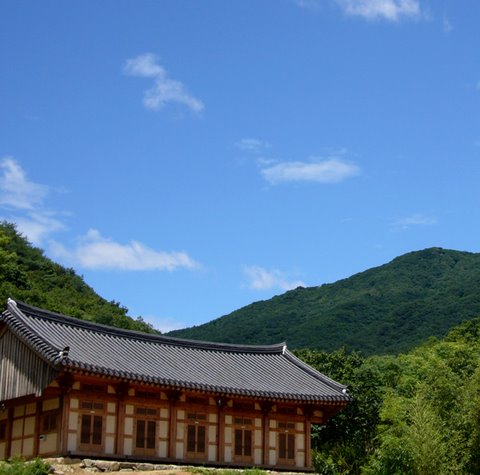
This week’s photo is of Tapsa (the Pagoda Temple), tucked between the Horse Ear Mountains, in Northern Jeolla province. It’s been one of my favorite places to visit in Korea, not only for the temple, but for the entire ethereal surroundings.


the mind and evolution

In his post a few days ago, Joseph relayed the story of a monk who died in the Jiri Mountains (A glimpse). It highlighted two critical truths, namely, that we are not our bodies, and the importance of how we use our minds. 

In Chapter 2 of No River to Cross, Daehaeng Kun Sunim also covers these points: 

If we just wander around in the fog...

Even after your body falls away, your consciousness remains. It often happens that people do not understand that their body does not exist anymore, and they do not realize that living people cannot see or hear them. So, sometimes, in their confusion and desire, they cause other people to suffer. If you sincerely cultivate mind while you have a body, then you can leave without having any attachments. However, if you don’t practice, then even though you’re dead, you’ll be caught up in all of your old relationships, and won’t be able to freely leave. Instead, you may just wander around, stuck in that state for a very long time. When people die, if they have never practiced spiritual cultivation, their consciousness cannot see and cannot hear. In the middle of the darkness, their consciousness cannot correctly perceive things, so those people may (accidently) enter the womb of a pig or a magpie. However, people who have cultivated mind give off a great light and thoroughly illuminate their surroundings. Even their families tend to live brightly, although individually they may not know anything about spiritual practice. (p 20-21)  

...running from the things that scare us, chasing after desires, where will we end up?

Have you ever gotten caught up in a dream about walking through a building that no longer exists? Those steps you were walking up are now only empty sky a hundred feet off the ground. After we die, we no longer have physical senses, so with what are we seeing and hearing? If we haven’t practiced while alive, then we’re only experiencing the arising of karmic states of consciousness. However, we think those things are really happening, and so chase or flee them. In essence, we’re running outdoors at full speed, while blindfolded.  

Thus, how we use our minds while alive is critically important to us.  

In order to be born as a human being, it may have taken a thousand years of accumulated virtue and merit. It’s so hard to become a human being. Nevertheless, if you don’t let go of the habits you developed prior to becoming a human being, and if you think of only yourself, your suffering will be endless. If you live this way, you may live like this for many, many lives, stuck like a hamster on a wheel, unable to evolve. Or you may devolve and be reborn as an animal. Once you are reborn as an animal, you will suffer a lot, having to eat others or be eaten. There will be very little opportunity to reflect upon your state, and if you develop the habits of an animal, it will be even more difficult to free yourself from that state, even over billions of eons. (p 19)  

We go where we look. Or in this case, where we think.  

From the perspective of evolution, lives are affected by circumstances and the environment, and can adapt themselves to a certain degree. However, the more fundamental things all depend upon consciousness. (p 21)

Once the level of mind changes, the body also changes accordingly. Evolution is the process of the mind becoming brighter, while creation is the outward manifestation of the minds design. Thus, while this process is evolution, it is also creation.  

Mind is the basis of both evolution and devolution; they aren’t separate forces. Devolution is also done by mind. All of this is the manifestation of our fundamental mind (and how we use it.) (p 22) 

Alive or dead, awake or asleep, if we always rely upon our inherent Buddha-essence, what could we have to fear?

notes on karma

During last year’s season of Rains Retreat talks Phra Cittasamvaro Bhikku said the Buddha taught there are  four imponderables, four things just not worth thinking about as they are impossible to understand. One is the source of psychic powers, another is the mind of an Arahant, the third is the mind of a Buddha, and the final imponderable is karma. Trying to figure out how karma works will do little more than split your head into seven different pieces the Buddha said.

But I keep coming back to it this week. My post on moving the mala was prompted by reflections on karma, those “huge killer waves of our own making”, and Joseph’s post yesterday underlines again just how vital it is, if not to fully understand, then to at least have a basic grasp of how these energies work. Just as Phra Pandit suggested last year, we can get by with an outline of the principles of karma without delving into its more complex, imponderable, depths. And that basic outline is simply that everyone has karma and so we must be careful of what we do.

“That’s it”, he said. “Finished. Anything that comes next is, unlike most of the Buddha’s other teachings, going to be mainly speculation.” But it’s clear that our behavour, and the patterns we establish, can make all the difference between joining those figures in white at the bulgogi feast, or remembering one’s vows just in time. The clearest and most succinct formulation I ever heard of the workings of karma came from a Thai friend of mine when she said “Do good, get good. Do bad, get bad”.  Whichever way you look at it, our intentions and habits, orientation and practice, are what decide our fates.

Who can’t help but be reminded of Bodhidharma and Emperor Wu? “How much karmic merit have I earned by ordaining monks, building monasteries, having sutras copied, and commissioning Buddha images?” “None.” And then there’s the story of Nanta, the old lady who, despite her poverty, lit a lantern for the Buddha with such sincerity that not only did it burn late into the night, but she was also promised future Buddhahood from that single act of devout intention.


Link:
Littlebang: Notes on the Clockwork Universe

a glimpse

One of the most interesting stories I heard Chong Go Sunim tell at Saturday Sangha was about a monk he knows who was staying in Haein Temple, when Zen Master Seong Chol was still alive. The monk left the temple to do a long retreat in the Jiri Mountainsand was living off what ever he could find in the forested slopes.

After eating something he shouldn’t have, maybe a poisonous mushroom or something else inedible, he became seriously ill and collapsed on the ground. He came to awareness back in Haein Temple, about 100km or more away and saw two of his friends in the hall doing what seemed like a death ceremony. They didn’t seem to notice him and he found it curious that instead of reciting the appropriate sutras, the monk with the mok-tak (a wooden percussion instrument) was repeating the word, “Chek, chek, chek…” (“Book, book, book…”) and the monk with the bell kept repeating, “Yeom ju, yeom ju, yeom ju…” (“prayer beads, prayer breads, prayer beads…”)

In a flash, he was in his mother’s house. He was standing next to her as she was loading wood in the fire. She didn’t notice him so he reached over and touched her shoulder. She let out a shriek and crumpled over in pain.

Just as he had found himself at the temple, then at his mother’s, he was standing back in the mountain. He noticed the scent of bulgogi, marinated beef, wafting up from the river bank and a group of men in white hanbok (traditional Korean clothes) calling, “Hey! Come down and join us, there’s plenty to go around!” Just as he was about to join them he remembered he is a monk and shouldn’t eat meat.

Making his way back into the hills, he came across an old man with an old fashion jigae, a wooden A-frame carrying rack, on his back. But instead of carrying wood, he was carrying a man down the mountain. He put the man down on the ground and the monk, thinking the man looked familiar, went over to take a closer look. As he stared at the man’s face, he couldn’t get over how much the man looked like himself. He touched the body and at that instant, his consciousness was sucked into the body, and he woke up with a jerk. He was laying near the village where he’d seen the old man put the body. He was also probably feeling a little disoriented from the strange experience he’d just had.

Returning to the temple, he went to his friends and told them about what he had seen. They replied that Seong Cheol Sunim spoke to them that he had died in the Jiri Mountains and that they should perform a death ceremony immediately.  He continued, telling them that they were chanting the words “book” and “prayer beads” instead of the proper sutra’s they should have been chanting. Surprised, the first one admitted that he knew the monk had a collection of really nice books and was wondering if he could have them. A bit ashamed, his second friend also admitted that he was thinking about the monk’s nice “yeom ju” and also wondering if he could have it. So, even though they were speaking the mantra, all that he could hear from them was their thoughts.

He visited his mother and told her of the experience. She replied that she remembered a sudden sharp pain in her shoulder.

Going back to the stream in the mountain, where he’d seen the men eating bulgogi, he found no remnants of barbecue. What he did see disturbed him though. Laying by the river bank was the corpse of a magpie, entirely infested with maggots. He realized that what appeared to him as men by the river were actually larva calling him to dine on the flesh of the dead bird. He wondered if he hadn’t reminded himself that he was a monk and had instead joined them, would he have been reborn as the larva of a fly? How difficult would it have been to work his way back to being born in human form again? When he left his body, he had no ears, no eyes, no nose, no tongue, no hands. All he was left with was his perception and his illusion of what surrounded him. He couldn’t hear words, only intentions.

For a while, I’ve felt that our state of mind at the moment of death is very important. We must be aware, first that we’ve stepped out and second, where we are to go. Through the Dhamma, I’ve learned that all life is equal, but the human mind is most advantageous for developing liberation. When taking into account the number of beings in existence, from elephants and whales to single cell organism, it is actually extremely rare to be born human. We should recognize the opportunity we have in this form and do the best we can with it. When we die, we usually won’t in the best states of mind, perhaps sick, drugged, confused, or not even conscious. The more our mind is prepared now, the better we can deal when the moment comes.

More (Buddhist) books about Korea

In a previous post featuring books about Korea, readers pointed out a couple of truly great books that been overlooked.

The first one is The Zen Monastic Experience, by Robert Buswell. Written about life in a major Korean zen monastery, this is based upon the years he spent at Songgwa Temple. He lived here as monk for about five years, under the great master Kusan Sunim. Buswell also does a great job of explaining the different jobs and positions at a large monastery.

As I think about it, I could do an entire post on the books of Robert Buswell! He’s really done some great ones about Korean Buddhism. One of the most influential is The Collected Works of Chinul: The Korean Approach to Zen. This is the only English translation of the complete works of one of Korea’s most important thinkers. However, used copies of this one sell for over $200, so it’s probably better to get the excerpted version, Tracing Back the Radiance: Chinul’s Korean Way of Zen. All of the works in this book are full-length; it’s only the longer, and more obscure works of Chinul that were left out. Buswell was also the editior of Religions of Korea in Practice, and Currents and Countercurrents: Korean Influences on the East Asian Buddhist Traditions.  This second one is definitely an under-appreciated gem. Most of us bought into the idea of a linear transmission of Buddhism. However, Buswell shows that this was much more dynamic, with Buddhist practitioners and teachers traveled throughout the region learning and influencing as they went. 

 
Similar to Religions of Korea in Practice is Makers of Modern Korean Buddhism. This is quite a nice volume about modern Korean Buddhism, with many chapters about the history and key figures of Korean Buddhism during the turbulent 20th century.


 Here’s a nice book about the life of modern Korean Buddhist nuns, Women in Korean Zen: Lives And Practices. Martine Bachelor was also another person who lived at Songgwa Temple and practiced under Kusan Sunim. She talks about the life of Korean Buddhist nuns, the difficulties of a westerner adjusting to both the monastic and Korean culture, and in the second half of the book, Martine includes the autobiography of the outstanding nun, Son’gyong Sunim.


One of the great works in Korean Buddhism is The Mirror of Zen, by Seon master Sosan. This one is studied by most of the monks and nuns in Korea, and here is widely availiable in English for the first time. My only complaint, and it’s not a reason to avoid this book, is that this book is only one section of Sosan Sunim’s original work, Mirror of the Three Religions: Confucianism, Taoism, and Buddhism. (The only attempt at this work in English is a MA thesis at the University of Hawaii by Jinwol Sunim.*) In it, Sosan Sunim compares the three religions then prevalent in Korea, and shows their common characteristics and beliefs, explaining why there is no need for conflict between them. In a sense, Sosan Sunim’s original work may be one of the first “Appreciation of” textbooks in the world.
 

Another neat book is Temples of Korea.  With beautiful photos, information, history about a number of important temples in Korea, I doubt you could go wrong with this one. 


There’s an interesting couple of books that resemble the “How it’s made” series, in the sense that they show and explain all of the components of various temples in detail. The first is called Korean Temple Motifs, and is quite a nice, if expensive, book.  

The second, Korean Cultural Heritage (Vol. 1), is perhaps even better. There is a volume 2, but it doesn’t cover Buddhism. This book (volume 1) is definitely worthwhile, but hard to find. It’s at Kyobo Books in Seoul, and I found my copy at the Bandi and Luni’s at Jongno 1ga (in Seoul), but apart from that, it doesn’t seem to be in many other places.


These are just some of the many books about Korea. I haven’t posted anything by my Dharma teacher, Daehaeng Kun Sunim, because you’ve probably already seen information about her books if you’ve visited this blog before. Likewise, most westerners interested in Buddhism already have at least a passing familiarity with the works Seung Sahn Kun Sunim. I’ve also avoided posting much about Korean art for two reasons. One, I don’t know anything! And two, there are a lot of newish books about Korean art that I haven’t looked at. Many of them aren’t available outside of Korea, but the bookstore Seoul Selection has a very good selection.

If you know of any books about Korea that left a good impression, please share them in the comments section. And I’ll try to include them in a future post.


 *  Common Themes of the Three Religions (Confucianism, Taoism, and Buddhism): The Samga Kwigam of Hyujong (1520-1604)  (University of Hawaii, 1990)