Exhibition featuring Jijang (Jizo, Ksitigarbha) Bodhisattva

There is an exhibition about Jijang Bodhisattva at the Buddhist Museum at Jogye Temple through January 16. (The museum is beneath the new building in the temple complex, and is closed Mondays.)

I don’t actually know anything about this exhibition!  Its title is:  “Leading beings from the hell realms to enlightenment“. It could be quite interesting, depending upon how they’ve used the older paintings and statues to illustrate how Jijang responds, even in the depths of hell, to those who are suffering.

Ven. Ya-un: the proper attitude towards wealth and sexual desire

Here Ya-un is writing about the two things that have the most power to lead astray those on the monastic path: money and sexual relationships.  

Actually, he used the word “women” instead of “sexual relationships,” but he was writing for an audience of male monastics. He must have known that nuns would also read or hear this, but perhaps he assumed that in 13th century China, nuns would be less likely to get themselves into trouble over issues of sexual desire. Or perhaps stating the issue outright was seen as vulgar. 

Although Ya-un was writing for monastics, I think this has to be read as a caution about unhindered desire, and in that sense, it applies to everyone.  
 
There is nothing more disruptive to the body than sexual behavior (again, it was “women” here), and nothing more detrimental to spiritual practice than wealth. Thus the Buddha set forth the precepts, and admonished practitioners to avoid wealth and sexual behavior, saying, “If you see beautiful women, treat them as you would poisonous snakes or tigers. If you come near gold or jade, look upon it as you would a rock or piece of wood.” Even if you are completely alone in a dark room, behave as if you were in front of an important guest.

Behave the same whether you are seen or not, and let your speech and thought be in accord. If your mind is pure, all good spirits will protect you. However, if you yearn for women, Heaven [i] will not tolerate you. If good spirits protect you, then you will not experience any difficulties, no matter how harsh the environment. If Heaven does not tolerate you, then you will not be at ease even in an outwardly peaceful place.

                           Greed and lust are the gates of Yama’s hell,
                           purity of mind and action lead to
                           the paradise of Amitabha Buddha
                           Enter hell and you’ll experience a
                           thousand kinds of suffering.
                           Enter liberation
                           and you’ll experience a
                           thousand kinds of happiness.


[i] In traditional Chinese literature “Heaven” roughly means the workings of nature or the universe. So to go against Heaven is to be in opposition to everything that nourishes and guides the universe.


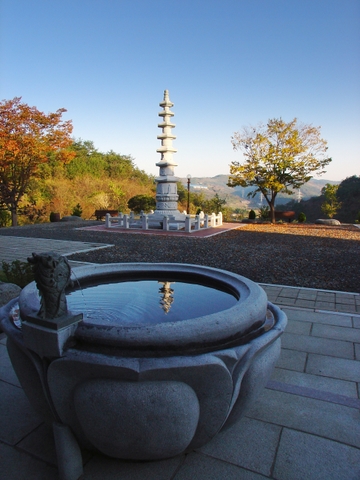
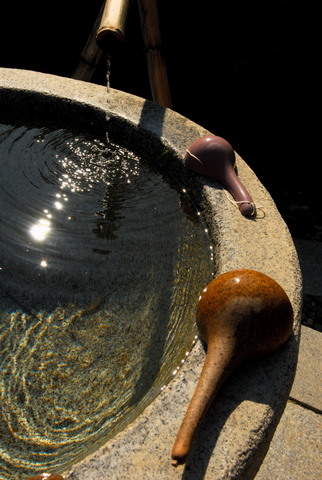
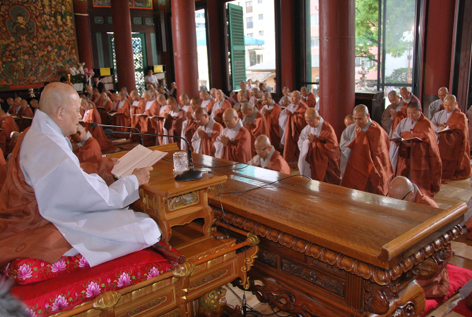
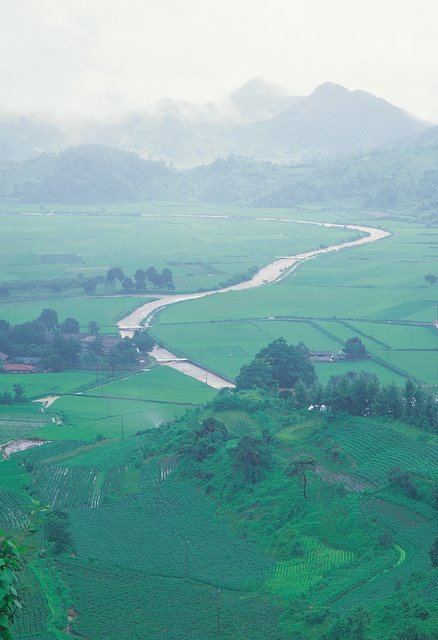
Photos: These are images from the area around the Seokgor-am grotto near Gyeongju (Kyongju)

Why does life seem empty? Questions and answers with Daehaeng Kun Sunim

 Here is another question from Find the Treasure Within:
 
 
My life has been very ordinary, but I’ve been fortunate in many respects. My wife and I get along well, and my children are happy and well-adjusted. Also, my work has been going smoothly. Nevertheless, I sometimes feel empty, like something is missing. Why do I feel like this, even though everything in my life seems to be going well?

 
Daehaeng Kun Sunim:  A wife, a lover, children, money, fame – none of those things have the power to make you feel complete. Only by returning inward to your true self, your foundation, can you become complete. 
 
However, many people are afraid of truly facing themselves. So they look for something outside, wandering around rather than looking within themselves. This is how they deceive themselves. As long as you deceive yourself like this, you can never know true peace, nor will the empty feeling go away — because both are caused by not knowing your true self. When you carefully observe your mind and live your life in touch with this inner mind, you’ll realize that peace is within you. However, if you don’t sincerely face yourself, you can never be truly free of this empty feeling, even if you achieve all of your goals such as having power, money, honor, and love. This applies to everyone. 
 
The more praise, the more pleasure you receive from outside of yourself, the deeper the emptiness will become. Then, as many people do, you may look around outside of yourself even more, searching for the cause or for something that will get rid of the emptiness, without realizing that both the cause and the cure are inside of you. Long ago, a poet left home looking for signs of spring. He searched everywhere, but was unsuccessful. However, upon returning home, he saw blossoms on the apricot tree in his courtyard. 
 
If you see the genuine, true self that’s within you, you will know true peace of mind and the feeling of emptiness will disappear. Yet, because this inner nature is truth itself, don’t think for a moment that things such as force, tricks, or lies can work there. So stop trying to use such deceit to find your true self. People often try to endure the hardships they face with the hope that somehow things will be better tomorrow or at some other place. However, these kinds of thoughts are like delusions if you don’t know about your inner self. They can’t help you for long.

Therefore, please, face yourself honestly. Discover the great, unimaginable “me” that’s already within you. Everything in the world – joy, sorrow, happiness, misery, and emptiness – comes from you; it is all within you. Because everything arises from you, you are the only one who can truly solve all of those issues. This is how it is. So entrust everything to your inner self. Let go of everything to your true self with firm faith, and observe how things work together inseparably. This is the inner path, which teaches you to see all things as not different from yourself, and which shows you that inherently there is no division between “you” and “me.” 


Renewing the Bodhisattva Precepts

 “Has the Sangha gathered together?”
We are all gathered.”

Is everyone united and in harmony?”
We are united and in harmony.”

For what have you all gathered?”
We have gathered to hear the Bodhisattva Precepts explained, and to reflect upon our own shortcomings.

Thus begins the ceremony for the Bodhisattva Precepts in Korea. While laypeople can and do take these precepts, every six months, monks and nuns are required go to their regional head temple for this ceremony.  (It’s  held once a month in meditation halls and sutra study halls, but it’s also held separately for those who aren’t in one of those.) Attendance is required; they actually make us sign in before the ceremony, and then sign out again after it’s over — no signing the ledger and slipping away!  Traditionally, this should be held at least once a month, but there is a lot of overlap with the Thousand Hands Sutra, which is chanted ever day.

Of the Ten Precepts, when western Buddhists think of numbers 6-10, they may be actually thinking of the ones from the set of Bodhisattva Precepts. 

6: Not discussing the faults of others.
7: Not praising yourself, or speaking ill of others.
8: Not being stingy with material or spiritual aid.
9: Not indulging in anger
10: Not speaking ill of the Three Treasures, the Buddha, Dharma, and Sangha.

You may have heard of the precepts against sleeping in a high bed, wearing perfumes, and accepting gold and silver. These are the original precepts of the Vinaya school, and are for renunciates. Whereas the Bodhisattva precepts were developed later, and are not necessarily for monastics alone.

  In total, there are 48 Bodhisattva Precepts. They originate from the Chinese version of the Bramha-jala Sutra, which takes the form of the Buddha reciting these precepts (here’s a link to one version of this sutra). Essentially what the Buddha is saying, is that those who are enlightened behave like this, and not like that. So if you want to become enlightened and a blessing for those around you, (and greatly reduce your own suffering) start by following the example set by the great practitioners whose awakening is reflected in their behavior.

Interestingly, the demand for complete vegetarianism comes from this sutra, as does the requirement of not eating the garlic and onions (perhaps they were considered the oysters of their day?) Some of these precepts seem like they are directed towards lay people, while others are clearly for monastics.

Some of these precepts are:

Don’t act as an agent or emissary for political powers,
respect your teacher and fellow practitioners,
help nurse those who are ill,
not teaching for the sake of profit,
not teaching those who would use what they learned to harm Buddhism and the faithful,
and so on. 

Here’s the full entry for a couple of precepts, to a taste of how they are presented (the quotes come from here) : 

On Slander and Libel

A disciple of the Buddha must not, without cause and with evil intentions, slander virtuous people, such as Elder Masters, monks or nuns, kings, princes or other upright persons, saying that they have committed the Seven Cardinal Sins or broken the Ten Major Bodhisattva Precepts. He should be compassionate and filial and treat all virtuous people as if they were his father, mother, siblings or other close relatives. If instead, he slanders and harms them, he commits a secondary offense.  
 
These precepts are also often worded in a way that makes it hard to deceive ourselves: he must not do it himself, nor command others to do it, nor allow it to happen through inaction, etc.

Some of these precepts also carry interesting insights into how the culture of how people lived at the time. I’m sure we can extrapolate the intention of the following precept, but look at who it’s directed at: slash and burn farmers.

On Starting Wildfires

A disciple of the Buddha shall not, out of evil intentions, start wildfires to clear forests and burn vegetation on mountains and plains, during the fourth to the ninth months of the lunar year. Such fires [are particularly injurious to animals during that period and may spread] to people’s homes, towns and villages, temples and monasteries, fields and groves, as well as the [unseen] dwellings and possessions of deities and ghosts. He must not intentionally set fire to any place where there is life. If he deliberately does so, he commits a secondary offense

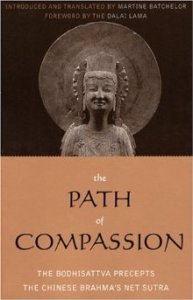
 Martine Batchelor has actually published an excellent translation of the complete Korean ceremony with precepts. It’s called The Path of Compassion: The Bodhisattva Precepts.  If you are at all interested in this subject, I recommend checking out her book. This sutra and ceremony are a huge part of the Buddhism of Korea, Japan, and China. I’d like to write a lot more about it, but I can’t find my copy! (If you’re the person I loaned it to, please send it back! ^-^)

How to overcome suffering: Questions and answers with Daehaeng Kun Sunim

   Look at how water flows.
When it meets a hole,
it fills it and continues to flow.
When water meets a rock,
it flows around it.
The path of finding your true self
is like this.
-Daehaeng Kun Sunim


In her regular Dharma talks, Daehaeng Kun Sunim often took questions afterwards. Some of these, and the answers, are quite useful to practitioners. We’ve been working on putting some of these into a small ebook edition called, Find the Treasure Within. We’re not quite finished, but I’ll go ahead and post slightly condensed versions of these. Some of what she says is so striking that I’ve highlighted it.

 Check out her answer to the question: Is life suffering?

 
Question: 
I had always hoped that my children would grow up happily because my childhood was not so good. Yet, no matter how hard I try, my life doesn’t seem to be turning out the way I wanted.
         I read in some book that Shakyamuni Buddha once told people, “Life is suffering.” Is that true? Does this mean there’s nothing I can do about these things?
 
 
Answer:
Every one of us experiences many things during our life, such as illness and poverty, joy and happiness. It might seem like some of those things happened by accident. However, because you were at that place and time, those things occurred and you experienced them. In fact, all the things that we experience are the result of what we have done over a great number of eons. It’s just that when they return to us, they tend to have a different appearance, so we don’t recognize them.

What we receive today is the outcome of what we did in the past, but how we react to this determines what our future will be. So don’t think that the difficulties you’re facing happened by chance.

However, even hardships are another face of your true self, which is trying to teach you. So, don’t blame others or the era for the difficult situation you are in. Instead, you should be grateful to your true self, which is giving you another chance to change things. Forgetting about your inner self and being depressed because of difficult circumstances cannot be excused.

When some hardship occurs, you can get angry and complain about it, or you can think of it as a good opportunity to complete yourself. Which way you approach things is entirely up to you. But your future depends upon the decisions you make.

It’s true Shakyamuni Buddha said, “The world is full of suffering,” and, “the world is like a burning house.” However, these were warnings given to people who chased after only material things, to people who never reflected upon the truth. 
 
Most people move through their life dragging their difficulties behind them. Thus they suffer twice: once when the difficulties come to them, and once more as they try to carry them along.  Every single Buddha has also experienced hardships because those things are the results of what one has made in the past,  and this applies to everyone. However,  without clinging to anything, Buddhas release everything to the fundamental place, the inner self, and by doing that, whatever they encounter becomes one with the inner self and so dissolves and melts away.

Once those bad situations have arisen, there’s not much that can be done about them. But, if you let go of all those difficulties to your inner self without holding on to them and without making discriminations about them, then you will not have to suffer from carrying them with you. You will also be freeing yourself from future suffering. When you keep doing this, you will gradually attain calmness and your suffering will dissolve,  and finally you will see your inner self, the truth.  

However, releasing everything like this isn’t easy if you’ve never tried it before. So, first, you should firmly believe that the truth is within you. In other words, know that your fundamental mind has the ability to take care of everything.  Next, you should understand that everything you confront is not suffering, but rather just another aspect of yourself.  Entrust it completely to your inner self.  Afterwards, the things you entrusted will dissolve because your inner self, your foundation, is the source of everything and the source of infinite energy.  
 
As I said before, the best way to solve the things you face is to truly let go of everything to your inner self with firm faith, because this is where everything arises from. This is true virtue and is the only way to live truly free


 copyright 2010, The Hanmaum Seonwon Foundation


Footprints of the Ox

Do you notice anything wrong with this painting? 


If you grew up on a farm, chances are you noticed that he’s following the hoof prints in the wrong direction!

The painter may have been a city boy, but, this also may have been deliberately painted like this.
As a warning. 

In the Tex Ox Herding pictures, the hoof prints are the traces of our fundamental mind. These are the deeper, transcendent experiences that arise as we make efforts to put our understanding into practice. 

The danger is that if we aren’t careful, these experiences can become footholds for ‘me’ and ‘I’. Look what I experienced. Now I know….  Not to let go of these is to put our neck in the noose.

The antidote is not to cling to even the magnificent and sublime experiences we have. We have to step forward, letting go of everything we think we know, and even the things we are worried we don’t know. We have to go forward with empty hands, trusting in the inherent Buddha essence within us all.
 
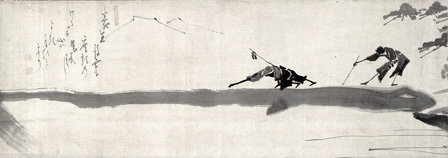
Genju, over at 108 Zen Books, posted a great painting by Hakuin that really speaks to this. 
It’s called “Blind Men Crossing a Log.”    


Walking in the dark,
on this narrow and dangerous path,
what would you depend on to guide you?
Ordinary knowledge
and mistaking the desires of the body for your true essence
will surely lead to missteps
and disaster.
 
Carefully, carefully now.
Though stepping forward into darkness,
the light of this fundamental mind,
this divinity, this Buddha essence,
guides each step
and shows the way.


(Thanks to Jack for the photo of the ox herding image.)

Venerable Ya-un: feeling superiour to others

Don’t feel that you are superior to others, and don’t look down upon others.[i]

Humility and modesty are the source of all good human qualities. Friendship arises from respect and trust. Without humility, the false ideas of self[ii] form a mountain that becomes higher and higher. And the ocean of the three evil rebirths,[iii] becomes deeper and deeper. Outward solemnity seems noble, but if there is no inner attainment, then it’s like a rotten ship.

As officials increase in position, their minds become smaller. As the spiritual cultivation of a practitioner deepens, they become more humble. When the distinction between you and I disappears, the supreme path is naturally achieved. Endless blessings flow naturally to those who are humble.

                      Wisdom is buried by arrogance,
                      ignorance feeds upon distinctions
                      of you and I.
                      While looking down on others
                      and not practicing,
                      you grow old and sick.
                     Moaning and sighing,
                     what can you do now?


[i] Don’t feel that you are better than someone else, the equal of someone else, or inferior to someone else. These are all considered wrong views.

[ii] There are four false ideas that people cling to: that there is a self, that this self is different from other beings, that all other beings also have a separate self, and that this self has a limited life span.

[iii] The realms of hell, hungry ghosts, and animals.

The Global Peace Initiative of Women, in Seoul

There’s a very interesting group meeting for three days this week in Seoul (Wednesday- Friday, Nov. 10-12), The Global Peace Initiative of Women  http://gpiw.org/

To be honest, most of the religious conferences I’ve been to have basically consisted of people waiting to speak. Few came to listen, few were interested in a dialogue or sharing of ideas and experiences. That’s what sets this conference apart. The organizers are very focused on creating a real dialogue. To this end, there are no prepared papers, and those with large egos haven’t been invited. Following brief opening remarks, the moderator sets the tone, and facilitates honest discussion among those who feel called to speak. It reminds me a lot of a Society of Friends Meeting. I’ve had a chance to talk with some of the organizers and have been very impressed with them as people, as practitioners, and with the spirit that they are approaching this with. If you want to hang out with some just plain good people, stop by if you have time. (And it isn’t just about women, there will also be many male participants.)

From their website:

The Global Peace Initiative of Women was founded to help awaken and mobilize spiritual energies in places of great need with the goal of aiding in healing and unifying the world community. GPIW facilitates this by seeking to gather together those of great insight, wisdom, compassion and dedication, many of whom are working quietly for the upliftment of the world. A major focus of GPIW’s work is to aid in building a global network of contemplative leaders who through their inner work can help transform the causes and conditions that lead to suffering at both the individual and collective level.

 Re-Envisioning Prosperity:
A Spiritual Forum during the G20 Summit

 Organized by The Global Peace Initiative of Women
in collaboration with Women of Wisdom, South Korea

November 10-13, 2010

While political leaders come together to discuss ways to stimulate the global economy, a parallel discussion will be taking place among spiritual leaders on a new economic paradigm that takes into consideration the need for greater and greater consideration for the health and wellbeing of the global ecosystems on which we depend for life. Can we have true prosperity without these?  What new framework is emerging that can guide us to a more inclusive, balanced, and life-sustaining understanding of prosperity?

 Wednesday, November 10th

8:00am     Depart for De-Militarized Zone (South / North border area) Cheorwon Peace observatory of the DMZ (1½ hours from Seoul)

 Global Prayers for Peace between South and North Korea

 Moderated by: Dr. Mary-Faeth Chenery, The Global Peace Initiative of Women Country Coordinator, Australia

 Welcome by:

Dr. Insook Kim, Founder, Women of Wisdom, South Korea

Dena Merriam, Founder and Convener, The Global Peace Initiative of Women, USA

 Religious leaders offer individual prayers or chants of 1-3 minutes each 

 2:00pm-4:00pm     Opening Session:

Re-Envisioning Prosperity for Greater Balance Between Our Material and Spiritual Aspirations 

There is a common misperception that material wealth brings greater happiness.   While there is a base line of human needs that must be satisfied, there is another base line, not much discussed, above which additional material accumulation does not contribute to happiness.  It is the work of all religions to help people turn inward for a sense of wellbeing and “happiness.”  Should this not be worked into the common understanding of “prosperity?”  How do our spiritual traditions define “prosperity” and how can this apply to our current time?

 Setting the Context: Prof. Dr. Phra Dharmakosajarn, Rector, Mahachulalongkornrajavidyalaya University, Thailand

 Moderated by: Dena Merriam, Founder and Convener, The Global Peace Initiative
of Women, USA

 Opening Remarks by:

  • Sraddhalu Ranade, Spiritual Teacher/Scientist, Sri Aurobindo Ashram, India
  • Bishop Bärbel Wartenberg-Potter, Former Bishop, Northelbien Evangelical-Lutheran Church of Germany
  • Dr. Doudou Diene, Former Director of the Interreligious Dialogue, UNESCO, Senegal/France
  • Rabbi Warren Stone, Temple Emanuel, USA

 Followed by Open Discussion of the Topic

 Thursday, November 11th 

Dongguk University, Main Temple Hall
9:30am–10:00am      Opening Prayer Ceremony (The Three Refuges)                                                                    
Moderated by:
 Prof. Kim, Aeju, Dongguk University, South Korea
 

                                     Prayer and Welcome

  • Greeting by:  Ven. Hae-Chong Sunim, Chogye Order of Korean Buddhism, Korea
  • Opening Remarks by: Ven. Wol-Ju Sunim, Chogye Order, Founder of Goodhand Organization, Korea
  • Prayer by: Ven. Bup-Ta Sunim, Director, Jeong-Gak Won Temple, Korea

 10:00 – 12:00pm     Emergence of New Global Norms

The American Dream has become the Global Dream – endless possibilities for every individual to achieve uncapped material success.  This dream is fast disappearing and spiritual communities in the US are beginning to talk about the new American Dream – not yet defined.  Some years ago the United Nations set a poverty line, which marks those living in extreme poverty and whose poverty the world had a responsibility to address.  Some religious communities are now working to establish a ‘greed line’ to demarcate a level of wealth amassment considered too extreme in a world of limited resources.  The new economic reality will certainly call for changes in the way we relate to both extreme poverty and extreme wealth.  These barometers, rather than being moral judgments, could emerge from a sense of urgency to re-balance our material and spiritual natures.  If our happiness depends on fulfilling our spiritual urges then this re-balancing becomes essential for the wellbeing of every individual.

 Moderated by: Dena Merriam, Founder and Convener, The Global Peace Initiative of Women, USA

Bishop Bärbel Wartenberg-Potter, Former Bishop, Northelbien Evangelical-Lutheran Church of Germany

 Speakers:

  • Prof. Dr. Phra Dharmakosajarn, Rector, Mahachulalongkornrajavidyalaya University, Thailand
  • Sraddhalu Ranade, Spiritual Teacher/Scientist, Sri Aurobindo Ashram, India
  • Ven. Hyon Gak Sunim, Zen Monk, USA/Germany
  • Rev. Dr. Chung Sook Ja, Theologian & Founder, “Women Church,” Korea
  • Zarko Andricivec, Chan Buddhist Master, Dharmaloka Center, Croatia 

 Closing Remarks:

  • Most Ven. Kakuhan Enami, Chairman, Japan Buddhist Conference for the World Federation and Chief Priest of Bishamon-do Temple and High Priest of Tendai Denomination, Japan

 2:00-4:00pm    Post-Prosperity: Challenges, Possibilities and a New Understanding
of Prosperity

 Young people today do not feel a sense of hope about their future, with regard to the economic opportunities. This is perhaps because of the comparison with the previous generation, which came of age during a time of unparalleled economic growth. But many young people are also coming to understand that making money is not the goal of life.  Money can enable one to fulfill one’s goal and thus is a means to an end, not an end in itself. The focus should perhaps be on finding purpose. This can be the defining goal in the post-“prosperity” era, and indeed this changed focus will help evolve a new understanding of prosperity.

 Moderated by:Prof. Dr. Hyun Kyung, Union Theological Seminary, USA

Nithya Shanti, Spiritual Teacher, India

 Opening Remarks by:

  • Dr. Christoph Quarch, Spiritual Philosopher, Lumen Naturale, Germany
  • Dr. Hwang Sookyung, Instructor, Dongguk University and Women of Wisdom, South Korea
  • Ven. Chang Kuan, Managing Director, Bhikshu Sangha of Dharma Drum Mountain and Vice Dean, Dharma Drum Sangha University, Taiwan
  • Ven. Myeong-Beop, Instructor, Unmun Seminary for Buddhist Nuns and Seoul National University, South Korea
  • Prof. Ejaz Akram, Sufi Scholar, Pakistan
  • Mr. Katsuji Iwahashi, Representative, Association of Shinto Shrines, Japan
  • Mr. Hiroshi Matsumoto, Trustee, International House of Japan, Japan

 Closing Remarks:  Ms. Hanne Strong, Founder Earth Restoration Corps, Canada

 The discussion will be followed by questions and answers.

 3:30pm      Closing Prayer Ceremony (The Four Great Vows)
                                   
Moderated by:  Prof. Kim, Aeju, Dongguk University, South Korea

 5:00pm      Tribute to “War & Peace” International Fashion Biennale

Friday, November 12th

 Hanmaum Seon Center of Korean Zen Master Daehaeng Kun Sunim

  Located at 101-60, Seoksu-dong, Anyang-si, Gyunggi-do / Tel: 031-470-3175 

 9:30am – 10:00am     
Opening Prayer Ceremony in Main Temple Hall – 4th Floor

 Welcome Remarks & Brief Introduction of the Hanmaum Seon Center by:

Venerable Hye Won Chuji Sunim, Abbess, Hanmaum Seon Center

 10:00am-12:00pm      
Morning Session: Spiritual Perspectives on the Current Economic Situation

 Each of the world’s economies seeks growth, and consumption is regarded as the path toward greater economic growth. There is much concern among economists about the decline in consumption, and yet from the spiritual perspective this would be regarded as a positive development. Is there another model emerging of a more “considered” or “conscious” growth? Is endless economic growth possible given the already heavy utilization of the Earth’s resources? What are the positive fruits of limited growth?

 Introduction of Theme by:  Dena Merriam, Founder and Convener, The Global Peace Initiative of Women, USA

 Session moderated by: Bishop Bärbel Wartenberg-Potter, Former Bishop, Northelbien Evangelical-Lutheran Church of Germany, Germany

Prof. Ejaz Akram, Sufi Scholar, Pakistan

  Opening Remarks by:

  • Ven. Dr. Hye Seon Sunim, Hanmaum Seon Center
  • Prof. Dr. Phra Dharmakosajarn, Rector, Mahachulalongkornrajavidyalaya University, Thailand
  • Prof. Dr. Samuel Lee, Director of ECO-ASIA, Former Director, UNESCO, South Korea 
  • Zarko Andricivec, Chan Buddhist Master, Dharmaloka Center, Croatia
  • Rabbi Warren Stone, Temple Emanuel, USA
  • Ven. Chang Kuan, Managing Director, Bhikshu Sangha of Dharma Drum Mountain and Vice Dean, Dharma Drum Sangha University, Taiwan

 2:00pm-4:00pm      
Open Discussion – Continuation of morning session

                                     Moderated by Dr. Doudou Diene, Senegal/France

                                     Opening Remarks:  

  • Prof. Dr. Hyun Kyung, Union Theological Seminary, South Korea/USA
  • Sraddhalu Ranade, Spiritual Teacher/Scientist, Sri Aurobindo Ashram, India
  • Sister Ruth Liddle, Brahma Kumaris Spiritual University, UK
  • Ven. Hyon Gak Sunim, Zen Monk, USA/Germany
  • Ven. Chonggo Sunim, Hanmaum Seon Center, Hanmaum International Culture Institute

 Concluding Remarks: Dr. Mary-Faeth Chenery, GPIW Country Coordinator, Australia

 Closing and Next Steps: Dena Merriam, Founder and Convener, The Global Peace Initiative of Women, USA


Acknowledgements Inner Trip Reiyukai International (ITRI), Japan

 Women of Wisdom, South Korea

 The Ministry of Culture and Health of the Government of South Korea

The Province of Kwangwon do

Chogye Order of Buddhism, South Korea

Hanmaum Seon Center, South Korea

 GPIW gratefully acknowledges the foundations, organizations and many individuals whose financial contributions, energy and efforts make our work possible

 Simultaneous translation for the Dongguk University Forum
kindly provided by Jhin, Jean Wookee and Hong, Yeon Ju

 Translation and assistance for the program at Hanmaum Seon Center
kindly provided by Lim, Hyangiel, Park, Hyejin, and Suh, Seonhee 

Venerable Ya-un: Sleep as a hindrance

The Venerable Ya-un’s Admonitions to Beginners (continued)

Okay, I have to admit that this admonition doesn’t seem to apply to our modern societies. I don’t know if it’s the residue of the protestant work ethic or not, but these days it may be a lack of sleep that hinders people. Perhaps, the modern situation requires us to ask ourselves to what are devoting so much time that fatigue is actually taking years off our lives? Is this just busy-ness as a form of intoxication? Is this also a form of anesthetizing ourselves?
       About the cultural context of this admonition, I have noticed a monk or two from other asian countries who have been able to sleep at the drop of a hat, and who spent most of their free time napping. It seemed like this was  common in their home countries. It was probably habits like this that the Venerable Ya-un had in mind when he wrote this admonition.

Don’t sleep outside of the fixed hours for sleeping.

Ever since ancient times, sleep has been considered the greatest hindrance to spiritual cultivation. For the entire day, keep the hwadu with a clear mind and don’t allow yourself to become dull. Whether you are sitting, standing, lying, or moving, always return to the bright light within you and carefully examine your mind. If you pass your life idly, grief will follow you for a thousand kalpas. Time passes in an instant, everyday you should be alarmed at where the time went. Even though it is said that life is short, in fact nobody can guarantee whether they will be alive even an instant from now. If you still haven’t penetrated the great meaning of the Patriarchs, how can you sleep peacefully?

                           Worse than a poisonous snake,
                           sleepiness clouds the moon of mind
                          practitioners forget which way to go
                          when they reach this point.
                          If you hold up a sharp-edged sword,
                          the clouds vanish,
                         revealing the brightly shining moon.

On Compassion

Here’s a guest post by Barry Briggs of Ox Herding

Recently someone new to Buddhism asked how it was that the Bodhisattva of Compassion, Quanyin, could serve as the “patron” of both vegetarians and fishermen.

There was an aggrieved tone in the person’s voice:  How could she?

I replied that true compassion does not depend on conditions.

Without hesitation, Quanyin offers unstinting compassion to vegetarians and carnivores, fishermen and farmers, and saints and murderers.

That’s because Quanyin has laid down the mind that picks and chooses based on like and dislike. She only responds to what is.

Indeed, love can only arise in response to what is. Everything else is fantasy.

These are easy words to write, but to live without dependence on conditions . . . well, that’s something else. That’s why clear-eyed direction is so important.